
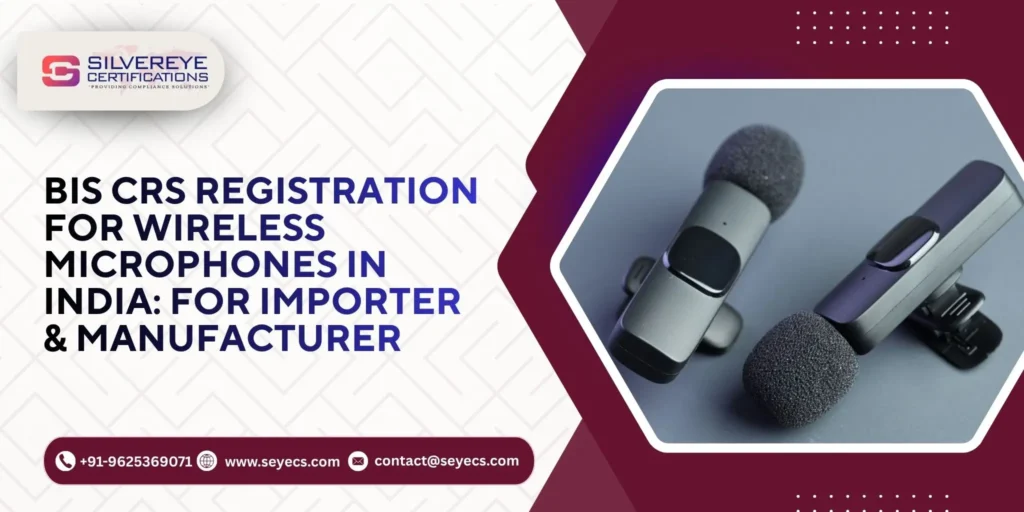
- BIS CRS Registration is mandatory government certification for Wireless Microphones sold in India, issued by the Bureau of Indian Standards (BIS) under the Department of Consumer Affairs.
- Wireless Microphones are listed at Sl. No. 33 in the BIS migration guidelines (9 March 2026) under the Electronics and Information Technology Goods (CRO) Order, 2021.
- Current standard: IS 616:2017 — being replaced by IS/IEC 62368-1:2023. Migration deadline: 1 November 2028 per MeitY notification S.O. 4997(E) dated 29 October 2025.
- Critical: Wireless Microphones also require mandatory WPC (Wireless Planning and Coordination Wing) type approval — they transmit on radio frequencies and need spectrum clearance from India's Ministry of Communications.
- From 25 February 2026, CRS licenses are valid for 5 years with annual fees payable every year in advance.
- Selling Wireless Microphones in India without valid BIS CRS AND WPC type approval is illegal — both are mandatory.
What is BIS CRS Registration for Wireless Microphones?
BIS CRS Registration is mandatory product certification for Wireless Microphones in India. Issued by the Bureau of Indian Standards (BIS) under the Department of Consumer Affairs, Government of India, it is required under the Electronics and Information Technology Goods (Requirement of Compulsory Registration) Order, 2021 (CRO 2021). Every Wireless Microphone — transmitter, receiver, and complete system — sold, manufactured, or imported into India must hold a valid BIS CRS licence before it can legally be sold, distributed, or used commercially in the country.

Wireless Microphones are listed at Sl. No. 33 in the BIS implementation guidelines dated 9 March 2026 (Ref: Reg/IS/IEC 62368-1:2023/Guidelines/01). The applicable safety standard is IS 616:2017 — India's adoption of IEC 60065:2014, the safety standard for audio, video, and similar electronic apparatus. As per MeitY notification S.O. 4997(E) dated 29 October 2025, IS 616:2017 is being superseded by IS/IEC 62368-1:2023 with a migration deadline of 1 November 2028.
What makes Wireless Microphones one of the most compliance-intensive products in the BIS CRS framework is their mandatory dual compliance requirement. Because wireless microphones transmit audio signals over radio frequencies — UHF, VHF, 2.4GHz, or other licensed/licence-exempt bands — they require WPC (Wireless Planning and Coordination Wing) type approval from the Ministry of Communications in addition to BIS CRS. This is not optional — wireless devices transmitting on radio frequencies in India require spectrum clearance under Indian wireless telegraphy regulations. Both BIS CRS and WPC type approval are mandatory, and both must be in place before a wireless microphone can be legally imported or sold in India.
From performance stages and broadcast studios to corporate conference rooms, houses of worship, educational institutions, and content creation setups — wireless microphones are ubiquitous in India's professional and consumer audio market. Every brand serving this market must be fully compliant.
Types of Wireless Microphones Covered Under BIS CRS
The BIS CRS notification covers the full spectrum of wireless microphone systems. Here is a complete breakdown of the types covered:
| Wireless Microphone Type | Technology / Frequency Band | Use Case | BIS CRS Required? | WPC Required? |
| UHF Handheld Wireless Microphone | UHF (470–698 MHz or designated bands) | Live performance, events, theatre, concerts | Yes — mandatory | Yes — mandatory |
| UHF Lapel / Lavalier Wireless Mic | UHF body pack transmitter + receiver | TV production, film, corporate presentations, weddings | Yes — mandatory | Yes — mandatory |
| VHF Wireless Microphone System | VHF (174–216 MHz or designated bands) | Budget events, educational use, basic PA systems | Yes — mandatory | Yes — mandatory |
| 2.4 GHz Digital Wireless Microphone | 2.4 GHz ISM band (licence-exempt in India) | Content creation, vlogging, interviews, portable use | Yes — mandatory | Yes — WPC for 2.4GHz module |
| Bluetooth Wireless Microphone | Bluetooth (2.4 GHz) | Smartphone-connected mics, social media content, casual use | Yes — mandatory | Yes — Bluetooth WPC approval |
| Digital Wireless Microphone System (DECT / 900MHz) | Various digital transmission bands | Broadcast, production, installed audio | Yes — mandatory | Yes — mandatory |
| Conference / Boundary Wireless Microphone | UHF or 2.4GHz wireless | Boardrooms, conference halls, government meetings | Yes — mandatory | Yes — mandatory |
| In-Ear Monitor System (IEM — wireless) | UHF wireless transmission for stage monitoring | Live performance stage monitoring for artists | Yes — mandatory | Yes — mandatory |
| Clip-On / Instrument Wireless Transmitter | UHF body pack for instrument wireless use | Guitar, violin, brass instruments on stage | Yes — mandatory | Yes — mandatory |
Every wireless microphone system sold in India — from a Rs. 1,500 budget 2.4GHz vlogging mic to a Rs. 5,00,000 professional UHF broadcast wireless system — requires both BIS CRS certification and WPC type approval. The radio frequency transmission is what makes WPC mandatory for every wireless microphone product, regardless of price or application.
Who Needs BIS CRS Certification for Wireless Microphones?
The BIS CRS certification requirement for Wireless Microphones applies across the complete supply chain in India:
- Indian manufacturers producing wireless microphone systems for the domestic audio market
- Foreign manufacturers — global wireless audio brands (Shure, Sennheiser, Audio-Technica, Rode, DJI, Sony, Yamaha, etc.) whose products are imported and sold in India
- Authorized Indian Representatives (AIRs) acting on behalf of foreign wireless microphone brands for all BIS CRS compliance purposes
- Importers bringing wireless microphone systems into India for commercial distribution, retail sale, or professional rental
- OEM and ODM brands whose wireless microphone hardware is sold under their own brand name in India as a finished product
- D2C e-commerce brands that source and sell wireless microphones under their own label in India
- Professional audio equipment rental companies that import wireless microphone systems for commercial rental use in India
- System integrators that source wireless microphones for AV installations in houses of worship, corporate offices, auditoriums, and educational institutions
India's wireless microphone market spans professional live sound, broadcast, corporate AV, education, worship, and fast-growing content creation segments. Whether your brand serves Rs. 1,000 budget microphones for YouTube creators or Rs. 10,00,000 professional broadcast wireless systems for TV studios — BIS CRS and WPC compliance are mandatory for every product in every segment.
The Critical Dual Compliance Requirement — BIS CRS + WPC Type Approval
Wireless Microphones are among the most compliance-intensive consumer and professional audio products in India's regulatory framework. They require two mandatory and completely separate certifications from two different government bodies. Missing either one means the product cannot be legally sold or imported in India.
| Compliance | Regulatory Body | What It Covers | Why It Is Mandatory |
| BIS CRS Registration | Bureau of Indian Standards (BIS), Dept. of Consumer Affairs, GoI | Complete product safety — electrical safety, thermal management, battery safety (for battery-powered transmitters), fire prevention, and mechanical safety under IS 616:2017 / IS/IEC 62368-1:2023 | All wireless microphone products are notified under the CRO 2021 — safety certification is mandatory for every unit sold in India |
| WPC Type Approval | Wireless Planning and Coordination Wing (WPC), Ministry of Communications, GoI | Wireless spectrum compliance — radio frequency parameters, transmission power levels, frequency band allocation compliance, and interference mitigation for the wireless transmission system under Indian wireless telegraphy regulations | Any device that transmits on radio frequencies in India requires spectrum clearance — wireless microphones transmit by their fundamental design, making WPC mandatory |
WPC Frequency Considerations for Wireless Microphones in India
Different wireless microphone technologies use different frequency bands, each with its own WPC regulatory treatment in India. Understanding this is critical for compliance planning:
| Wireless Microphone Technology | Frequency Band | WPC Treatment in India | Notes |
| UHF Wireless Microphone | Typically 470–698 MHz | Licensed spectrum — WPC type approval required; frequency assignment may also be needed for certain use cases | Professional live sound, broadcast, theatre — the most common professional wireless mic technology |
| VHF Wireless Microphone | Typically 174–216 MHz | Licensed spectrum — WPC type approval required | Older technology, still in use for budget/education segments |
| 2.4 GHz Digital Wireless | 2400–2483.5 MHz (ISM band) | Licence-exempt band — WPC type approval still required for the device | Growing segment — content creators, portable systems |
| Bluetooth Wireless Microphone | 2400–2483.5 MHz (Bluetooth) | Licence-exempt band — WPC Bluetooth type approval required | Consumer and social media segment |
| DECT-Based Wireless Mic | 1880–1900 MHz (DECT band) | Specific band rules apply — WPC type approval required | Enterprise conferencing, installed AV |
Key practical point: Even for 2.4 GHz license-exempt band wireless microphones, WPC type approval is still mandatory. 'License-exempt' refers to the spectrum use — it does not mean the device itself is exempt from WPC type approval. Every wireless microphone transmitter sold in India needs WPC clearance regardless of frequency band.
Key 2026 Regulatory Updates — BIS CRS for Wireless Microphones
BIS Extends CRS License Validity to 5 Years — Amendment Dated 25 February 2026
The Bureau of Indian Standards amended the BIS (Conformity Assessment) Regulations, 2018 on 25 February 2026, extending CRS license validity from 1 year to 5 years under Scheme-II. This update applies to all CRS products including Wireless Microphones:
| Parameter | Previous Rule | New Rule (w.e.f. 25 Feb 2026) |
| Initial Licence Validity | 1 Year | 5 Years |
| Licence Renewal Period | 1 Year | 5 Years |
| Annual Fee Payment | Required annually | Still required annually — paid in advance by prescribed due date |
| Production Details Submission | Annually with fee | Annually with fee — unchanged |
| Non-Payment Consequence | Suspension possible | Suspension / Deferment and Cancellation / Expiry under BIS (CA) Regulations, 2018 as amended |
MeitY Notification S.O. 4997(E) Dated 29 October 2025 — IS/IEC 62368-1:2023 Migration
MeitY issued notification S.O. 4997(E) on 29 October 2025, formally amending the CRO 2021 to notify IS/IEC 62368-1:2023 as the replacement safety standard for Wireless Microphones, superseding IS 616:2017. Wireless Microphones (Sl. No. 33) are among 38 product categories in this migration.
BIS issued detailed implementation guidelines on 9 March 2026 confirming concurrent running of both standards until 1 November 2028. After this date, IS 616:2017 is officially withdrawn for Wireless Microphones. All existing licensees must migrate to IS/IEC 62368-1:2023 by this deadline.
| 1 November 2028 — Wireless Microphone Brands Must Plan Now Last date of concurrent running of IS 616:2017 and IS/IEC 62368-1:2023 for Wireless Microphones After 1 November 2028: IS 616:2017 is officially WITHDRAWN for Wireless Microphones Any CRS license not migrated to IS/IEC 62368-1:2023 by this date will be made inoperative BIS will cancel licenses or delete non-migrated models from scope post-deadline New applicants applying under IS 616:2017 must commit in writing to IS/IEC 62368-1:2023 migration Professional wireless audio brands with large product portfolios should begin migration testing well before 2028 |
Applicable BIS Standards for Wireless Microphones — IS 616:2017 vs IS/IEC 62368-1:2023
| Standard | Full Name | Technical Basis | Status for Wireless Microphones |
| IS 616:2017 | Safety Requirements for Mains Operated Electronic and Related Apparatus for Household and Similar General Use | Indian adoption of IEC 60065:2014 — audio/video and electronic apparatus safety standard | Currently valid — officially withdrawn for Wireless Microphones after 1 November 2028 |
| IS/IEC 62368-1:2023 | Audio/Video, Information and Communication Technology Equipment — Part 1: Safety Requirements | IEC 62368-1:2023, 3rd Edition — Hazard-Based Safety Engineering (HBSE) — unified A/V and IT safety framework | New mandatory standard — all Wireless Microphone licensees must comply by 1 November 2028 |
IS 616:2017 was designed for audio and video apparatus — covering both mains-operated and battery-powered devices, which is directly relevant for wireless microphone systems that include mains-powered receivers and battery-operated transmitters. IS/IEC 62368-1:2023 provides a more comprehensive HBSE framework that handles the energy hazards of both the receiver unit (typically mains-powered or powered via adaptor) and the transmitter/body pack (battery-powered, physically worn by the user). For brands migrating from IS 616 to IS/IEC 62368-1:2023, retesting of both the receiver and transmitter units under the new HBSE framework is required at a BIS-recognized laboratory.
India's Wireless Microphone Market in 2026 — Why Compliance is Non-Negotiable
India's wireless microphone market spans a remarkably diverse range of applications — from budget consumer products to high-end professional broadcast systems. Understanding each segment clarifies the BIS CRS compliance stakes.
| Market Segment | BIS CRS + WPC Compliance Relevance |
| Live Events and Concerts | The highest-demand professional segment. UHF wireless systems from Shure, Sennheiser, Audio-Technica. Event organisers and promoters increasingly verify BIS certification for equipment used at licensed events. BIS CRS + WPC mandatory. |
| Broadcast and Film Production | Television channels, OTT platforms, film production companies — all require BIS and WPC-certified wireless microphone systems. Government broadcasters (Doordarshan) and BARC-rated channels mandate certified equipment. |
| Houses of Worship | India's massive religious gathering market. Temples, churches, mosques, gurudwaras — large AV installations with multiple wireless microphone channels. Institutional procurement increasingly requires certified equipment. |
| Corporate AV and Conferencing | Conference rooms, boardrooms, training halls — wireless lapel and boundary microphone systems. Enterprise IT and AV procurement mandates BIS-certified audio equipment. |
| Education Sector | Schools, colleges, coaching institutes — teacher microphone systems for large classrooms. Government school tenders and institutional procurement specify BIS-certified wireless systems. |
| Content Creation and Vlogging | YouTubers, Instagram creators, podcasters — 2.4 GHz wireless microphones (DJI Mic, Rode Wireless GO style products). E-commerce primary channel — BIS and WPC mandatory for Amazon / Flipkart listings. |
| Wedding and Events Photography / Videography | Professional wireless lapel mics for wedding video production. High-volume professional purchase — BIS and WPC certification required for imported systems. |
| Karaoke and Consumer Entertainment | Budget wireless microphone systems for home and small venue karaoke. E-commerce driven — BIS CRS required for marketplace listings. |
Every segment of India's wireless microphone market requires full BIS CRS and WPC compliance. The enforcement consequences — customs rejection, marketplace de-listing, and legal action — combined with the spectrum interference risks of uncertified wireless devices, make this one of the most actively enforced compliance areas in India's audio equipment market.
Documents Required for BIS CRS Registration — Wireless Microphones
For Indian Manufacturers
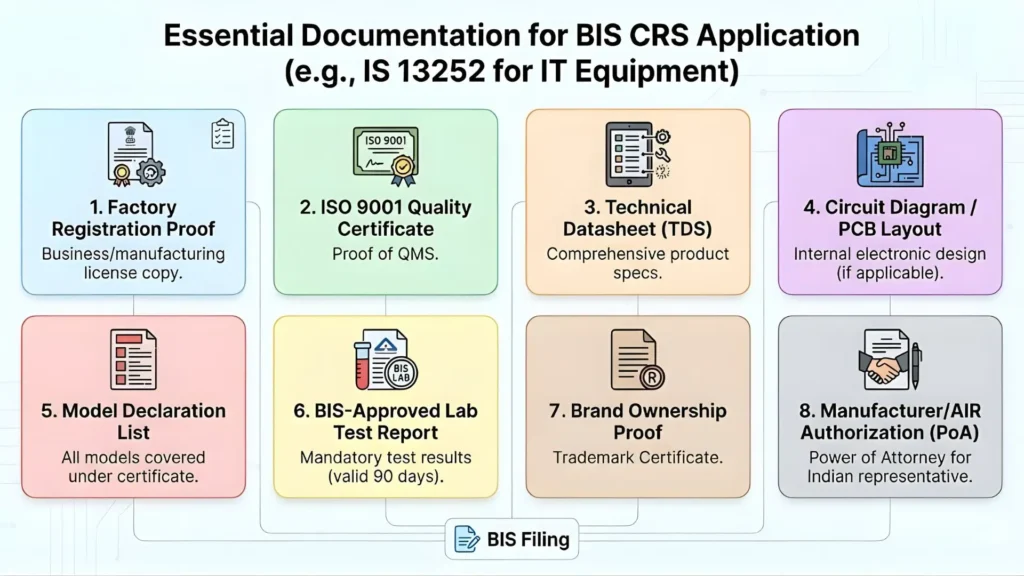
- Completed BIS CRS application form — filed via manakonline.in under Scheme-II
- Business registration certificate — Company Incorporation / MSME Certificate / LLP Agreement / Partnership Deed
- GST Registration Certificate
- Manufacturing or assembly facility address proof
- Product details — brand name, model number(s), frequency band, transmitter/receiver specifications, power output, modulation type
- Safety Test Report from a BIS-recognized laboratory under IS 616:2017 or IS/IEC 62368-1:2023 — covering both transmitter and receiver units
- Product photographs — transmitter (handheld / body pack), receiver unit, antenna, charging cradle (if applicable), accessories, and retail packaging
- Packaging specimens showing BIS Standard Mark placement space
- Technical documentation — circuit diagrams, block diagrams, frequency specification, RF output power, battery specification for transmitters, power adaptor specification for receivers
- Declaration of conformity signed by authorized signatory
- Authorized signatory identity documents — PAN, Aadhaar, designation letter
- Bank account details for BIS fee payment
- WPC type approval certificate for the wireless transmitter module (mandatory — coordinate simultaneously with BIS CRS)
For Foreign Manufacturers / Importers
- All company registration and identity documents of the foreign manufacturer or brand owner
- Authorized Indian Representative (AIR) appointment letter — notarized and signed by the foreign manufacturer
- AIR company registration documents — Indian entity registration certificate, GST, PAN
- Import Export Code (IEC) of the AIR or Indian importer
- Power of Attorney or MOU between the foreign manufacturer and the Indian AIR
- Safety Test Report from a BIS-recognized laboratory or MRA-accredited partner laboratory (IS 616:2017 or IS/IEC 62368-1:2023) — for complete wireless microphone system
- Brand / trademark ownership certificate or registration document
- Country of origin certificate for the wireless microphone system
- Product photographs — all components (transmitter, receiver, accessories) and retail packaging
- Packaging and label specimens showing designated BIS Standard Mark and Registration Number space
- Technical file — complete RF system specification, frequency allocation, modulation scheme, output power levels, antenna details, battery specification for transmitters, receiver power adaptor specification
- Declaration of conformity from the foreign manufacturer
- WPC type approval certificate for the wireless transmitter (mandatory — applies to every wireless microphone model)
- User manual or instruction guide covering operating frequency range and power specifications
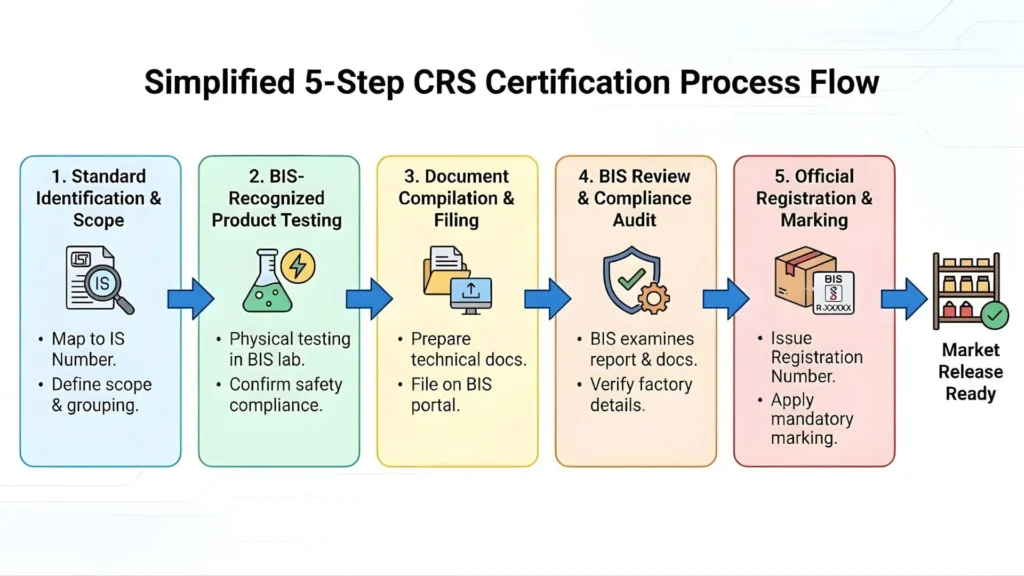
Step-by-Step BIS CRS Registration Process — Wireless Microphones
| Step | Stage | Key Details |
| 1 | Product Category Confirmation | Confirm your product is a Wireless Microphone at Sl. No. 33 in the BIS migration guidelines — includes handheld systems, lapel / lavalier systems, IEM systems, and wireless instrument systems |
| 2 | Frequency and WPC Assessment | Identify the exact frequency band(s) your wireless mic uses — UHF, VHF, 2.4GHz, Bluetooth, DECT. Initiate WPC type approval for the transmitter module simultaneously with BIS CRS. |
| 3 | Standard Selection | Choose IS 616:2017 or IS/IEC 62368-1:2023 — new applicants strongly recommended to apply under IS/IEC 62368-1:2023 directly |
| 4 | Laboratory Selection | Select a BIS-recognised laboratory capable of testing wireless microphone systems under IS 616:2017 or IS/IEC 62368-1:2023 — confirm the lab can test both transmitter and receiver units |
| 5 | Sample Submission to Lab | Submit complete wireless microphone system samples — transmitter (handheld or body pack), receiver unit, antennas, batteries, charging accessories, power adaptors, and all retail package contents |
| 6 | Safety Testing | Lab tests both transmitter and receiver against IS 616:2017 or IS/IEC 62368-1:2023 — covers electrical safety of the receiver (mains/adaptor-powered) and safety of the transmitter (battery-powered, body-worn) |
| 7 | Obtain Safety Test Report | Receive the complete safety test report for the wireless microphone system from the BIS lab |
| 8 | WPC Type Approval (Parallel) | Apply for WPC type approval for the RF transmitter through the WPC online portal (wpc.gov.in) — submit RF measurement reports and technical documents for the transmitter |
| 9 | Obtain WPC Type Approval Certificate | Receive the WPC type approval certificate for the wireless transmitter module |
| 10 | Document Compilation | Compile all required documents — company registration, AIR appointment, BIS test report, WPC certificate, brand proof, technical file, RF specification |
| 11 | Online CRS Application Submission | File BIS CRS application via manakonline.in under Scheme-II — upload all test reports, WPC certificate, and required documents |
| 12 | BIS Application Scrutiny | BIS reviews the application — may raise queries on frequency specification, test report completeness, transmitter safety testing scope, or technical documentation |
| 13 | Factory Inspection (if applicable) | For Indian manufacturers — BIS may conduct a factory visit to verify manufacturing infrastructure and quality controls |
| 14 | CRS Licence Grant | BIS issues the CRS licence — valid for 5 years from the grant date as per the 25 February 2026 amendment |
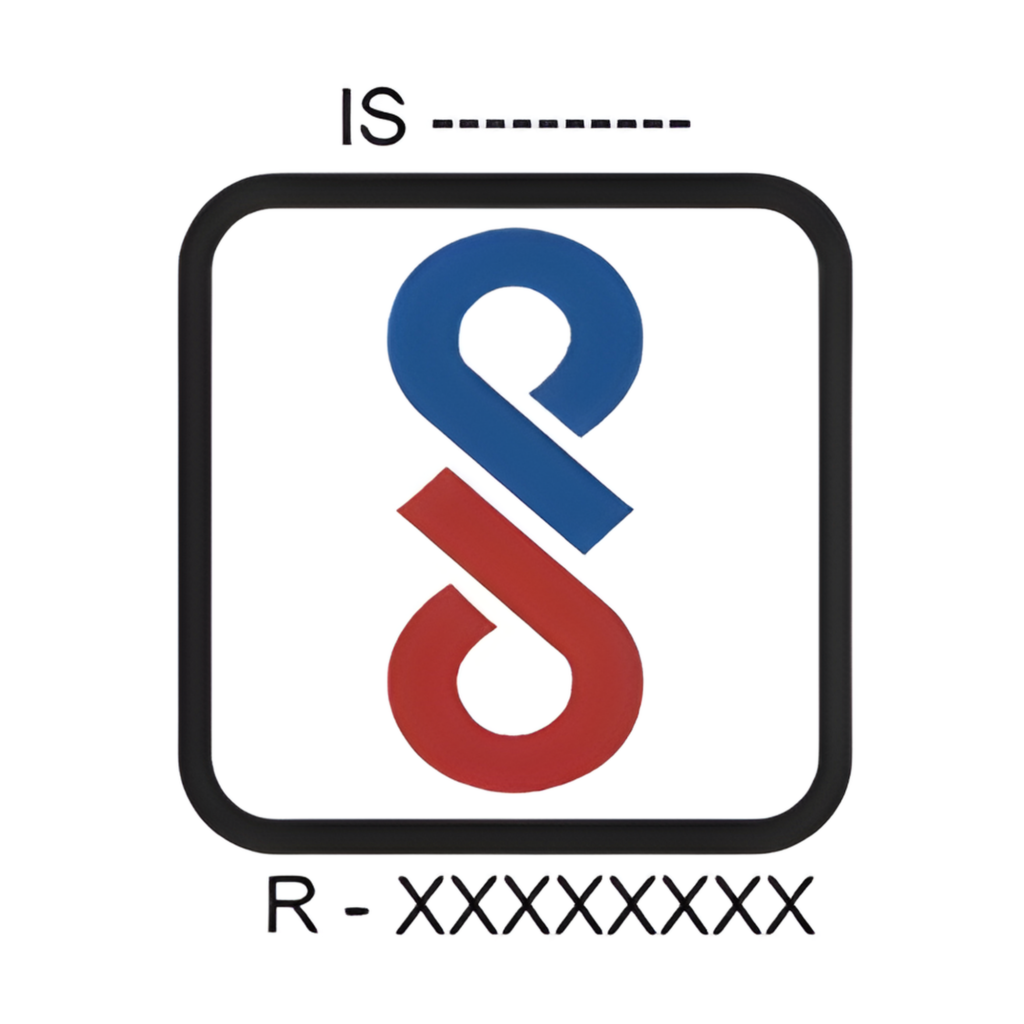
| 15 | BIS Standard Mark Affixing | Affix ISI Mark and Registration Number R-XXXXXXXX on the transmitter, receiver, packaging, or label per BIS requirements |
| 16 | Annual Fee + Production Details | Pay annual licence fee in advance and submit production details every year by the prescribed due date |
| 17 | IS/IEC 62368-1:2023 Migration | For existing licensees — submit updated test reports under IS/IEC 62368-1:2023 for all wireless microphone models before 1 November 2028 |
BIS CRS Registration Fees — Wireless Microphones
| Fee Component | Description | When Payable |
| Application Processing Fee | One-time fee paid when submitting the BIS CRS application via manakonline.in | At application submission |
| Annual Licence Continuation Fee | Paid every year in advance by the prescribed due date — mandatory throughout the 5-year licence period | Annually (in advance) |
| Safety Testing Fee (Lab) — Receiver Unit | Charged by the BIS-recognised laboratory for testing the receiver unit (typically mains/adaptor-powered) under IS 616:2017 or IS/IEC 62368-1:2023 | Before or during lab testing |
| Safety Testing Fee (Lab) — Transmitter Unit | Charged for testing the transmitter / body pack (battery-powered) — may be tested as part of the complete system or as a separate unit depending on lab procedure | Before or during lab testing |
| Renewal Processing Fee | Applicable at the end of the 5-year licence period when filing for the next 5-year renewal | At 5-year renewal filing |
| Change in Scope Fee | Applicable when adding new wireless microphone models, frequency variants, or channel configurations to an existing licence scope | At scope change request |
| Late Annual Fee Surcharge | Applies when annual fee is not paid by the prescribed due date — continued non-payment leads to suspension | As and when applicable |
| WPC Type Approval Fee | Separate fee paid to WPC, Ministry of Communications for wireless transmitter type approval — mandatory for every wireless microphone model; entirely outside BIS CRS fee structure | At WPC application submission |
| RF Testing / EMC Testing Fee (for WPC) | Laboratory fee for radio frequency (RF) emissions and compliance testing required for WPC type approval application — separate from BIS safety testing | Before WPC application submission |
Note: BIS fee amounts are revised periodically. WPC type approval fees and RF testing laboratory fees are governed separately by WPC, Ministry of Communications. Always verify current fee details on bis.gov.in and wpc.gov.in, or consult a certified compliance expert like Silvereye Certifications for accurate, up-to-date guidance.
BIS CRS License Validity, Renewal & Annual Compliance — Wireless Microphones 2026
Initial License Grant — 5 Years
- Wireless Microphone CRS license is now granted for an initial period of 5 years from the date of issue
- Annual fees must be paid in advance by the prescribed due date every year during this 5-year period
- Production details — model-wise quantities manufactured or imported — must accompany each annual fee payment
- Both the BIS CRS license and WPC type approval must remain valid throughout the period products are sold in India
License Renewal — Further 5 Years
- At the end of the 5-year period, the license is renewed for a further 5 years
- Renewal fees follow the same annual payment structure — paid in advance during the renewal period
- WPC type approvals also have their own validity — plan WPC renewal alongside BIS CRS annual compliance
Consequences of Non-Compliance
- Non-payment of annual BIS fee by due date → suspension or deferment of CRS license
- Continued non-payment → cancellation or expiry of CRS license
- Cancelled BIS CRS → wireless microphones cannot be legally sold, imported, or distributed in India
- Non-migration to IS/IEC 62368-1:2023 by 1 November 2028 → license made inoperative
- Expired WPC type approval while selling wireless microphones → violation of wireless telegraphy regulations — separate enforcement risk
- Reinstating a cancelled BIS CRS license requires a completely fresh application — entire process restarts
| Annual Compliance Checklist for Wireless Microphone CRS Licensees • Set reminders 60–90 days before your annual BIS fee due date — BIS does not send payment reminders • Prepare model-wise production details at least 30 days before the annual submission deadline • Check WPC type approval expiry dates for all wireless microphone transmitter models — renew before expiry • Track the IS/IEC 62368-1:2023 migration deadline — 1 November 2028 — initiate retesting for both transmitter and receiver units • Verify BIS Standard Mark and Registration Number placement on transmitter unit, receiver unit, and packaging • Ensure all new wireless microphone models added to your India portfolio go through both BIS CRS scope addition and new WPC type approval before import or sale |
IS/IEC 62368-1:2023 Migration — What Wireless Microphone Brands Must Do
Existing CRS Licensees — Action Required Before 1 November 2028
- Implement IS/IEC 62368-1:2023 compliance for all Wireless Microphone models in your license scope by 1 November 2028.
- Submit complete Test Reports from a BIS-recognized laboratory (tested under IS/IEC 62368-1:2023) for all lead wireless microphone systems covered under your license — covering both transmitter and receiver units.
- Upload updated test reports through the Standard Revision / Amendment / Essential Requirement provision available in your BIS portal login.
- Provide a signed undertaking confirming IS/IEC 62368-1:2023 requirements have been implemented in all series models within your license scope.
- BIS will issue a confirmation letter once migration is verified — listing all compliant wireless microphone models.
- Failure to complete migration by 1 November 2028 → license cancellation or deletion of non-compliant models from scope.
New Applicants — First-Time BIS CRS for Wireless Microphones
- Applications where samples have already been submitted under IS 616:2017 can still be processed under the old standard
- New applications can be filed directly under IS/IEC 62368-1:2023 — strongly recommended
- Applying under IS 616:2017 requires a signed declaration committing to IS/IEC 62368-1:2023 migration by 1 November 2028
- After 1 November 2028, no new CRS license will be granted under IS 616:2017 for Wireless Microphones
Change in Scope — Adding New Models
- Adding new wireless microphone models or channel systems to an existing scope follows the same guidelines as for new applicants
- Processing under IS 616:2017 is permitted only until the licensee's own IS/IEC 62368-1:2023 switchover date or 1 November 2028 — whichever comes first
Complete List of 38 Products Migrating to IS/IEC 62368-1:2023 Under BIS CRS (2026)
All 38 product categories under BIS CRS migration as per the BIS implementation guidelines dated 9 March 2026. Wireless Microphones appear at Sl. No. 33:
| Sl. No. | Product Category | Current Standard | New Standard | Deadline |
| 1 | Electronic Games (Video) | IS 616:2017 | IS/IEC 62368-1:2023 | 1 Nov 2028 |
| 2 | Laptops / Notebooks / Tablets | IS 13252 (Part 1):2010 | IS/IEC 62368-1:2023 | 1 Nov 2028 |
| 3 | Plasma / LCD / LED Television | IS 616:2017 & IS 18112:2025 | IS/IEC 62368-1:2023 & IS 18112:2025 | 1 Nov 2028 |
| 4 | Optical Disc Players (200W and above) | IS 616:2017 | IS/IEC 62368-1:2023 | 1 Nov 2028 |
| 5 | Visual Display Units / Video Monitors | IS 13252 (Part 1):2010 | IS/IEC 62368-1:2023 | 1 Nov 2028 |
| 6 | Printers / Multi-Function Devices / Plotters | IS 13252 (Part 1):2010 | IS/IEC 62368-1:2023 | 1 Nov 2028 |
| 7 | Scanners, Barcode Readers, Iris Scanners, Optical Fingerprint Scanners | IS 13252 (Part 1):2010 | IS/IEC 62368-1:2023 | 1 Nov 2028 |
| 8 | Wireless Keyboards | IS 13252 (Part 1):2010 | IS/IEC 62368-1:2023 | 1 Nov 2028 |
| 9 | Telephone Answering Machines | IS 13252 (Part 1):2010 | IS/IEC 62368-1:2023 | 1 Nov 2028 |
| 10 | Amplifiers (2000W and above) | IS 616:2017 | IS/IEC 62368-1:2023 | 1 Nov 2028 |
| 11 | Electronic Musical Systems | IS 616:2017 | IS/IEC 62368-1:2023 | 1 Nov 2028 |
| 12 | Set Top Boxes | IS 13252 (Part 1):2010 | IS/IEC 62368-1:2023 | 1 Nov 2028 |
| 13 | Automatic Data Processing Machines | IS 13252 (Part 1):2010 | IS/IEC 62368-1:2023 | 1 Nov 2028 |
| 14 | Power Adaptors for IT Equipment | IS 13252 (Part 1):2010 | IS/IEC 62368-1:2023 | 1 Nov 2028 |
| 15 | Power Adaptors for Audio / Video Equipment | IS 616:2017 | IS/IEC 62368-1:2023 | 1 Nov 2028 |
| 16 | Mobile Phones | IS 13252 (Part 1):2010 & IS 16333 (Part 3):2022 | IS/IEC 62368-1:2023 & IS 16333 (Part 3):2022 | 1 Nov 2028 |
| 17 | Cash Registers | IS 13252 (Part 1):2010 | IS/IEC 62368-1:2023 | 1 Nov 2028 |
| 18 | Point of Sale Terminals | IS 13252 (Part 1):2010 | IS/IEC 62368-1:2023 | 1 Nov 2028 |
| 19 | Copying Machines / Duplicators | IS 13252 (Part 1):2010 | IS/IEC 62368-1:2023 | 1 Nov 2028 |
| 20 | Smart Card Readers | IS 13252 (Part 1):2010 | IS/IEC 62368-1:2023 | 1 Nov 2028 |
| 21 | Mail / Postage / Franking Machines | IS 13252 (Part 1):2010 | IS/IEC 62368-1:2023 | 1 Nov 2028 |
| 22 | Passport Readers | IS 13252 (Part 1):2010 | IS/IEC 62368-1:2023 | 1 Nov 2028 |
| 23 | Power Bank (Portable Application) | IS 13252 (Part 1):2010 | IS/IEC 62368-1:2023 | 1 Nov 2028 |
| 24 | CCTV Cameras / CCTV Recorders | IS 13252 (Part 1):2010 + IP Security ERs | IS/IEC 62368-1:2023 + IP Security ERs | 1 Nov 2028 |
| 25 | Smart Watches | IS 13252 (Part 1):2010 | IS/IEC 62368-1:2023 | 1 Nov 2028 |
| 26 | Keyboards | IS 13252 (Part 1):2010 | IS/IEC 62368-1:2023 | 1 Nov 2028 |
| 27 | Automatic Teller Cash Dispensing Machines | IS 13252 (Part 1):2010 | IS/IEC 62368-1:2023 | 1 Nov 2028 |
| 28 | USB Type External Hard Disk Drives | IS 13252 (Part 1):2010 | IS/IEC 62368-1:2023 | 1 Nov 2028 |
| 29 | Wireless Headphones and Earphones | IS 616:2017 | IS/IEC 62368-1:2023 | 1 Nov 2028 |
| 30 | USB External Solid-State Storage Devices (above 256 GB) | IS 13252 (Part 1):2010 | IS/IEC 62368-1:2023 | 1 Nov 2028 |
| 31 | Standalone SMPS (output voltage 48V max) | IS 13252 (Part 1):2010 | IS/IEC 62368-1:2023 | 1 Nov 2028 |
| 32 | Televisions other than Plasma / LCD / LED | IS 616:2017 & IS 18112:2025 | IS/IEC 62368-1:2023 & IS 18112:2025 | 1 Nov 2028 |
| 33 | Wireless Microphones | IS 616:2017 | IS/IEC 62368-1:2023 | 1 Nov 2028 |
| 34 | Digital Cameras | IS 13252 (Part 1):2010 | IS/IEC 62368-1:2023 | 1 Nov 2028 |
| 35 | Video Cameras | IS 616:2017 | IS/IEC 62368-1:2023 | 1 Nov 2028 |
| 36 | Webcams (Finished Product) | IS 616:2017 | IS/IEC 62368-1:2023 | 1 Nov 2028 |
| 37 | Smart Speakers (with / without Display) | IS 616:2017 | IS/IEC 62368-1:2023 | 1 Nov 2028 |
| 38 | Bluetooth Speakers | IS 616:2017 | IS/IEC 62368-1:2023 | 1 Nov 2028 |
Key Benefits of BIS CRS Registration for Wireless Microphone Brands
- Legal right to sell in India: BIS CRS is the mandatory legal entry requirement — no wireless microphone can be legally imported, sold, or distributed in India without it
- WPC compliance completion: Holding both BIS CRS and WPC type approval confirms complete regulatory compliance — the only legally valid position for wireless microphone brands in India
- Customs clearance: BIS Registration Number (R-XXXXXXXX) is required at Indian customs — missing it means consignment detention. WPC type approval is also checked for wireless devices.
- E-commerce marketplace access: Amazon India, Flipkart, and all major platforms require BIS certification for wireless microphone listings — uncertified products are de-listed
- Professional live event and broadcast supply: Event management companies, TV studios, and broadcasters specify both BIS-certified and WPC-approved wireless microphone systems — certification opens these high-value professional channels
- Government and institutional procurement: Government event infrastructure, educational institution PA systems, and defence procurement specify BIS-certified audio equipment
- Houses of worship supply: Large temple trusts, church networks, and mosque administrations increasingly require certified wireless audio equipment for large-scale AV installations
- Consumer trust and brand credibility: The BIS Standard Mark assures Indian buyers of product safety and regulatory compliance — critical in a market with many uncertified imported alternatives
- 5-year license stability (2026): Reduced administrative burden — professional audio brands benefit most from longer compliance cycles matching product commercial life
Eligibility Criteria for BIS CRS Registration — Wireless Microphones
| Applicant Type | Eligibility Requirement | Key Condition |
| Indian Manufacturer | Registered business entity in India — Company, LLP, MSME, or Proprietorship | Must operate a manufacturing or assembly facility in India producing wireless microphone systems |
| Foreign Manufacturer | Any registered overseas entity or brand owner | Must appoint a registered Indian entity as Authorised Indian Representative (AIR) before applying for BIS CRS |
| Authorised Indian Representative (AIR) | Indian company, LLP, or individual | Must hold a valid IEC code and a formal written appointment from the foreign manufacturer |
| Indian Importer / Distributor | Registered Indian business entity with valid IEC | Can act as AIR for the foreign wireless microphone brand and hold the CRS licence on their behalf |
| OEM / Private Label Audio Brand | Registered Indian or foreign entity | Must obtain BIS CRS in their own brand name — also needs WPC type approval in the brand or importer's name |
Silvereye Certifications — India's Trusted BIS CRS Consultant for Wireless Microphone Brands
Wireless Microphone compliance in India is more involved than almost any other audio product. The combination of BIS CRS under IS 616:2017 / IS/IEC 62368-1:2023, mandatory WPC type approval for each frequency band, the requirement to test both transmitter and receiver units, the IS/IEC 62368-1:2023 migration deadline, and the WPC frequency-specific regulatory requirements — all of this demands expert, coordinated management.
Silvereye Certifications is one of India's most experienced BIS CRS and wireless compliance consulting firms. Their team brings deep expertise in audio product certification, RF compliance, and WPC type approval — and stays fully current with every BIS notification, MeitY regulatory update, and WPC spectrum management development. For wireless microphone brands at every stage — from first India market entry to licence renewal to IS/IEC 62368-1:2023 migration — Silvereye delivers comprehensive, accurate compliance results.
Conclusion
BIS CRS Registration for Wireless Microphones is one of the most comprehensive compliance requirements in India's electronics regulatory framework — combining mandatory product safety certification (BIS CRS) with mandatory wireless spectrum compliance (WPC type approval) in a dual-compliance structure that applies to every wireless microphone system sold in India. The 2025-2026 regulatory updates have added critical urgency: MeitY's IS/IEC 62368-1:2023 migration mandate (deadline 1 November 2028) and BIS's 5-year licence validity extension both require active compliance management. And with the WPC requiring type approval for wireless transmitters across all frequency bands — including 2.4GHz licence-exempt products — there is no shortcut to full legal compliance for wireless microphone brands.
Here is your 2026 action plan:
- If you do not have BIS CRS and WPC type approval for your Wireless Microphone — apply for both immediately and simultaneously. Both are mandatory before any unit can be legally sold.
- If you have an existing IS 616:2017 CRS licence — begin IS/IEC 62368-1:2023 migration planning now. Ensure test scope covers both transmitter and receiver units.
- Track WPC type approval validity for all wireless microphone models — expired WPC approvals create separate legal risk independent of BIS CRS status.
- Partner with Silvereye Certifications for BIS CRS, WPC type approval, IS/IEC 62368-1:2023 migration, and ongoing annual compliance management for your wireless microphone portfolio.
India's wireless audio market — spanning live events, broadcast, corporate AV, education, worship, and content creation — is one of the most dynamic professional audio markets in the world. Only brands with complete BIS CRS and WPC compliance can access this market legally, win professional supply contracts, list on major e-commerce platforms, and build the brand trust needed for sustained commercial success across India's diverse wireless microphone market segments.
Frequently Asked Questions
Is BIS CRS Registration mandatory for Wireless Microphones sold in India?
Yes, mandatory under the Electronics and Information Technology Goods (CRO) Order, 2021. Additionally, the wireless transmitter module requires WPC type approval from the Ministry of Communications. Both BIS CRS and WPC are mandatory — neither alone is sufficient for legal sale. Selling without both certifications violates the BIS Act, 2016 and Indian wireless telegraphy regulations.
What standard applies to Wireless Microphones under BIS CRS in 2026?
Wireless Microphones currently fall under IS 616:2017 — the audio/video equipment safety standard (based on IEC 60065:2014). Per MeitY notification S.O. 4997(E) dated 29 October 2025, this is being replaced by IS/IEC 62368-1:2023. Both standards run concurrently until 1 November 2028. New applicants should apply under IS/IEC 62368-1:2023 directly to avoid migration costs later.
Do wireless microphones need WPC type approval in addition to BIS CRS?
Yes, absolutely mandatory. Wireless microphones transmit audio signals on radio frequencies — making them wireless devices subject to India's wireless telegraphy regulations administered by the WPC Wing, Ministry of Communications. WPC type approval is required for every wireless microphone transmitter model regardless of frequency band (UHF, VHF, 2.4GHz, Bluetooth, DECT). Even 2.4GHz licence-exempt band wireless microphones require WPC type approval — 'licence-exempt' refers to spectrum use, not device approval exemption.
What is the IS/IEC 62368-1:2023 migration deadline for Wireless Microphone brands?
1 November 2028 is the last date of concurrent running of IS 616:2017 and IS/IEC 62368-1:2023 for Wireless Microphones. After this date, IS 616:2017 is officially withdrawn. For migration, test reports must cover both the transmitter (body pack / handheld) and the receiver unit of the wireless microphone system under IS/IEC 62368-1:2023.
Does my wireless microphone need separate BIS CRS for the transmitter and receiver?
Typically, a wireless microphone system (transmitter + receiver) is certified as a complete system under one BIS CRS application — the test report covers both units. However, the specific scope depends on how the product is sold. If transmitters and receivers are sold as separate, individual products, each requires its own coverage within the licence scope. Discuss the exact test scope with your BIS-recognised laboratory and consultant before sample submission.
How long is the BIS CRS license valid for Wireless Microphones after the 2026 amendment?
Following the BIS amendment effective 25 February 2026, CRS licences for Wireless Microphones are now valid for 5 years from the date of grant. Renewal is for 5 years. Annual fees must be paid every year in advance by the prescribed due date with production details.
Can a foreign wireless microphone brand apply directly for BIS CRS in India?
No. A foreign manufacturer must appoint an Authorised Indian Representative (AIR) — a registered Indian entity with a valid IEC code — who applies and holds the CRS licence on their behalf. For WPC type approval, the AIR or importer also typically holds the WPC approval in India. Both BIS CRS and WPC approvals are managed through the Indian entity. Both are mandatory before any wireless microphone unit can be sold in India.
Can multiple wireless microphone models (different channel counts, frequency bands) be covered under one BIS CRS license?
Yes. Multiple wireless microphone models can be covered under one BIS CRS licence through the lead model and series model framework. Lead models are tested; series models that share the same core safety parameters can be added via an undertaking. However, models with different frequency bands may require separate WPC type approvals for each band. Always plan the test scope for both BIS and WPC approvals together when managing a multi-model portfolio.
What happens if I import and sell wireless microphones without WPC type approval?
Operating or selling wireless transmission devices without WPC type approval violates the Indian Wireless Telegraphy Act. Consequences include customs seizure of wireless microphone shipments, financial penalties from WPC enforcement, and in serious cases, prosecution under wireless telegraphy regulations. WPC authorities actively monitor wireless device imports. The risk is independent of BIS CRS — both violations carry separate enforcement consequences.
What are the penalties for selling Wireless Microphones without BIS CRS certification in India?
Selling wireless microphones without valid BIS CRS violates the BIS Act, 2016 and CRO 2021. Consequences include: customs detention of import consignments, product seizure from retail and distribution channels, e-commerce de-listing from Amazon India and Flipkart, financial penalties from BIS enforcement, and criminal prosecution for repeat violations.