
- If your business is dedicated to moving food — refrigerated vans, milk or oil tankers, food trucks used purely for transport, or a logistics fleet carrying food as its core cargo — you need FSSAI registration or a license under the 'Transportation' Kind of Business.
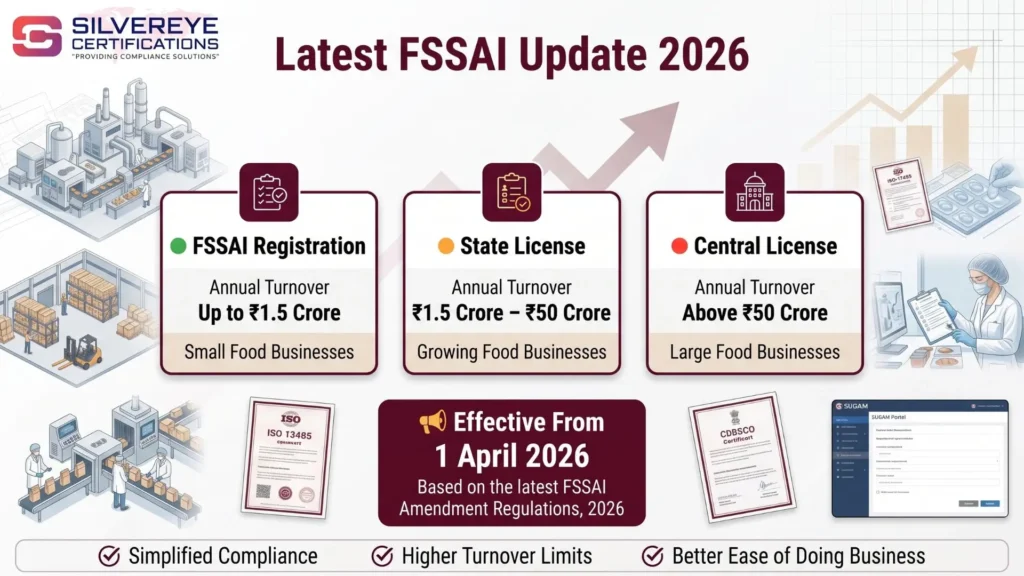
- Transportation follows the same 2026 turnover-based structure as most FSSAI categories: Registration up to ₹1.5 crore, State License up to ₹50 crore, Central License above ₹50 crore.
- Individual gig delivery riders working for Swiggy, Zomato, or similar platforms generally don't need their own personal FSSAI registration — the restaurant or platform they deliver for is the one that must hold the license.
- A single Transportation license typically covers your entire fleet of vehicles for that business, rather than requiring a separate license per vehicle.
Introduction
You need FSSAI registration for food transporters if your business is dedicated to moving food products — using refrigerated vans, milk or oil tankers, dry-cargo trucks carrying packaged food, or a food truck used purely for transit rather than on-site cooking. FSSAI's 'Transportation' Kind of Business follows the standard 2026 turnover slabs: Basic Registration up to ₹1.5 crore, State License up to ₹50 crore, and Central License above ₹50 crore, with fees from ₹100 to ₹7,500 a year.

You generally don't need this if you're an individual gig delivery rider for Swiggy or Zomato — that obligation sits with the restaurant or platform, not with you personally — but a dedicated logistics or cold-chain company moving food as its core business does need it.
What Is FSSAI Registration for Food Transporters?
FSSAI registration for food transporters is the food safety approval issued to any business whose activity involves moving food products — packed or in bulk — from one location to another, using vehicles or containers, including specialized equipment like insulated refrigerated vans, milk tankers, oil tankers, and dedicated food trucks. Under the Food Safety and Standards Act, 2006, transporting food commercially without this registration or license is not permitted.
FSSAI treats transportation as a distinct Kind of Business (KoB) from manufacturing, storage, or retail, because food safety risks specific to transit — temperature control failure, contamination during loading/unloading, cross-contamination with non-food cargo — are different from the risks at a factory or a shop counter.
Do You Actually Need This?
This is the question most people searching for this topic actually want answered, so here's a straightforward way to think about it.
| Your Situation | Do You Need FSSAI Transportation Registration? |
| You run a dedicated cold-chain logistics company moving refrigerated/frozen food for clients | Yes — this is exactly the core activity the Transportation KoB covers |
| You operate milk tankers or oil tankers as your primary business | Yes — specifically named as covered activity under this KoB |
| You run a food truck that only transports food between locations, without cooking or serving on-site | Yes, under Transportation — though most food trucks that also prepare/serve food on-site are typically registered under the Restaurant KoB instead |
| You're a general trucking/logistics company that occasionally carries a food shipment alongside other unrelated cargo | Generally yes if food transport is a meaningful, recurring part of your business — check with your Food Safety Officer if it's genuinely incidental and rare |
| You're an individual delivery rider for Swiggy, Zomato, or a similar platform | Generally no — the restaurant or platform you deliver for is the Food Business Operator required to hold the FSSAI license, not you personally |
| You're a private individual moving your own home-cooked food for personal, non-commercial reasons | No — FSSAI registration applies to commercial food business activity, not personal, non-commercial handling |
| You manufacture food and also run your own delivery vehicles to distribute it | You likely need both your Manufacturer KoB and a Transportation KoB endorsed on your license, if operated from the same business |
If you're still unsure after this check, the safest approach is to consult your state Food Safety Department or a compliance professional with your exact business model, since edge cases (like a small business that both retails and occasionally delivers) can go either way depending on how central transportation is to what you actually do.
2026 FSSAI Turnover Update: How It Applies to Transporters
FSSAI's Order No. RCD-01002/1/2021-Regulatory-FSSAI-Part(1), dated 13 March 2026, revised the turnover thresholds for food business categorization under the Food Safety and Standards (Licensing and Registration of Food Businesses) Amendment Regulations, 2026 (Gazette notification dated 10 March 2026), effective 1 April 2026. The Transportation Kind of Business follows this same standard structure:
| License Type | Turnover Threshold (from 1 April 2026) | Annual Fee |
| Basic Registration | Annual turnover up to ₹1.5 crore | ₹100 |
| State License | Annual turnover above ₹1.5 crore up to ₹50 crore | ₹2,000 – ₹5,000 |
| Central License | Annual turnover above ₹50 crore, or multi-state/import-export operations | ₹7,500 |
Two other 2026 changes apply here as well:
- Perpetual validity: Licenses/registrations granted after 1 April 2026 no longer expire on a fixed 1–5 year term, subject to risk-based inspections.
- Automatic category upgrade: If your fleet's turnover crosses your current slab, FSSAI moves you up automatically, at no extra cost, retaining your existing 14-digit number.
One License, Many Vehicles: How Fleet Coverage Works
A genuinely useful, practical point for logistics operators: FSSAI's Transportation Kind of Business is a special case among licensing categories, since one license generally covers the entire fleet of vehicles operated by that business, rather than requiring a separate license per vehicle or per location. This is different from most other FSSAI categories, which are strictly premises-based.
- Your FSSAI number should be displayed on your transport vehicles/containers as required, and referenced in your delivery and consignment documentation.
- If you're adding significant new vehicles or expanding operations substantially, this is still worth reflecting through a license modification rather than assuming your original registration automatically scales to cover indefinite growth.
- If your fleet crosses state lines regularly as a core part of operations, that scale of activity is one of the factors that can push you toward needing a Central License rather than a State License.
Food Trucks: Transportation or Restaurant KoB?
Food trucks sit at a genuinely common point of confusion. FSSAI's guidance distinguishes based on what the truck actually does:
- A food truck used purely to transport food from a central kitchen to delivery points, with no cooking or direct serving happening from the vehicle itself, generally falls under the Transportation KoB.
- A food truck that prepares, cooks, or serves food directly to customers from the vehicle (the more common 'street food truck' model) is generally treated under the Restaurant/Food Service KoB instead, since the vehicle functions as the point of sale and preparation, not just transit.
- If your food truck does both — transports ingredients from a central kitchen and also serves prepared food on-site — check with your Food Safety Officer on the correct primary KoB classification for your specific operation, since misclassification can cause application delays.
Documents Required for FSSAI Registration for Food Transporters
- Photo ID proof of the Food Business Operator (Aadhaar, PAN, Voter ID, Passport, or Driving License)
- Proof of possession of business premises (registered office or depot address, if any) — a rental agreement or utility bill
- Business constitution certificate — Partnership Deed, Certificate of Incorporation, GST registration, or Udyam Registration, for State/Central applications
- List of food products/categories to be transported
- A food safety management plan appropriate to transportation — covering temperature control, vehicle hygiene, and loading/unloading practices
- Supporting documentation or a self-declaration of the number and type of vehicles operated (specialised refrigerated vehicles, tankers, general dry-cargo trucks, etc.)

Step-by-Step FSSAI Registration Process for Transporters
Confirm your business genuinely falls under the Transportation KoB using the self-check table above, rather than assuming based on general impression.
- Register on the FoSCoS portal and select 'Transportation' as your Kind of Business.
- Confirm your license category — Basic Registration, State, or Central — against the 2026 turnover thresholds, factoring in whether your operations span multiple states.
- Fill Form A (Basic Registration) or Form B (State/Central License), including details of your vehicle fleet and the food categories you transport.
- Upload the required documents, including your food safety management plan for transportation-specific hygiene practices.
- Pay the applicable government fee online.
- For State/Central applications, expect scrutiny of your fleet's temperature control capability (for refrigerated/cold-chain operations) and general hygiene practices, though this may not always require a physical premises inspection in the way a factory license would.
- On approval, display your 14-digit FSSAI number on your vehicles/containers as applicable, and reference it in consignment and delivery documentation.
FSSAI Fee Chart for Food Transporters
| License Category | Government Fee (per year) | Typical Timeline |
| Basic Registration | ₹100 | 7–10 working days |
| State License | ₹2,000 – ₹5,000 (scale-dependent) | 30–60 working days |
| Central License | ₹7,500 | 60–90 working days |
Renewal and Ongoing Compliance
- Perpetual validity: licenses/registrations granted after 1 April 2026 no longer expire on a fixed 1–5 year term, subject to risk-based inspections.
- Older, fixed-term licenses: renew at least 30 days before expiry to avoid the ₹100-per-day late fee.
- Annual Return (Form D-1): due by 31 May every year for State/Central License holders.
- Ongoing hygiene compliance: transporters are expected to maintain vehicle cleanliness, temperature logs for cold-chain operations, and separation from non-food cargo on an ongoing basis — this isn't a one-time check at registration.
- Fleet changes: significant fleet expansion or a change in the type of food being transported is worth reflecting through a license modification rather than leaving your registration details outdated.
Penalties for Non-Compliance
Operating a food transportation business without valid FSSAI registration or license is a punishable offence under the FSS Act, 2006 — penalties of up to ₹5 lakh and imprisonment of up to six months apply for operating without a license. Beyond the direct legal risk, food that's mishandled or contaminated in transit due to poor hygiene or temperature control practices can trigger separate liability for the food safety incident itself, independent of any licensing violation.
Frequently Asked Questions
Do all businesses that move food need FSSAI registration?
Not automatically — it depends on whether food transport is a genuine, core part of your business activity. A dedicated logistics company or cold-chain operator needs it; an individual delivery rider or someone occasionally carrying food alongside unrelated cargo generally doesn't, in their own name.
Do Swiggy or Zomato delivery riders need their own FSSAI registration?
Generally no. The obligation to hold an FSSAI license sits with the restaurant or platform they're delivering for, not with individual delivery personnel.
What is the FSSAI license fee for a food transportation business?
₹100 per year for Basic Registration, ₹2,000–₹5,000 per year for a State License, and ₹7,500 per year for a Central License, based on turnover and the scale of operations.
Do I need a separate FSSAI license for every vehicle in my fleet?
No. One Transportation license generally covers your entire fleet of vehicles for that business, rather than requiring a license per vehicle.
Does a food truck need Transportation or Restaurant registration?
It depends on what the truck actually does. If it only transports food without cooking or serving on-site, Transportation KoB applies. If it prepares or serves food directly to customers, it's generally treated under the Restaurant KoB instead.
Do refrigerated vans and milk tankers need a specific type of FSSAI registration?
They fall under the same 'Transportation' Kind of Business as general food transporters, categorised by turnover the same way — there isn't a separate, distinct license type just for cold-chain vehicles.
What documents are needed for FSSAI transporter registration?
At minimum: photo ID, business premises proof (if applicable), a list of food products transported, a food safety management plan for transportation, and details or a self-declaration of your vehicle fleet.
Does a general trucking company need FSSAI registration if it occasionally carries food?
It depends on how central food transport is to the business. If it's a meaningful, recurring activity, registration is generally expected; if it's genuinely incidental and rare, check with your Food Safety Officer for guidance specific to your situation.
How long does it take to get FSSAI registration for a transportation business?
Basic Registration typically takes 7–10 working days. State Licenses usually take 30–60 working days, and Central Licenses 60–90 working days.
Does a Central License apply automatically to transporters operating across multiple states?
Operating across multiple states as a core, substantial part of your business is one of the factors that can push a transporter toward needing a Central License — turnover crossing ₹50 crore is the standard threshold, but scale of multi-state operation is also relevant to your overall classification.
Is the FSSAI license for transporters valid for a lifetime now?
Licenses/registrations granted on or after 1 April 2026 carry perpetual validity, subject to risk-based inspections — they no longer need renewal every 1–5 years.
What is the penalty for transporting food commercially without FSSAI registration?
Operating without a valid FSSAI registration or license can attract a penalty of up to ₹5 lakh and imprisonment of up to six months under the FSS Act, 2006.