

- Standalone IP cameras and CCTV systems are not generally certified under classic TEC MTCTE Certification — the mandatory framework is BIS registration plus MeitY/STQC cybersecurity certification.
- From 1 April 2026, no CCTV camera can be legally sold, imported, or manufactured in India unless it meets MeitY's Essential Requirements (ER:01) for CCTV security.
- TEC MTCTE Certification and WPC approval come into play only when a camera embeds independently regulated telecom hardware, like a built-in 4G/LTE or Wi-Fi radio module.
- BIS registration under IS 13252 (Part 1):2010 remains the baseline safety requirement for every CCTV camera and recorder sold in India.
Introduction
Most TEC Certification For IP cameras and CCTV systems in India are not certified under the classic TEC MTCTE scheme that covers routers, modems, and 5G equipment. Instead, the mandatory certification path runs through the Bureau of Indian Standards (BIS) — registration under IS 13252 (Part 1):2010 for safety — combined with MeitY's Essential Requirements (ER:01) for CCTV security, tested and certified through STQC (Standardization Testing and Quality Certification).
This ER framework, introduced by gazette notification on 9 April 2024, becomes fully mandatory from 1 April 2026, after which non-compliant cameras cannot legally be sold, imported, or manufactured in India. TEC MTCTE Certification and WPC approval apply separately only if the camera includes its own independent telecom radio module, such as built-in 4G/LTE connectivity.

If you've searched for "TEC certification for IP cameras," you're not alone — and you're about to learn something that most guides on this topic get wrong. Unlike routers, modems, and 5G equipment, standalone IP cameras and CCTV systems generally don't go through TEC's MTCTE scheme.
The real mandatory certification for CCTV in India runs through the Bureau of Indian Standards (BIS) and the Ministry of Electronics and Information Technology (MeitY), via STQC-administered cybersecurity testing. With a hard enforcement deadline of 1 April 2026 now in effect, this is one of the most time-sensitive compliance topics in India's electronics and surveillance industry right now. Here's exactly what applies, what doesn't, and what you need to do about it.
Does TEC MTCTE Certification Apply to IP Cameras and CCTV Systems?
This is the single most important clarification in this guide, because a lot of consultancy content online conflates "TEC certification" with all telecom-adjacent electronics. Here's the accurate picture:
| Scenario | What Actually Applies |
| Standalone IP camera / CCTV camera (records and streams over a local network) | BIS registration (IS 13252 Part 1:2010) + MeitY Essential Requirements (ER:01) via STQC — not classic TEC/MTCTE |
| NVR/DVR (Network/Digital Video Recorder) | Also governed under the same BIS Compulsory Registration Order and MeitY ER framework as CCTV cameras |
| IP camera with a built-in Wi-Fi radio module | BIS + MeitY ER as above, plus WPC equipment type approval for the Wi-Fi radio component (frequency/spectrum compliance) |
| IP camera with a built-in cellular (4G/LTE) module for remote transmission | BIS + MeitY ER as above, plus the cellular module may separately fall under a notified MTCTE category (as a radio/telecom module) and needs WPC approval for spectrum use |
| Camera system bundled with a router/gateway device as a single product | The router/gateway component may independently require TEC/MTCTE certification under the applicable router or CPE Essential Requirement, in addition to BIS + MeitY ER for the camera function |
"TEC certification for IP cameras" as a distinct, dedicated MTCTE product category doesn't exist the way it does for routers or modems. What does exist — and is now strictly enforced — is BIS registration combined with MeitY's cybersecurity Essential Requirements. If your product also happens to contain independently regulated telecom radio hardware, that specific component may separately need TEC MTCTE Certification and/or WPC clearance.
| 2026 Compliance Deadline — Read This First MeitY issued an Office Memorandum on 16 January 2026 withdrawing all previous grace-period extensions for CCTV cameras. Effective 1 April 2026, any CCTV camera that does not conform to the notified Essential Requirements (ER:01) cannot legally be sold, imported, or manufactured in India — regardless of prior stock or earlier approvals. If you manufacture, import, or specify CCTV/IP camera products for India, this deadline should be treated as final; MeitY has stated no further extensions will be granted. |
Regulatory Timeline: How the CCTV Compliance Framework Evolved
| Date | What Happened |
| 9 April 2024 | MeitY issued a gazette notification amending IS 13252 (Part 1):2010 under the Compulsory Registration Order (CRO), introducing the Essential Requirement(s) for Security of CCTV — ER:01 |
| Originally scheduled: 9 October 2024 | Initial enforcement date for ER:01 compliance |
| Extended to: 9 April 2025 | MeitY pushed the enforcement date back to allow manufacturers/importers time to align products with the new cybersecurity standards |
| 21 May 2025 | MeitY issued an Office Memorandum granting a further grace period, allowing sale of CCTV stock imported or manufactured before 9 April 2025 |
| 16 January 2026 | MeitY withdrew all remaining extensions via a new Office Memorandum, confirming enforcement from 1 April 2026 with no further relaxation |
| 1 April 2026 | Full enforcement: non-ER-compliant CCTV cameras cannot legally be sold, imported, or manufactured in India |
What MeitY's Essential Requirement (ER:01) for CCTV Actually Covers
Unlike the older IS 13252 safety standard (which focuses on electrical safety), ER:01 is explicitly about cybersecurity — protecting CCTV cameras from being used as a network attack surface, a well-documented risk with cheap, insecure IP cameras.
- Secure boot and firmware signing: Prevents tampered or malicious firmware from running on the device.
- Hardware-level security: Debugging interfaces (USB, UART, JTAG, etc.) must be disabled or protected, and cryptographic keys must be unique per device.
- Access control and authentication: Strong default credential handling and access management, rather than shared or hardcoded passwords.
- Network encryption: Encrypted communication channels to prevent interception of video/data streams.
- Tamper resistance and sensitive data protection: Safeguards against physical and firmware-level tampering.
- Vulnerability management: Ongoing patching and update mechanisms to address discovered security flaws.
BIS Registration: The Baseline Requirement for CCTV Cameras
Before the cybersecurity layer even comes into play, CCTV cameras and recorders must be registered under BIS's Compulsory Registration Scheme (Scheme-II of the BIS Conformity Assessment Regulations, 2018), against IS 13252 (Part 1):2010 / IEC 60950-1:2005 for electrical and physical safety.
- This applies to CCTV cameras and recorders generally, independent of the newer ER:01 cybersecurity layer.
- Existing BIS licensees must extend their registration scope to include ER:01 test reports for each registered model, or those models get removed from the license scope.
- New applicants must submit both the IS 13252 (Part 1):2010 safety test report and the ER:01 test report together when applying for BIS registration.
STQC Certification Process for CCTV and IP Cameras (ER:01)
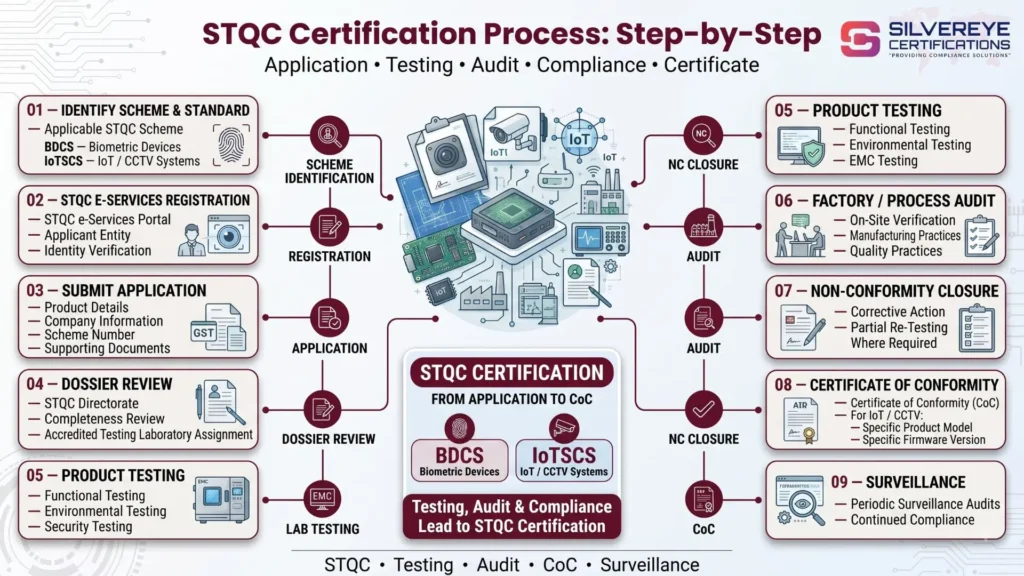
STQC (Standardization Testing and Quality Certification), operating under MeitY, runs the testing and certification process for ER:01 compliance through its IoT System Certification Scheme (IoTSCS). The process is document-heavy and centers around a Technical Construction File (TCF):
- Prepare a Technical Construction File (TCF) describing how the camera implements each ER:01 requirement — secure boot, access control, encryption, tamper protection, and so on.
- Submit the application and TCF to STQC, along with the proposed Certification Body and test lab details.
- The Certification Body reviews the TCF and, if found satisfactory, schedules a detailed technical review with the manufacturer.
- The manufacturer provides an engineering sample/board with access probes to allow the test lab to verify claims made in the TCF.
- The designated test laboratory evaluates the camera against the ER:01 parameters under the Certification Body's supervision.
- On successful evaluation, a test report is issued and submitted (via the BIS portal's ER module) alongside the existing or new BIS registration application.
- The certificate must reference the specific model, chipset details (make and origin), and firmware version and hash — so any firmware change may require re-verification.
A generic Series Certification pathway is also available for manufacturers with multiple closely related camera models, reducing the need to repeat the full TCF process for every variant.
Who Needs TEC Certification for IP Cameras and CCTV Systems?
- Indian manufacturers producing IP cameras, analog CCTV cameras, or NVR/DVR units for the domestic market.
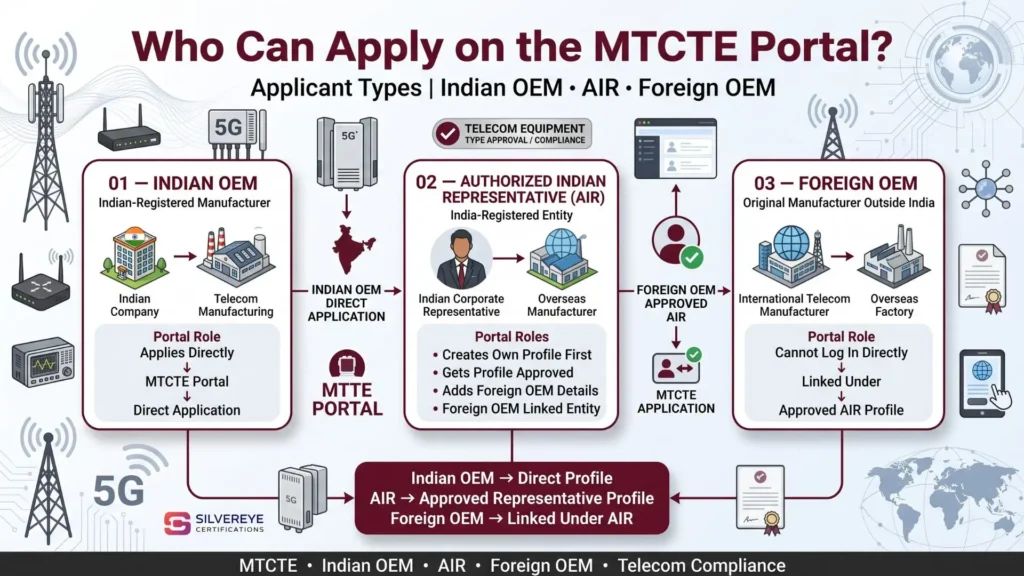
- Importers and foreign OEMs bringing CCTV/surveillance equipment into India, who must appoint an Indian representative for BIS/STQC purposes.
- System integrators and brand owners rebranding third-party camera hardware under their own name for the Indian market.
- Government departments and public-sector buyers, who have required STQC/ER compliance for procurement since June 2024, well ahead of the general market deadline.
Documents Required for TEC Certification For IP Cameras and CCTV Systems
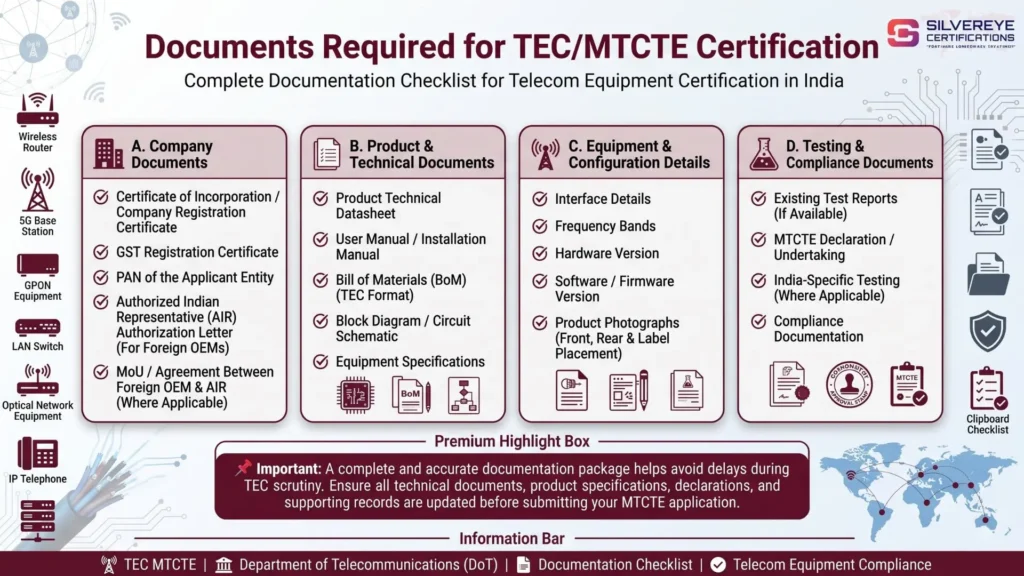
- Company registration and authorization documents (Certificate of Incorporation/Partnership Deed, Authorization Letter, PAN/GST).
- For foreign manufacturers: Indian representative appointment documents, since BIS registration requires a local presence.
- IS 13252 (Part 1):2010 safety test report from a BIS-recognized lab.
- Technical Construction File (TCF) detailing the camera's security architecture against ER:01.
- Chipset details — make, origin, and firmware version/hash — for each model or series being certified.
- Product images and technical datasheet.
- Existing BIS license details, if extending scope for an already-registered model.
- For camera products with embedded Wi-Fi/cellular modules: separate technical documentation for the radio component, required for WPC and any applicable MTCTE application.
Fees for TEC Certification For IP Cameras and CCTV Systems
Fees combine BIS registration charges and STQC/ER testing charges, and vary based on whether you're extending an existing license or applying fresh:
- BIS scope extension (existing licensees): Historically around ₹30,000 plus applicable taxes per application (inclusive of one test report), with roughly ₹20,000 plus taxes for related processing — always confirm current BIS fee notifications, since these are revised periodically.
- STQC/ER:01 testing charges: Paid separately to the STQC-empanelled test lab for the Technical Construction File evaluation and testing.
- New BIS registration (first-time applicants): Combines standard CRS registration fees with the additional ER:01 test report requirement.
Because this certification spans two government bodies (BIS and MeitY/STQC), always verify current fee schedules directly on the BIS CRS portal and STQC's IoTSCS documentation before budgeting, as fee structures are updated periodically.
Typical Certification Timeline
| Stage | Typical Duration |
| TCF preparation and submission to STQC | 2–4 weeks, depending on how well-documented the camera's security architecture already is |
| STQC technical review and sample evaluation | Several weeks, given the depth of the security assessment |
| BIS registration/scope extension (with ER:01 report) | Processed alongside or shortly after STQC evaluation |
| Total (STQC testing for CCTV, general estimate) | Roughly 6–10 weeks including testing and audits, though this varies by lab capacity and product complexity |
Validity and Renewal TEC Certification For IP Cameras and CCTV Systems
- BIS registration validity generally runs on a multi-year cycle, subject to periodic renewal and compliance audits — typically referenced as running for one to a few years depending on risk classification, so confirm your specific license term with BIS.
- ER:01 compliance is tied to the specific model, chipset, and firmware version certified — a firmware change affecting the certified security functions can require re-verification, not just a notification.
- Government tender eligibility depends on maintaining current registration — a lapsed license blocks you from public procurement until renewed.
- Keep the BIS CRS portal and STQC/MeitY notifications on your compliance calendar, since enforcement dates and grace periods for this framework have shifted more than once since 2024.
Benefits of Getting TEC Certification For IP Cameras and CCTV Systems
- Legal market access: Mandatory for any CCTV camera to be sold, imported, or manufactured in India from 1 April 2026.
- Government and enterprise procurement eligibility: Public-sector and large enterprise buyers already require ER/STQC compliance for surveillance purchases.
- Stronger cybersecurity posture: ER:01 testing catches common IP camera vulnerabilities (weak credentials, unencrypted streams) before deployment at scale.
- Consumer trust and "Make in India" alignment: Compliance supports India's broader push to reduce cybersecurity risk from insecure imported surveillance hardware.
Common Mistakes and Misconceptions
- Assuming "TEC certification" is the relevant approval for a standalone IP camera — it generally isn't; BIS + MeitY/STQC is the actual requirement.
- Treating BIS safety registration (IS 13252) as sufficient on its own, without the separate ER:01 cybersecurity test report now required for the same license scope.
- Assuming older grace-period extensions still apply — MeitY explicitly withdrew all extensions as of the 16 January 2026 Office Memorandum.
- Overlooking that a firmware update can invalidate ER:01 compliance for a model, since the certificate is tied to a specific firmware version and hash.
- Missing the separate WPC (and potentially MTCTE) requirement for cameras with a built-in Wi-Fi or cellular radio module.
What's New for CCTV/IP Camera Compliance in 2026
- Full enforcement of MeitY's Essential Requirements (ER:01) for CCTV security takes effect from 1 April 2026, following the withdrawal of all prior grace periods via the 16 January 2026 Office Memorandum.
- No further extensions have been indicated — treat this as a hard compliance deadline for the industry.
- Enforcement authorities have been empowered to inspect warehouses, retail outlets, and e-commerce platforms for non-compliant CCTV stock after the deadline.
- The framework continues to sit under MeitY/BIS, separate from TEC/MTCTE — camera manufacturers should not assume alignment with the TEC certification path used for routers, modems, or 5G equipment.
Conclusion
If you've been searching for "TEC certification for IP cameras," the most useful thing this guide can tell you is that you're likely looking for the wrong regulator. Standalone IP cameras and CCTV systems in India are governed by BIS registration and MeitY's Essential Requirements (ER:01), certified through STQC — not TEC MTCTE Certification.
TEC Certification and WPC ETA Approval only enter the picture if your camera includes its own independent wireless or cellular radio module. With full enforcement of ER:01 landing on 1 April 2026 and no further extensions expected, the priority for manufacturers, importers, and integrators is straightforward: get your BIS registration current, add the ER:01 test report to your license scope, and don't wait for another grace period — MeitY has made clear there won't be one.
Frequently Asked Questions
Do IP cameras need TEC certification in India?
Generally, no. Standalone IP cameras and CCTV systems are certified through BIS registration (IS 13252) combined with MeitY's Essential Requirements (ER:01) via STQC — not the classic TEC/MTCTE scheme used for routers, modems, and 5G equipment.
What certification do CCTV cameras actually need in India?
CCTV cameras and recorders need BIS registration under the Compulsory Registration Order (Scheme-II, IS 13252 Part 1:2010) for safety, plus MeitY's Essential Requirements (ER:01) cybersecurity certification, tested and issued through STQC.
When does CCTV ER compliance become mandatory in India?
Full enforcement begins 1 April 2026, following MeitY's Office Memorandum dated 16 January 2026, which withdrew all previous grace-period extensions.
What happens if my CCTV cameras aren't ER-compliant after April 2026?
They cannot legally be sold, imported, or manufactured in India. Enforcement authorities can inspect warehouses, retail stores, and e-commerce platforms for non-compliant stock.
Does a Wi-Fi-enabled IP camera need any TEC or WPC approval?
Yes, for the wireless component. While the camera function itself follows BIS/MeitY ER requirements, the Wi-Fi radio module separately needs WPC equipment type approval, and potentially TEC/MTCTE clearance if it falls under a notified telecom equipment category.
What is STQC and how is it different from TEC?
STQC (Standardisation Testing and Quality Certification) operates under MeitY and certifies electronics against cybersecurity Essential Requirements, including CCTV cameras. TEC (Telecommunication Engineering Centre) operates under the Department of Telecommunications and certifies telecom network equipment like routers and base stations under MTCTE — they are separate bodies with separate scopes.
What is ER:01 for CCTV cameras?
ER:01 is MeitY's Essential Requirement for Security of CCTV, introduced by gazette notification on 9 April 2024, covering secure boot, access control, encryption, tamper resistance, and vulnerability management for CCTV cameras.
Is BIS registration alone enough for CCTV cameras in India?
No. BIS registration under IS 13252 covers electrical/physical safety only. The separate ER:01 cybersecurity test report is also required and must be added to the same BIS license scope.
How long does STQC certification for a CCTV camera take?
Typically around 6–10 weeks including testing and technical review, though this varies with lab capacity, product complexity, and how complete the Technical Construction File submission is.
Does a firmware update affect my CCTV camera's ER compliance?
It can. ER:01 certification is tied to a specific chipset and firmware version/hash, so a firmware change affecting certified security functions may require re-verification rather than simple notification.
Are government CCTV purchases already required to be ER-compliant?
Yes. STQC/ER compliance has been mandatory for CCTV cameras procured by government departments or used in public surveillance projects since 2024, ahead of the broader 1 April 2026 market-wide deadline.
Can existing CCTV stock manufactured before the ER requirement still be sold?
No, not after 1 April 2026. An earlier grace period (Office Memorandum dated 21 May 2025) allowed sale of pre-9-April-2025 stock, but MeitY withdrew this extension via its 16 January 2026 memorandum.