

- Mandatory Compliance: DC-supplied and battery-operated massage appliances are listed under Serial No. 86 of the 2026 appliances order.
- Applicable Standard: IS 302 (Part 1):2024, alongside the relevant product-specific requirements where applicable, for BIS certification and the ISI Mark under Scheme-I.
- Important Deadlines: 1 October 2026 for general manufacturers, 1 January 2027 for small enterprises, and 1 April 2027 for micro enterprises.
- Who Must Comply? Indian manufacturers and overseas brands supplying covered products to the Indian market should assess their BIS compliance requirements before placing products on the market.
Introduction
BIS certification for battery-operated massage appliances is governed by the Safety of Household, Commercial and Similar Electrical Appliances (Quality Control) Order, 2026 (S.O. 1739(E), dated 6 April 2026). DC-supplied and battery-operated massage appliances are listed at Serial No. 86 in the order’s table.

Covered products must meet the applicable requirements of IS 302 (Part 1):2024 and obtain a BIS license to use the ISI Mark under Scheme-I, as applicable to the product category. The stated compliance dates are 1 October 2026 for general manufacturers, 1 January 2027 for small enterprises, and 1 April 2027 for micro enterprises.
What Is BIS Certification for Battery-Operated Massage Appliances?
BIS Certification for Battery-Operated Massage Appliances involves obtaining a license from the Bureau of Indian Standards (BIS) to use the ISI Mark on products covered by the applicable Quality Control Order (QCO). The mark indicates that the product conforms to the applicable Indian Standard and is manufactured under the conditions specified by the BIS certification scheme.

Products that may require a scope assessment include rechargeable massage guns, handheld percussion massagers, neck and shoulder massagers, back massagers, eye massagers, foot massagers, and similar appliances powered by a battery or DC supply. However, the product’s intended use, design, electrical characteristics, and applicable standard determine whether it falls within the order’s scope. The product name or marketing description alone is not sufficient to establish coverage.
Two important points should be understood before beginning the certification process:
- ISI Mark certification, not CRS registration: The order specifies certification under Scheme-I of Schedule-II of the BIS (Conformity Assessment) Regulations, 2018. This route involves obtaining a BIS license and meeting the applicable product-testing and manufacturing requirements. It differs from the Compulsory Registration Scheme (CRS) used for certain notified product categories.
- Product classification determines applicability: A product marketed as a wellness gadget or relaxation device may still fall within the scope of the order if its function and design meet the applicable definition of a massage appliance. Confirm the classification against the relevant entry and standard before proceeding.
2026 Regulatory Update: What the New Order Says
The Safety of Household, Commercial and Similar Electrical Appliances (Quality Control) Order, 2026 was published in the Gazette of India (Extraordinary) on 6 April 2026, under Section 16 of the Bureau of Indian Standards Act, 2016. According to the details provided, it supersedes the previous 2025 order, subject to the provisions relating to actions already taken or omitted before the replacement.
The stated file number is F. No. P-29026/36/2023-LEI.
| Provision | Regulatory details |
|---|---|
| Scope | Electrical appliances intended for household, commercial, or similar use within the voltage limits specified in the order. |
| Relevant entry | Serial No. 86 identifies DC-supplied and battery-operated massage appliances. Mains-powered massage appliances are listed separately at Serial No. 9. |
| Indian Standard | IS 302 (Part 1):2024, Household and Similar Electrical Appliances — Safety — Part 1: General Requirements, identified in the supplied details as aligned with IEC 60335-1:2020. |
| Applicable version | The order states that the latest version of the relevant Indian Standard applies, according to the supplied details. |
| Certification scheme | Standard Mark under a BIS licence, following Scheme-I of Schedule-II of the BIS (Conformity Assessment) Regulations, 2018. |
| Exclusions | The supplied details describe exclusions for products covered by another QCO or notified for mandatory BIS certification under another Act. Confirm the precise wording and applicability in the Gazette. |
| Export exemption | Goods manufactured domestically for export are stated to be exempt, subject to the order's conditions. |
| Research and development imports | The supplied details specify an annual limit of 200 imported units for R&D, subject to restrictions on commercial sale, disposal, and recordkeeping. |
| Existing stock | A six-month sell-off provision is described for eligible declared stock manufactured or imported before the implementation date. Confirm the eligibility conditions and declaration requirements with BIS. |
| Enforcement | BIS is identified as the certifying and enforcing authority, with contraventions subject to the applicable provisions of the BIS Act, 2016. |
Implementation Dates for Massage Appliances at Serial No. 86
| Manufacturer category | Stated implementation date | Indicative end of six-month stock window |
|---|---|---|
| General manufacturers (other than micro and small enterprises) | 1 October 2026 | 1 April 2027 |
| Small enterprises | 1 January 2027 | 1 July 2027 |
| Micro enterprises | 1 April 2027 | 1 October 2027 |
The stock-window dates are calculated from the stated implementation dates. They should not be treated as automatic permission to sell uncertified products. Eligibility may depend on the exact wording of the order, the manufacturer's status, the relevant stock declaration, and compliance with BIS requirements.
Small and micro enterprises are classified under the Micro, Small and Medium Enterprises Development Act, 2006, subject to the applicable definitions and criteria.
What does this mean for manufacturers?
As of 22 October 2026, the stated implementation date for general manufacturers has passed. Businesses in this category should promptly confirm their certification status and whether any transitional provision applies to their specific products and stock.
Small and micro enterprises have later stated implementation dates. However, product testing, documentation, and factory assessment can take time. Manufacturers should begin assessing applicability and preparing their certification applications well in advance of their respective deadlines.
Why BIS Certification Matters for Massager Brands
BIS certification can support regulatory compliance and provide a structured way to demonstrate that covered products meet the applicable safety requirements.
- Regulatory compliance: Products covered by the order must meet the applicable certification requirements from the relevant implementation date, subject to any valid exemptions or transitional provisions.
- Retail and marketplace readiness: Retailers, distributors, and online marketplaces may request BIS license details or supporting compliance documents when onboarding regulated electrical products. Specific requirements vary by platform and buyer.
- Customer confidence: Massage appliances may contain rechargeable batteries and electrical components used close to the body. Appropriate safety testing and compliant manufacturing processes help address potential product-safety concerns.
- Reduced compliance risk: Failure to meet applicable requirements may expose businesses to enforcement action under the BIS Act, 2016. The consequences depend on the circumstances and relevant legal provisions.
- Improved product quality: Safety assessment can help manufacturers identify potential issues involving insulation, heating, mechanical hazards, abnormal operation, and product marking.
- B2B and distributor support: Maintaining valid certification and accurate compliance documentation can help simplify due diligence during distributor discussions, procurement reviews, and tender processes where certification is required.
Who Needs BIS Certification? Eligibility and Applicability
BIS certification requirements depend on the product category, manufacturing location, intended market, and applicable Quality Control Order (QCO). The following table provides a practical overview for businesses dealing with battery-operated massage appliances.
| Business category | Is BIS certification required? | Important considerations |
|---|---|---|
| Indian manufacturer selling in India | Yes, if the product is covered by the order | Apply for the applicable Scheme-I licence for the manufacturing premises and covered product models. The implementation date depends on the manufacturer's category. |
| Overseas manufacturer exporting to India | Yes, if the product is covered by the order | Foreign manufacturers generally need to follow the applicable BIS Foreign Manufacturers Certification Scheme (FMCS) requirements. |
| Importer or brand owner | Through the licensed manufacturer | Verify that the overseas or domestic manufacturer holds a valid BIS licence covering the relevant product and model before placing an order. |
| Contract manufacturer producing for a brand | Depends on the manufacturing and licensing arrangement | Confirm the licensed factory, product models, manufacturer details, and permitted brand or marking arrangements with BIS. |
| Domestic manufacturer producing exclusively for export | Exempt under the stated order provision, subject to its conditions | Maintain records demonstrating that the goods were manufactured for export and meet the applicable exemption conditions. |
| Importer bringing in research and development samples | Potentially exempt within the stated limit and conditions | The supplied order details specify up to 200 units annually for R&D, subject to restrictions on commercial sale and applicable recordkeeping. Confirm eligibility before importing. |
| Product covered by another QCO or mandatory BIS notification | May fall outside this order | Check the precise exclusion and determine which other order or notification applies to the product. |
Important: Importers, distributors, and brand owners should not assume that an application or test report alone authorises the sale of a regulated product. Confirm the applicable licence and any transitional provisions before placing products on the Indian market.
Which Battery-Operated Massage Products Are Likely to Be Covered?
The supplied details for Serial No. 86 describe DC-supplied and battery-operated massage appliances without providing a detailed product-by-product list. The following table is a preliminary guide to help manufacturers identify products that may require a scope assessment. It is not an official BIS classification list.
| Product type | Potential classification | What to check |
|---|---|---|
| Rechargeable massage gun or percussion massager | Battery-operated massage appliance under Serial No. 86, subject to confirmation | Battery configuration, supplied charger or adapter, intended use, and applicable standard |
| Neck, shoulder, and back massager powered by a battery or DC supply | Potentially covered under Serial No. 86 | Heating functions, operating modes, and product-specific safety requirements |
| Cordless handheld or wand massager | Potentially covered under Serial No. 86 | Applied parts, surface temperatures, and intended use |
| Rechargeable eye or head massager | Scope assessment required | Whether the appliance incorporates heating, light, or other additional functions |
| DC-powered foot massager | Classification requires confirmation | Whether its principal function is massage, foot warming, or another regulated function |
| Facial massager or skin-care device | Classification requires confirmation | Primary function and whether the product includes light, laser, or other specialised technology |
| Mains-powered massage chair or massager | May fall under a separate massage-appliance entry or another applicable category | Supply type, product design, principal function, and the relevant QCO entry |
How to Confirm Product Applicability
Before selecting a certification route, manufacturers should:
- Review the product's intended use, technical specifications, and electrical supply.
- Identify the relevant entry in the applicable Quality Control Order.
- Confirm the applicable Indian Standard and any product-specific requirements.
- Check whether another QCO or mandatory certification notification applies.
- Obtain clarification from BIS or a suitable BIS-recognised laboratory if classification is uncertain.
This assessment can help prevent unnecessary testing or an application under the wrong product category.
Technical Requirements for BIS Certification of Massage Appliances
1. Applicable Indian Standard
The supplied order details identify IS 302 (Part 1):2024, Household and Similar Electrical Appliances — Safety — Part 1: General Requirements, as the applicable general safety standard for the listed product category.
Part 1 addresses a range of electrical safety considerations, including:
- Protection against access to live parts
- Input power and current
- Heating and temperature rise
- Leakage current and electric strength
- Abnormal operation
- Stability and mechanical hazards
- Resistance to heat and fire
- Product marking and instructions
Massage appliances may also be subject to additional product-specific safety requirements. IEC 60335-2-32 is the international particular standard for massage appliances, but its applicability and the corresponding Indian Standard must be confirmed for the specific product and certification route.
Before testing begins, ask the laboratory to confirm the applicable editions, amendments, and any additional requirements. Do not assume that the general standard alone covers every safety requirement for every massage appliance.
2. Battery and Charger Considerations
Battery-operated massage appliances should be assessed as complete products, including their relevant charging arrangements and operating modes.
Depending on the design, the assessment may consider:
- Battery protection and charging behaviour
- Enclosure strength and mechanical safety
- Temperature during normal use and charging
- Electrical safety of the power supply and charging interface
- Supplied chargers or adapters and their applicable compliance requirements
- Critical components and their specifications
If the product is supplied with a separate charger or adapter, confirm whether that component requires separate BIS compliance under another applicable order. The answer depends on the component category and the regulations that apply to it.
3. Manufacturing Controls and Quality Management
Scheme-I certification involves more than obtaining a product test report. The manufacturer must meet the applicable licensing requirements for the manufacturing premises and product category.
Preparation may include:
- Documenting the manufacturing process
- Establishing inspection and testing procedures
- Maintaining records for incoming materials and critical components
- Ensuring suitable testing equipment is available and calibrated
- Implementing quality-control checks during production
- Maintaining traceability and relevant production records
Where assembly or other manufacturing activities are outsourced, the applicant should confirm the permitted manufacturing arrangement and the premises covered by the BIS license.
4. ISI Marking and Product Labelling
After the appropriate BIS license has been granted, the manufacturer must use the ISI Mark and license details in accordance with the license conditions and applicable marking requirements.
The product and its documentation should also carry the required information, which may include:
- Manufacturer and model identification
- Rated voltage and other applicable electrical ratings
- Required safety instructions and warnings
- BIS licence number and Standard Mark details, as applicable
Do not apply the ISI Mark before the licence has been granted or use it outside the scope of the licence.
Documents Required for BIS Certification of Massage Appliances
The documents required depend on the application type, manufacturing location, product category, and current BIS checklist. The following is a preparatory checklist rather than a definitive list of mandatory documents.
| Document category | Documents to prepare |
|---|---|
| Business and factory details | Company or firm registration documents, GST registration where applicable, factory address proof, and authorised signatory details |
| MSME classification | Udyam Registration Certificate, where relevant to the claimed enterprise category |
| Factory and manufacturing process | Factory layout, manufacturing flow chart, machinery list, and details of available testing equipment |
| Quality control | Applicable application forms, proposed inspection and testing arrangements, in-house procedures, and incoming-material inspection records |
| Product specifications | Model list, rating plate and label artwork, user manual, circuit diagram, and critical component list |
| Battery and charger details | Battery specifications, charging arrangement, charger or adapter details, and relevant component documentation |
| Testing documents | Test report from an appropriate BIS-recognised laboratory, where required under the applicable certification process |
| Authorisation | Authorisation for the person handling the application and relevant brand-owner documentation, where applicable |
| Fee payment | Application fee payment receipt and other applicable fee records |
| Foreign manufacturer documentation | Overseas factory details, Authorised Indian Representative (AIR) documentation, and additional documents required under the applicable FMCS procedure |
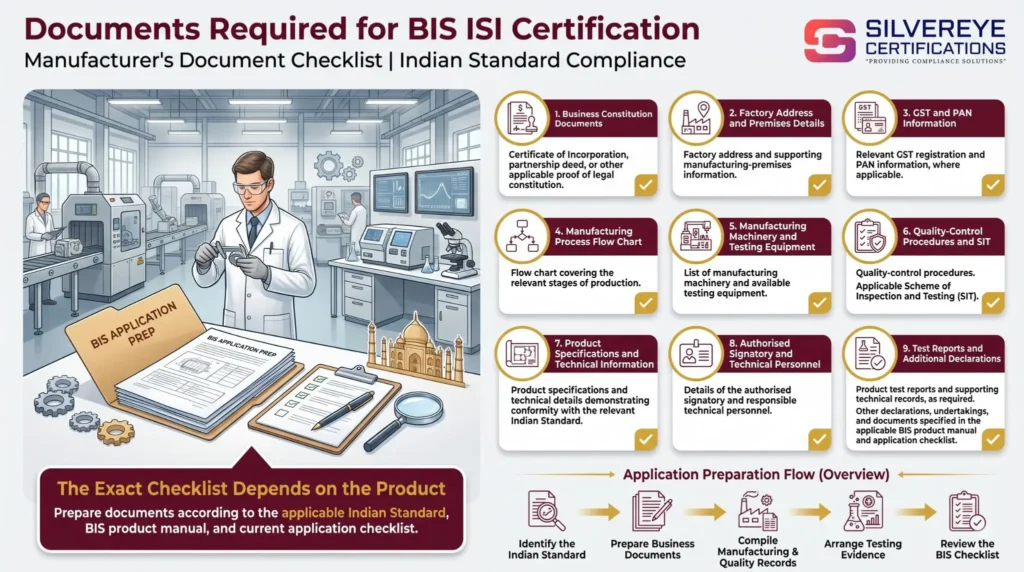
Before submitting an application: Check the latest BIS application forms, product-specific checklist, and testing requirements. The final document set should match the actual product, factory, and certification route.
Step-by-Step Process to Get BIS Certification for Massage Appliances
Obtaining BIS Certification for Battery-Operated Massage Appliances involves checking product applicability, completing the required testing, preparing the manufacturing facility, and obtaining a BIS license under the applicable certification scheme.
| Step | What happens | What you need to do |
|---|---|---|
| 1. Check product applicability | The product is matched to the relevant QCO entry, standard, and certification scheme. | Prepare the model list, product ratings, photographs, and technical specifications. |
| 2. Conduct a technical gap assessment | The product design and documentation are reviewed against applicable safety requirements. | Identify potential design, component, and labelling gaps before testing. |
| 3. Complete product testing | Samples are evaluated by an appropriate BIS-recognised laboratory under the applicable requirements. | Provide representative samples and complete technical and component details. |
| 4. Prepare the factory | Manufacturing controls, testing arrangements, calibration, and quality records are reviewed. | Ensure the required facilities, equipment, procedures, and records are available. |
| 5. Submit the application | The application and supporting documents are submitted through the applicable BIS process. | Complete the required forms, provide factory and product information, and pay the applicable fee. |
| 6. Respond to BIS queries | BIS reviews the application and may request additional information or clarification. | Submit accurate, complete, and document-supported responses. |
| 7. Complete factory assessment | BIS assesses the manufacturing and quality-control arrangements where required. | Keep relevant equipment, staff, procedures, and records ready for assessment. |
| 8. Obtain the licence | BIS considers the application, test results, and applicable assessment requirements before deciding on the licence. | Pay applicable charges and complete any outstanding requirements. |
| 9. Apply the ISI Mark | Licensed products are marked according to the licence conditions and applicable requirements. | Update product labels, packaging, and manuals as required. |
| 10. Maintain compliance | The licence remains subject to applicable surveillance, renewal, and change-control requirements. | Maintain production and testing records, cooperate with inspections, and apply for renewal on time. |
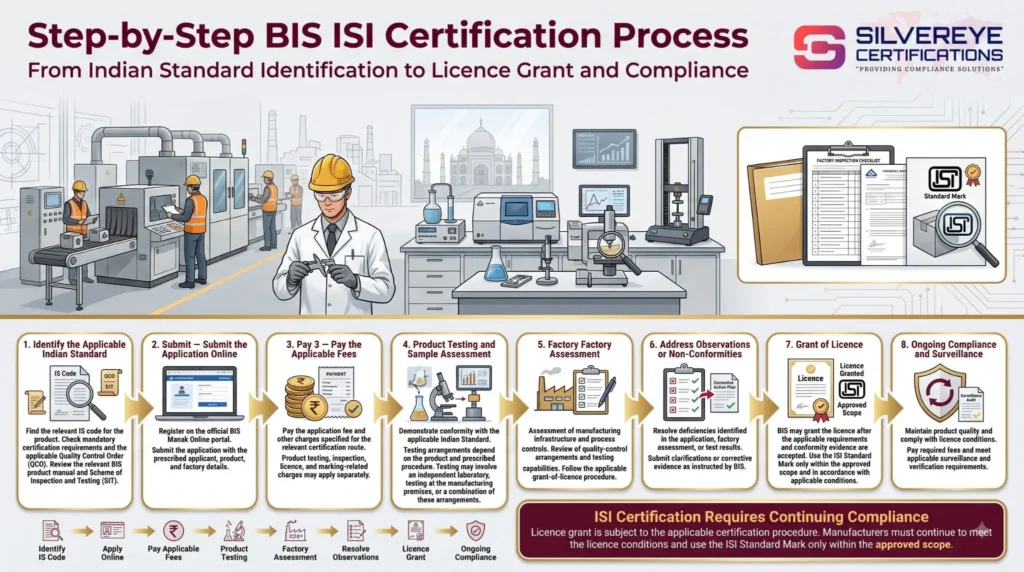
How Long Does BIS Certification Take?
There is no single timeline that applies to every massage appliance. The duration depends on laboratory availability, product complexity, the number of models, test results, factory readiness, the completeness of the application, and the time required to respond to BIS queries.
Manufacturers can help avoid preventable delays by reviewing the applicable standard before testing, preparing the required documentation in advance, and addressing design or labelling gaps early. The actual timeline should be confirmed for the product and application concerned.
BIS Certification Fees for Massage Appliances
The total cost of BIS certification depends on the applicable government fees, laboratory testing charges, inspection requirements, and any external technical or consultancy support. The figures below should be treated as a budgeting guide only, not as a confirmed quotation or current official fee schedule.
| Fee component | Cost basis | Important notes |
|---|---|---|
| Application fee | As specified in the current BIS fee schedule | Confirm the amount and payment requirements before filing. |
| Inspection fee | Based on applicable BIS inspection charges and assigned man-days | The final amount depends on the assessment requirements. |
| Licence fee | As specified in the current BIS fee schedule | Confirm the applicable payment and licence conditions. |
| Minimum marking fee | Product- and scheme-specific | Check the applicable marking-fee provisions and calculation method. |
| Laboratory testing charges | Quoted by the laboratory | Costs can vary by product design, number of models, and testing scope. |
| Consultancy and documentation support | Quoted by the service provider | Depends on the number of models, factory readiness, and the complexity of the application. |
What Affects the Total Certification Cost?
Three important cost drivers are:
- Number of models: Model grouping may affect testing requirements, subject to BIS acceptance and the applicable rules.
- Factory inspection requirements: The applicable inspection charges depend on the assessment arrangements.
- Additional testing: Design changes or unsuccessful tests may require further work or testing, depending on the laboratory's assessment.
Before preparing a budget, confirm the latest BIS fees, laboratory quotation, and applicable testing requirements. Avoid relying on older fee figures without checking the current schedule.
Validity and Renewal of the BIS License
A BIS licence is subject to the validity period and conditions specified by BIS. Manufacturers should monitor the licence expiry date and comply with applicable renewal, marking-fee, surveillance, and reporting requirements.
| Item | Details |
|---|---|
| Initial validity | Check the validity period stated in the licence and the applicable BIS regulations. |
| Renewal process | Submit the applicable renewal application and supporting production and marking-fee details through the prescribed BIS procedure. |
| Renewal period | The available renewal period depends on the applicable regulations and current BIS procedures. |
| When to apply | Begin preparing the renewal documents well before the licence expires and follow the prescribed filing timeline. |
| Delayed renewal | Late filing, deferred renewal, or suspension is subject to the applicable BIS regulations and conditions. |
| Ongoing obligations | Maintain production and testing records, cooperate with surveillance activities, and report relevant changes as required. |
Recommended Renewal Preparation
Start gathering production statements, marking-fee records, test records, and other required documents approximately three months before the licence expiry date. This is a practical planning recommendation, not a statutory deadline. Submit the renewal application within the prescribed period and confirm the status of the licence before continuing to mark products.
Common Mistakes That Can Delay BIS Certification
Manufacturers can reduce avoidable delays by addressing these common issues early:
- Treating the application as a CRS registration instead of following the applicable BIS licensing route.
- Applying before completing the required product testing or preparing the factory.
- Using an outdated standard or overlooking applicable product-specific requirements.
- Omitting relevant information about the battery, charger, adapter, or supplied accessories.
- Failing to verify whether a transitional provision applies to existing stock.
- Assuming that similar models can automatically be grouped under one application or test report.
- Importing products without verifying that the manufacturer's BIS licence covers the relevant product.
- Missing the applicable renewal deadline or failing to maintain required records.
What Happens If You Sell Massage Appliances Without BIS Certification?
If a product falls within the scope of the applicable Quality Control Order, the manufacturer or other responsible party must comply with the relevant requirements from the applicable implementation date, subject to valid exemptions and transitional provisions.
Non-compliance may lead to enforcement action under the Bureau of Indian Standards Act, 2016, and other applicable legal provisions. The precise consequences depend on the nature of the contravention and the facts of the case.
Manufacturers, importers, and brand owners should verify the product's classification, the applicable implementation date, and any relevant exemption before placing products on the Indian market. For a specific enforcement or penalty question, consult the official Act and applicable order or obtain qualified legal advice.
Why Choose Silvereye Certifications for BIS Certification?
BIS certification for battery-operated massage appliances can involve product classification, technical documentation, laboratory testing, factory preparation, and ongoing license compliance. Silvereye Certifications can support businesses in organising these activities and preparing for the applicable certification process.
- Product applicability assessment: Review the product details, relevant QCO entry, certification route, and enterprise category.
- Technical gap assessment: Identify potential issues in product design, labelling, and documentation before testing.
- Laboratory coordination: Assist with sample planning, model documentation, and communication with an appropriate laboratory.
- Documentation support: Help prepare and review the required application forms, factory documents, and authorisation records.
- Factory readiness guidance: Help organise quality-control procedures, testing arrangements, calibration records, and relevant documentation.
- Post-certification support: Assist with marking guidance, applicable scope changes, renewal preparation, and ongoing compliance documentation.
- Clear regulatory guidance: Help identify when a product may require a different certification route or further clarification from BIS.
Get Started with Your BIS Certification Assessment
If you manufacture, import, or sell battery-operated massage appliances in India, start by confirming which requirements apply to your product.
Share your model list, product ratings, technical specifications, and manufacturing location with Silvereye Certifications to request an applicability and readiness assessment before proceeding with testing and the BIS application.
Conclusion
BIS Certification for Battery-Operated Massage Appliances is an important compliance consideration for manufacturers and brands supplying covered products to the Indian market. Under the 2026 appliances order, applicable products must meet the prescribed safety requirements and obtain a BIS licence to use the ISI Mark under Scheme-I. Manufacturers should confirm the applicable Indian Standard, product classification, and implementation deadline before proceeding.
To prepare for certification, start with three steps:
- Confirm applicability: Identify the relevant QCO entry and your enterprise category.
- Review technical compliance: Assess your product design, documentation, and labelling against the applicable safety requirements.
- Plan testing and factory readiness: Prepare samples, quality-control records, and manufacturing facilities for the certification process.
Silvereye Certifications can assist with product applicability assessments, documentation preparation, laboratory coordination, and BIS application support. Early preparation can help businesses identify compliance gaps, organise the certification process, and reduce avoidable delays.
Contact Silvereye Certifications to discuss your product requirements and plan your next steps towards BIS certification.
Frequently Asked Questions
Is BIS certification mandatory for battery-operated massage appliances in India?
Yes. DC-supplied and battery-operated massage appliances are listed at serial no. 86 of the Safety of Household, Commercial and Similar Electrical Appliances (Quality Control) Order, 2026, which requires conformity to IS 302 (Part 1): 2024 and the ISI Mark.
Does a massage gun need BIS certification?
A rechargeable massage gun is a battery-operated massage appliance, so it is expected to fall under serial no. 86. Confirm your exact model with a laboratory or BIS if it has extra functions such as heat or light.
When did the order come into force?
The order came into force on 1 October 2026. For small enterprises the date for these products is 1 January 2027, and for micro enterprises it is 1 April 2027.
Which standard applies?
IS 302 (Part 1): 2024, which is IEC 60335-1: 2020, Household and Similar Electrical Appliances – Safety – General Requirements. The order says the latest version applies. Ask your laboratory which Part 2 requirements for massage appliances will be applied to your product.
Is this the ISI Mark or CRS registration?
It is the ISI Mark under Scheme-I, which needs a BIS licence and a factory assessment. It is not a CRS registration.
Can I import massagers without a BIS licence?
Not for commercial sale once the order applies to you. The overseas manufacturer needs a valid BIS licence covering the product. The order only allows up to 200 units a year for R&D, and these cannot be sold.
Are exports exempt?
Goods manufactured domestically for export are exempt under the order. Keep proof that the goods are for export.
Can I sell my existing stock after the date?
A manufacturer who is BIS-certified or who has applied for certification can sell, display or offer to sell declared stock made or imported before the implementation date for six months from that date, if a declaration is made to BIS.
How much does BIS certification cost for a massager?
There is no single figure. Government fees include an application fee, inspection charges, a licence fee and a product-specific minimum marking fee. Laboratory charges are extra. See the fee table above and verify current amounts on the BIS portal.
How long is the BIS license valid and how do I renew it?
The validity is stated on your licence. Renewal is applied for online in Form XII with production details, and BIS allows renewal for up to five years from the last validity date. Apply before expiry.
What happens if I sell uncertified massagers?
The order states that contravention is punishable under the Bureau of Indian Standards Act, 2016. Consequences depend on the case.
Do small and micro enterprises get any relief?
Yes, in timing. Small enterprises have until 1 January 2027 and micro enterprises until 1 April 2027 to comply for these products.