
- BIS issue New Standards For Tea Bags Under IS 19787:2026 in 2026 — India's first dedicated Indian Standard specifically covering tea bags used for brewing.
- The standard sets requirements for tea bag materials, food contact safety, and restricted substances including plastics that release microplastics.
- Manufacturers and importers of tea bags sold in India must align their products with IS 19787:2026 to meet BIS compliance norms.
- Consumers benefit directly: the standard ensures the tea bag you dip in boiling water meets verified food safety and quality benchmarks.
Introduction
In 2026, the Bureau of Indian Standards (BIS) issued IS 19787:2026 — a new Indian Standard for tea bags. This standard specifies the material requirements, food contact safety criteria, and restricted substances for tea bags sold in India. It addresses growing consumer concerns about microplastics leaching from nylon and polypropylene-based tea bags into hot beverages.
All tea bag manufacturers and importers must comply with IS 19787:2026 to sell products in the Indian market. The standard is part of India's broader push to align food packaging safety with international best practices and protect public health.
Why Did BIS Issue a New Standards For Tea Bags?
India is among the world's largest producers and consumers of tea. Millions of households and offices use tea bags every single day. Yet, until 2026, there was no standalone Indian Standard dedicated specifically to tea bags as a product — covering the bag itself, the material it is made from, and whether it is safe to use with hot water.

BIS had existing standards for tea quality — such as IS 3633 for black tea and IS 15344 for green tea — but these covered the tea leaves inside the bag, not the bag material itself. IS 19787:2026 fills that gap.
The timing is not a coincidence. Scientific research published between 2019 and 2024 raised serious alarms globally. Studies found that a single plastic tea bag steeped in boiling water can release billions of micro and nanoplastic particles into your cup. These particles — primarily from nylon, polypropylene, and PET materials commonly used in tea bags — were found to be absorbed by human intestinal cells. India's regulatory body acted to set clear, enforceable boundaries.
BIS Indian Standards for Tea: At a Glance
| IS Number | Title / Scope | Status (2026) |
| IS 3633:2003 | Black Tea – Specification | Active |
| IS 15344:2003 | Green Tea – Specification | Active |
| IS 15342:2003 | Instant Tea in Solid Form | Active |
| IS 15576:2005 | Multiwall Paper Sacks for Tea (Export) | Active |
| IS 13649:1993 | Polyethylene-lined Jute Bags for Packing Tea | Withdrawn |
| IS 19787:2026 | Tea Bags – Material, Safety & Restricted Substances | New Standard (2026) |
What is BIS IS 19787:2026? Complete Guide to India's New Tea Bags Standard
IS 19787:2026 is a new Indian Standard issued by the Bureau of Indian Standards (BIS) specifically for tea bags. It is developed under the Food and Agriculture Division of BIS and is applicable to tea bags intended for use in preparing hot tea beverages — the bags that you dip or steep in hot or boiling water.
The standard covers several important dimensions that were previously unregulated at the national level:
- Material composition of the tea bag — what the filter/bag material can and cannot be made from
- Food contact safety — ensuring materials that come into contact with hot water are safe for consumption
- Restricted and prohibited substances — specific chemicals and polymers that must not be present beyond threshold limits
- Physical requirements — including heat resistance, tensile strength, and impermeability to tea particles
- Labelling requirements — what information must be declared on tea bag packaging
- Sampling and testing methods — procedures for verifying compliance
In simple terms: IS 19787:2026 is the rulebook for every tea bag sold in India. If the bag material is unsafe, the standard flags it. If a restricted plastic is present, the standard prohibits it.
Restricted Materials Under IS 19787:2026 – What Is Not Allowed?
This is the section that has the most direct impact on consumers and manufacturers. IS 19787:2026 addresses materials known to pose food safety risks, particularly when a tea bag is exposed to high-temperature water during brewing.
Why Certain Plastics Are Restricted
The concern with plastic-based tea bag materials is well documented in peer-reviewed science. When tea bags made from nylon (polyamide), polypropylene (PP), or polyethylene terephthalate (PET) are steeped in water at or above 70°C — which is normal brewing temperature for most teas — these materials begin to degrade and shed particles.
Research has consistently found that plastic tea bags are a significant source of microplastic and nanoplastic exposure in beverages. At typical black tea brewing temperatures of 95–100°C, the degradation rate and particle release are substantially higher than at room temperature.
Key Restricted / Regulated Substances
| Material / Substance | Why It Is Restricted | Safer Permitted Alternative |
| Polypropylene (PP) | Used as heat-seal adhesive; releases ~1.2 billion nano particles/mL in hot water | PLA (plant-based bioplastic) heat-seal or cotton stitch |
| Nylon / Polyamide (PA6) | Common in pyramid bags; releases micro/nanoplastics at brew temperatures | Unbleached abaca fibre, food-grade cotton mesh |
| PET (Polyethylene Terephthalate) | Used in silky pyramid bags; sheds microplastics and phthalates under heat | Corn starch (Soilon/PLA), natural wood pulp fibre |
| Epichlorohydrin (ECH) | Wet-strength additive in paper bags; classified as a possible carcinogen (IARC Group 2A) | ECH-free wet-strength paper; thermally bonded abaca fibre |
| Elemental Chlorine (Cl) | Used in paper bleaching; generates dioxins which are persistent toxic pollutants | Oxygen or peroxide-bleached paper (TCF/ECF processes) |
| PFAS (Per/Polyfluoroalkyl Substances) | Persistent 'forever chemicals'; bioaccumulate in the body; banned in EU food contact materials from August 2026 | PFAS-free food-contact certified paper or natural fibre |
Note: The exact numerical threshold limits (migration limits, parts per million values) are specified within the IS 19787:2026 document. Manufacturers and compliance teams should refer directly to the BIS published standard for precise test parameters.
Permitted and Encouraged Materials Under IS 19787:2026
The standard does not just restrict — it provides clarity on what materials are acceptable and preferred for tea bag manufacturing in India:
| Permitted Material | Description | Properties |
| Unbleached Abaca Fibre | From the banana plant family; natural, fast-growing fibre | Compostable, biodegradable, no microplastics, strong in wet conditions |
| Wood Pulp (ECF/TCF) | Plant-based paper made without elemental chlorine | Widely available, compostable, cost-effective, safe for food contact |
| Organic / Unbleached Cotton | Natural fibre mesh, stitched not heat-sealed | 100% plastic-free, compostable, premium quality |
| PLA (Polylactic Acid) | Plant-derived bioplastic (corn starch / sugar cane) | Industrially compostable, reduced microplastic risk vs synthetic polymers |
| Sugar Cane Fibre | Agricultural byproduct-based material | USDA biobased certified, fast composting, zero water-waste production |
Key Requirements Under IS 19787:2026
Material and Physical Requirements
The standard sets out minimum physical performance criteria for tea bag materials to ensure they function safely in hot water environments. These include:
- Heat Resistance: Tea bag material must withstand brewing temperatures (typically 85°C–100°C) without structural breakdown, tearing, or excessive leaching.
- Wet Tensile Strength: The bag must not rupture or disintegrate when immersed in hot water, preventing tea leaf contamination of the beverage.
- Filtration Performance: The material must retain tea particles while allowing adequate infusion of flavour and colour into the water.
- Migration Limits: Any material in contact with hot water must not migrate substances beyond the permissible limits set under food safety norms, including BIS food contact material standards and FSSAI regulations.
Labelling Requirements
IS 19787:2026 requires that tea bag packaging carry accurate material declarations so consumers can make informed choices. Labelling must include:
- Material composition of the tea bag filter (e.g., 'Made from unbleached abaca and wood pulp fibre' or 'Contains food-grade PLA bioplastic')
- Whether the bag is compostable, biodegradable, or contains synthetic polymer components
- Any relevant food contact certifications or compliance declarations
- Manufacturer or importer name and contact details
- Country of manufacture
Sampling and Testing
BIS specifies standardised sampling procedures and test methods for verifying that tea bags meet IS 19787:2026 requirements. Testing typically includes:
- Migration testing — measuring substance transfer from bag material into hot water under simulated brewing conditions
- Physical tests — wet tensile strength, puncture resistance, and dimensional consistency
- Chemical analysis — for restricted substances including PP, PA, PET, ECH, and PFAS
- Sensory tests — ensuring the bag material does not impart colour, odour, or taste to the brewed beverage
Who Does IS 19787:2026 Apply To?
IS 19787:2026 applies to all entities in the tea bag supply chain that sell or distribute tea bags within India:
| Who | Applicability | Action Required |
| Domestic Tea Bag Manufacturers | Directly applicable | Reformulate materials, obtain BIS certification, update labelling |
| Tea Importers | Must verify imported tea bags meet IS 19787:2026 | Obtain conformity declaration from foreign supplier or test in BIS-recognised lab |
| Tea Brands (Private Label) | Responsible for end-product compliance | Audit contract manufacturers; update packaging and labelling |
| E-commerce Sellers | Listings must not carry non-compliant products after enforcement date | Verify compliance certificates from brands before listing |
| HoReCa (Hotels, Restaurants, Caterers) | Should procure from IS 19787:2026 compliant suppliers | Update procurement standards; prefer certified suppliers |
How to Get BIS Certification for Tea Bags Under IS 19787:2026
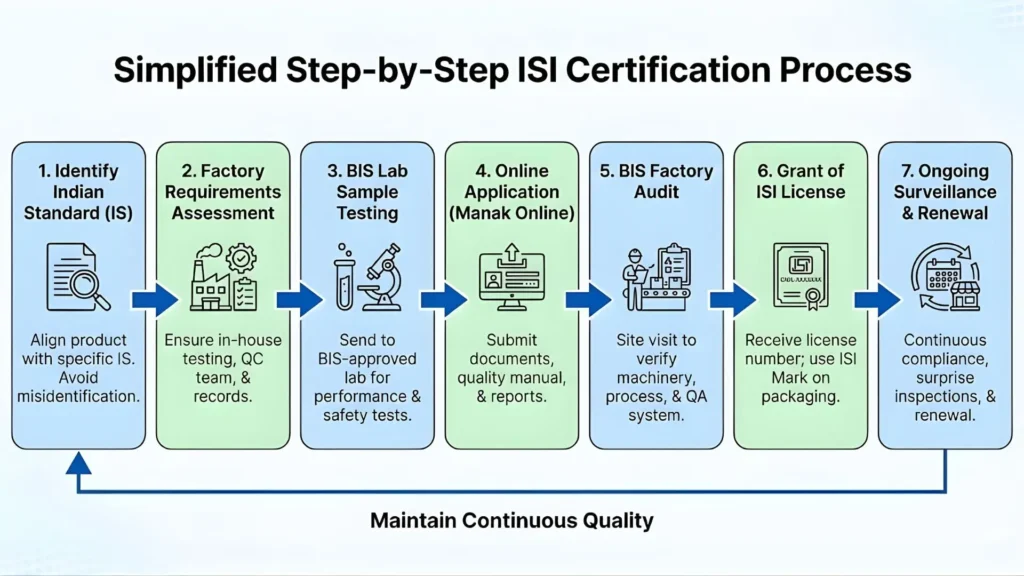
If you are a manufacturer or importer of tea bags and want to demonstrate compliance with IS 19787:2026, the BIS Product Certification (ISI Mark) scheme is the pathway. Here is a step-by-step overview of the process:
Step 1 – Review the Standard: Obtain a copy of IS 19787:2026 from the BIS Manak Online portal (www.manakonline.in) or BIS Connect. Study all material, labelling, and test requirements.
Step 2 – Internal Audit: Audit your current tea bag materials against the restricted substances list. Identify any non-compliant components (e.g., polypropylene heat seals, nylon mesh) and initiate reformulation.
Step 3 – Pre-testing in BIS-Recognised Lab: Submit tea bag samples for testing at a NABL-accredited or BIS-recognised laboratory. Obtain test reports confirming compliance with IS 19787:2026 parameters.
Step 4 – Apply for BIS Certification: Submit the application online through the BIS Connect portal (www.services.bis.gov.in). Upload required documents including factory details, test reports, quality manual, and production flow chart.
Step 5 – BIS Factory Inspection: A BIS officer will conduct an inspection of your manufacturing facility to verify production processes, quality controls, and compliance with standard requirements.
Step 6 – Grant of License: On successful inspection, BIS grants a product certification licence to use the ISI mark on your tea bag packaging.
Step 7 – Ongoing Compliance: Licenses are subject to surveillance testing and periodic factory audits to maintain certification. Any change in material or process must be notified to BIS.
Documents Required for BIS Certification For Tea Bags
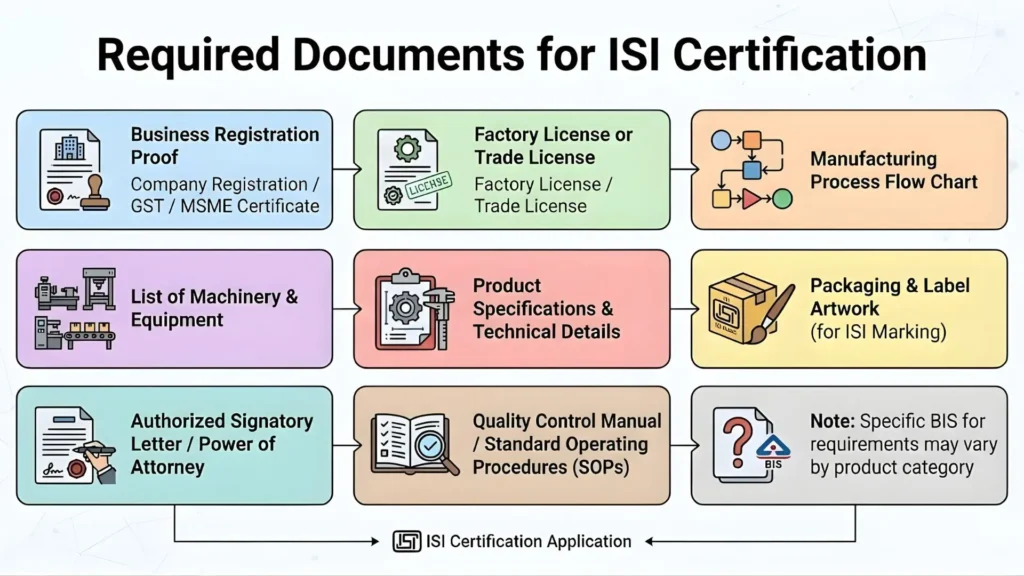
- Completed BIS application form (online via BIS Connect portal)
- Test reports from NABL-accredited / BIS-recognized laboratory confirming IS 19787:2026 compliance
- Factory registration certificate and GST registration
- Manufacturing process flowchart and quality control plan
- List of raw materials used with supplier declarations
- Labelling samples or artwork for the product packaging
- Import documents (for importers) — Bill of Lading, supplier conformity declaration
BIS Certification For Tea Bags Fees
BIS certification fees include an application fee, grant-of-licence fee, and annual marking fee based on production volume. The exact fee schedule is available at the BIS official website (www.bis.gov.in) and is subject to periodic revision. Applicants should check the latest fee structure at the time of application.
Validity and Renewal For Tea Bags
A BIS product certification licence for tea bags under IS 19787:2026 is typically valid for one to two years, subject to satisfactory surveillance. Renewal applications must be submitted before expiry. BIS may conduct surprise inspections at any point during the validity period.
Benefits of IS 19787:2026 for Consumers, Manufacturers, and the Market
For Consumers
- Assurance that the tea bag material in contact with your hot beverage meets verified food safety standards
- Reduced exposure to microplastics and nanoplastics from plastic-based tea bag materials
- Clearer labelling helps you make informed choices about the tea bag materials you use daily
- Protection from harmful chemicals like epichlorohydrin and PFAS in tea bag paper
For Manufacturers
- A clear, nationally recognized compliance framework replacing ambiguity in material selection
- BIS certification (ISI Mark) builds consumer trust and brand differentiation
- Alignment with global food packaging safety trends makes Indian tea bag brands more competitive in export markets
- Early compliance avoids future market disruption when enforcement begins
For the Market and Environment
- Accelerates the shift away from single-use plastic tea bags toward compostable, biodegradable alternatives in India
- Reduces plastic pollution from discarded tea bags, which are a significant source of microplastic contamination in soil and water
- Supports India's commitments under the Extended Producer Responsibility (EPR) framework for plastic packaging
- Encourages domestic manufacturing of natural fibre tea bag materials using India's abundant resources like abaca, cotton, and jute
India's IS 19787:2026 in a Global Regulatory Context
India is not alone in addressing tea bag safety. Regulatory bodies worldwide have been moving in the same direction, driven by mounting scientific evidence on microplastics in food contact materials:
| Country / Region | Key Regulation / Development | Year / Status |
| India (BIS) | IS 19787:2026 – First dedicated tea bag safety standard | Issued 2026 |
| European Union | Packaging & Packaging Waste Regulation (PPWR) – PFAS ban in food contact materials; compostability rules for tea bags | Effective August 2026 |
| Canada | McGill University research (2019) triggered national review of food contact plastics; Health Canada guidance on microplastics | Ongoing review |
| United States | FDA food contact regulations apply; growing pressure for specific microplastics guidance in hot-beverage packaging | Under review |
| ISO | ISO standards on food contact materials and migration testing form the global reference framework | Active standards |
India's IS 19787:2026 is therefore a timely and proactive step — positioning India alongside the EU as a global leader in food contact material safety regulation for tea products.
What Should Tea Brands in India Do Right Now?
If you are a tea brand, manufacturer, or importer operating in India, here is your practical 2026 action checklist:
- Audit your current tea bag supplier — ask for material composition data and check it against the IS 19787:2026 restricted substances list.
- If your bags contain polypropylene heat seals or nylon/PET mesh, initiate transition to PLA, abaca, or natural fibre alternatives immediately.
- Test your products at a NABL-accredited laboratory under IS 19787:2026 parameters before the enforcement deadline.
- Update your product labelling to include clear material declarations as required under the standard.
- Apply for BIS ISI Mark certification to demonstrate compliance and gain market advantage.
- Monitor BIS notifications for enforcement date announcements and any amendments to IS 19787:2026.
- Train your quality assurance and procurement teams on the new standard requirements.
Conclusion: IS 19787:2026 Is a Step in the Right Direction for Every Tea Drinker in India
India has a deep, daily relationship with tea. For most people, it is the first thing they reach for in the morning. That cup of tea deserves the same safety standards as any other food or beverage product — and IS 19787:2026 ensures that the bag holding your tea leaves is not silently adding billions of plastic particles to your drink.
BIS issuing IS 19787:2026 is a meaningful, overdue development. It brings tea bags within a formal food safety regulatory framework, aligns India with global best practices, and gives both manufacturers and consumers a clear, trustworthy benchmark.
For manufacturers: start your compliance journey today. For consumers: look for BIS-certified or natural-material tea bags. For the industry: this is the future — and it is already here.
Frequently Asked Questions
What is IS 19787:2026?
IS 19787:2026 is a new Indian Standard issued by the Bureau of Indian Standards (BIS) in 2026 that sets material safety, food contact, and labelling requirements specifically for tea bags used in preparing hot beverages in India.
Is IS 19787:2026 mandatory for tea bag manufacturers in India?
BIS certification under IS 19787:2026 is expected to become mandatory for tea bags sold in India. Manufacturers and importers should consult the latest BIS gazette notifications for the enforcement timeline and mandatory certification order details.
Are nylon tea bags banned under IS 19787:2026?
IS 19787:2026 restricts materials that leach unsafe substances into hot water. Nylon (polyamide) is flagged as a material of concern due to microplastic and nanoplastic release at brewing temperatures. Manufacturers using nylon mesh bags must evaluate compliance against the standard's migration limits.
Are plastic tea bags already banned in India?
IS 19787:2026 does not constitute an outright ban on all plastic tea bag components. Rather, it sets material safety thresholds and migration limits. Components that exceed permissible limits or are explicitly restricted will not be compliant with the standard.
Which tea bag materials are safe under IS 19787:2026?
Permitted and preferred materials include unbleached abaca fibre, ECF/TCF wood pulp paper, organic cotton mesh (stitched, not heat-sealed), PLA (polylactic acid) bioplastic, and sugar cane fibre. These materials meet food contact safety requirements without microplastic concerns.
Who issues IS 19787:2026 and where can I get a copy?
IS 19787:2026 is issued by the Bureau of Indian Standards (BIS), the national standards body under the Ministry of Consumer Affairs. You can purchase the official standard document from the BIS Manak Online portal at www.manakonline.in or through the BIS Connect portal.
Does IS 19787:2026 apply to imported tea bags?
Yes. Importers of tea bags for sale in India must ensure their products comply with IS 19787:2026 requirements. This includes obtaining supplier conformity declarations and testing products at BIS-recognised laboratories in India.
What is the penalty for non-compliance with IS 19787:2026?
Under the Bureau of Indian Standards Act, 2016, selling products that falsely claim BIS certification or fail to comply with mandatory Indian Standards can attract penalties including fines and product recall. Specific enforcement actions depend on whether certification is made mandatory under a government order.
How does IS 19787:2026 protect consumers from microplastics?
By restricting the use of materials like polypropylene, nylon, and PET in tea bags — which are scientifically proven to release micro and nanoplastics into hot beverages — IS 19787:2026 directly reduces the amount of plastic particles consumers ingest while drinking tea made from compliant tea bags.
Will tea prices increase due to IS 19787:2026?
A transition to natural or bioplastic materials may marginally increase production costs for manufacturers currently using cheap synthetic bag materials. However, the long-term health benefits and consumer trust gained from compliance are expected to outweigh short-term cost adjustments. Competitive pricing in the natural fibre segment has also improved significantly as global demand grows.