
- Mandatory from 19 March 2026: No ISI Mark under IS 302 (Part 1): 2024 means no legal sale, no import clearance, and no e-commerce listing in India.
- All vacuum types covered: Dry, wet & dry, robotic, water suction, steam, central vacuum, and commercial cleaning appliances.
- Fast-track timelines: Indian manufacturers — 30 to 45 working days. Foreign manufacturers via FMCS — 120 to 180 working days.
- Complete end-to-end support: Silvereye Certification handles gap analysis, documentation, lab testing, factory audit preparation, BIS portal filing, and post-certification compliance.
Why BIS Certification for Vacuum Cleaners Is No Longer Optional in 2026
If you manufacture, import, or sell vacuum cleaners in India, the rules changed on 19 March 2026. Under the Safety of Household, Commercial and Similar Electrical Appliances (Quality Control) Order, 2025 — commonly called QCO 2025 — every vacuum cleaner, wet and dry cleaning machine, and water suction appliance sold in India must now carry the ISI Mark under IS 302 (Part 1): 2024.
This is not a recommendation. It is a legal requirement enforced by the Bureau of Indian Standards under the BIS Act, 2016. Products sold without BIS certification for vacuum cleaners face seizure, port detention, heavy financial penalties, and in serious or repeat cases, criminal proceedings against responsible individuals.
The good news is that getting your vacuum cleaner BIS certified is a structured, well-defined process — and with the right expertise, it is entirely achievable within the compliance deadlines. This guide covers everything you need to know: what the standard requires, who needs certification, how the process works step by step, what it costs in time and effort, and how to stay compliant after your ISI Mark is issued.
IS 302 (Part 1): 2024 — Key Facts for Vacuum Cleaner Manufacturers and Importers
| Detail | Information |
| Applicable Standard | IS 302 (Part 1): 2024 / IEC 60335-1: 2020 (Seventh Revision) |
| Previous Standard | IS 302 (Part 1): 2008 — concurrent until 23 February 2027 |
| Mandatory Order | Safety of Household, Commercial and Similar Electrical Appliances (QCO) 2025 |
| Issued By | DPIIT, Ministry of Commerce and Industry, Government of India |
| Effective Date | 19 March 2026 (Large and Medium Enterprises) |
| Small Enterprises Deadline | 9 months after 19 March 2026 |
| Micro Enterprises Deadline | 12 months after 19 March 2026 |
| Certifying Authority | Bureau of Indian Standards (BIS) |
| Certification Scheme | Scheme-I — ISI Mark Licensing |
| Indian Manufacturer Timeline | 30 to 45 Working Days |
| Foreign Manufacturer (FMCS) | 120 to 180 Working Days |
| Voltage Scope | Up to 250V single phase / Up to 480V three phase and DC |
| Export-Only Products | Exempt — Export-only documentation required |
| R&D Import Allowance | Up to 200 units per year — not for commercial sale |
What Is IS 302 (Part 1): 2024 and Why Does It Matter for Vacuum Cleaners?
IS 302 (Part 1): 2024 is the Seventh Revision of India's general safety standard for household, commercial, and similar electrical appliances. It is issued by the Bureau of Indian Standards under Technical Committee ETD 32 and directly adopts IEC 60335-1: 2020 — the current international safety standard from the International Electrotechnical Commission.

This alignment with IEC 60335-1: 2020 is significant. It means that manufacturers who have already tested or certified their products against the IEC standard in other markets have a head start on the Indian certification requirements. However, local BIS certification under IS 302 (Part 1): 2024 is still mandatory and cannot be substituted by foreign certifications or test reports alone.
For vacuum cleaners and water suction cleaning appliances, IS 302 (Part 1): 2024 is the primary applicable standard under QCO 2025. In cases where a dedicated Part 2 Section standard applies to a specific appliance type, both the Part 1 general requirements and the relevant Part 2 Section requirements must be met together.
Which Vacuum Cleaner Types Require BIS Certification Under QCO 2025?
One of the most common questions manufacturers and importers ask is: does my specific product type fall under this mandatory certification requirement? The answer for most electrical cleaning appliances is yes. Here is a complete breakdown of covered product categories:
| Product Type | Description | Key Notes |
| Dry Vacuum Cleaners | Upright, canister, stick, handheld household and commercial models for dry debris and dust | Most common category — household and commercial |
| Wet and Dry Vacuum Cleaners | Multi-function appliances handling dry debris and liquid spillages | Requires water ingress protection testing |
| Water Suction Cleaning Appliances | Designed specifically to extract water and wet material from floors and drains | Strict electrical insulation requirements in wet environments |
| Bagless / Cyclonic Vacuum Cleaners | Use cyclonic separation to collect dust in a bin without replaceable bags | Both household and commercial grades covered |
| Robotic Vacuum Cleaners | Autonomous floor cleaning appliances with motorised suction and self-navigation | Requires software safety function documentation |
| Central Vacuum Systems | Fixed-installation systems with central motor unit and building-wide inlet ports | Motor and suction unit covered under this standard |
| Steam Vacuum Cleaners | Combination appliances using steam and suction for cleaning and sanitisation | Water and thermal requirements both apply |
| Commercial and Industrial Cleaners | Heavy-duty appliances for commercial, hospitality, healthcare, and light industrial use | Rated within the QCO 2025 voltage scope |
If you are unsure whether your specific product model falls within the mandatory scope of IS 302 (Part 1): 2024 under QCO 2025, a product scope review is the right first step before committing to the certification process.
Why Are Vacuum Cleaners and Water Suction Appliances Specifically Targeted by QCO 2025?
This is a fair question to ask. India has seen rapid growth in the vacuum cleaner market over the past decade — driven by urbanization, rising household incomes, growth in premium residential and commercial construction, and the rapid expansion of professional cleaning services across hospitality, healthcare, and facilities management.
This growth also brought a significant volume of imported and domestically assembled appliances at all price points — from premium branded products with rigorous internal testing programmes to low-cost imports assembled with components of unverified quality and no independent safety testing at all.
Vacuum cleaners and water suction appliances present three specific and serious safety risks that mandatory BIS certification directly addresses:
1. Electric Shock Risk in Wet Environments
Water suction appliances and wet and dry vacuum cleaners are designed to work with large quantities of water. The electrical insulation, motor housing sealing, and circuit protection in these appliances must prevent water from reaching live electrical components under real daily operating conditions — not just under ideal laboratory conditions. When this protection fails, the risk of electric shock is immediate and serious. IS 302 (Part 1): 2024 includes mandatory moisture conditioning and water ingress testing specifically to verify that this protection is genuine and reliable.
2. Motor Overheating and Fire Risk
High-speed suction motors generate significant heat during operation. In properly designed appliances, thermal protection systems keep this within safe limits. In poorly designed or unverified products, a blocked filter, clogged suction path, or extended operating period can push motor temperatures to levels that damage housing materials, scorch floor surfaces, or in worst cases contribute to electrical fires — particularly dangerous when the appliance contains collected dry debris that can itself be combustible. IS 302 (Part 1): 2024 requires abnormal operation testing and motor thermal protection verification to ensure certified appliances reach a safe state under these conditions.
3. Insulation Failure and Electrical Shock
The insulation between live electrical components and the surfaces a user touches — the hose, the body, the brush roll housing, the metal fittings — must be robust and durable across the product's service life. IS 302 (Part 1): 2024 tests this through dielectric strength testing and insulation resistance measurement that verify the barrier is real, not just nominal.
Benefits of BIS Certification for Vacuum Cleaners — Why It Is More Than Just Compliance
Manufacturers and importers often approach BIS certification as a compliance obligation — a box to tick before products can enter the market. That framing misses the real business value that BIS ISI Mark certification delivers. Here are the concrete benefits that certified manufacturers experience:
1. Unrestricted Market Access Across All Sales Channels
BIS certification under IS 302 (Part 1): 2024 is the single entry credential for every sales channel in India. Without the ISI Mark, your vacuum cleaner products cannot legally be sold through retail stores, wholesale distributors, e-commerce platforms, institutional buyers, or government procurement. With the ISI Mark, all of these channels are open.
2. Consumer Confidence and Brand Credibility
Indian consumers have become significantly more aware of product safety and quality certifications over the past several years. The ISI Mark is the most widely recognized product safety mark in India — it signals that a product has been independently tested and certified by the Bureau of Indian Standards, not just claimed to be safe by the manufacturer.
For vacuum cleaner brands operating in an increasingly competitive market, the ISI Mark differentiates products at the point of sale, supports premium pricing, and builds the long-term brand trust that drives repeat purchases and positive word-of-mouth in a market where online reviews heavily influence buying decisions.
3. Access to Government and Institutional Procurement
Government departments, public sector undertakings, defence establishments, hospitals, educational institutions, and large corporate facilities all include ISI Mark requirements in their procurement specifications for electrical appliances. This is an enormous and stable market segment — one that is entirely inaccessible to manufacturers without BIS certification. Certified manufacturers can bid on government tenders, qualify as approved suppliers for institutional buyers, and access the structured B2B market that individual consumer sales do not reach.
4. Legal Protection and Liability Reduction
A vacuum cleaner that causes an electric shock, starts a fire, or injures a user creates significant legal liability for the manufacturer, importer, or brand owner. BIS certification under IS 302 (Part 1): 2024 is the documented evidence that your product was independently tested against India's mandatory safety standard before it entered the market. It does not eliminate all liability, but it is the strongest available evidence of due diligence in product safety — which is critical in any legal proceeding involving a product safety incident.
5. Competitive Advantage Over Non-Compliant Competitors
In the period immediately following QCO 2025 enforcement, a significant portion of the vacuum cleaner market — particularly the lower-priced import segment — will be disrupted as non-certified products are removed from shelves and detained at ports. Manufacturers who have obtained BIS certification before these enforcement actions have an immediate and concrete competitive advantage: their products are legally available when competitors' products are not.
6. International Market Alignment
IS 302 (Part 1): 2024 directly adopts IEC 60335-1: 2020 — the current international standard. Vacuum cleaner manufacturers who certify under IS 302 (Part 1): 2024 are simultaneously ensuring their products meet the same technical requirements applied in European, North American, and other major markets. For manufacturers with international export ambitions, BIS certification under the 2024 standard is a step toward broader global market readiness, not just India-specific compliance.
Key Technical Requirements Under IS 302 (Part 1): 2024 — What Your Vacuum Cleaner Must Pass
Here are the core safety requirements your vacuum cleaner must meet to achieve BIS certification under IS 302 (Part 1): 2024:
- Dielectric Strength: High voltage applied between all live parts and accessible surfaces — insulation must withstand it without breakdown. For wet-rated appliances, this test is performed after moisture conditioning.
- Leakage Current: Actual current through unintended paths measured under normal conditions, single-fault conditions, and post-water-exposure for wet-rated models. Limits under the 2024 standard are more stringent than the 2008 version in several fault scenarios.
- Earth Continuity: For Class I appliances, the earth path from motor housing through the body to the supply earth must have adequate conductivity.
- Temperature Rise: Motor windings, housing, cord attachment, switches, and all accessible surfaces must remain within defined temperature limits during normal rated operation.
- Abnormal Operation: Blocked suction, stalled motor, clogged filter — the appliance must activate thermal protection and reach a safe state. Not continue operating until something fails.
- Motor Thermal Protection: Thermal cutout or electronic protection must activate correctly and prevent restart until the appliance has cooled to a safe temperature.
- Mechanical Strength: Housing, handle, hose connector, and wheel systems must withstand defined impact and force loads.
- Cord and Strain Relief: Power cord must withstand repeated bending cycles at the strain relief — simulating years of daily use.
- Stability: The appliance must not tip over under defined lateral forces in its operating positions.
- Water Ingress Protection (Wet and Water Suction Models): Spray water tests and liquid spillage tests verify that electrical compartments remain protected during water suction operation.
New in the 2024 Revision — What Changed from IS 302 (Part 1): 2008
The 2024 revision introduced several requirements that did not exist in the 2008 version. If you currently hold a BIS licence under IS 302 (Part 1): 2008, these are the areas most likely to require attention during your transition:
| New or Updated Requirement | Who It Affects | What to Do |
| Software and electronic control safety | Robotic vacuum cleaners, smart vacuum cleaners, app-connected appliances, electronic speed control models | Document software safety functions and provide validation evidence |
| Lithium battery system requirements | All cordless vacuum cleaners with lithium battery packs | Document BMS specifications, overcharge protection, thermal runaway prevention measures |
| Updated EMC requirements | All appliances with electronic controls or wireless connectivity | Verify EMC test data meets 2024 requirements — may need re-testing |
| Revised insulation classification and creepage/clearance | All appliance types | Review circuit design against updated values — critical for PCB layouts |
| Updated marking and instruction requirements | All appliance types | Update product labels to include energy consumption data, operating cycle limitations, and filter maintenance guidance |
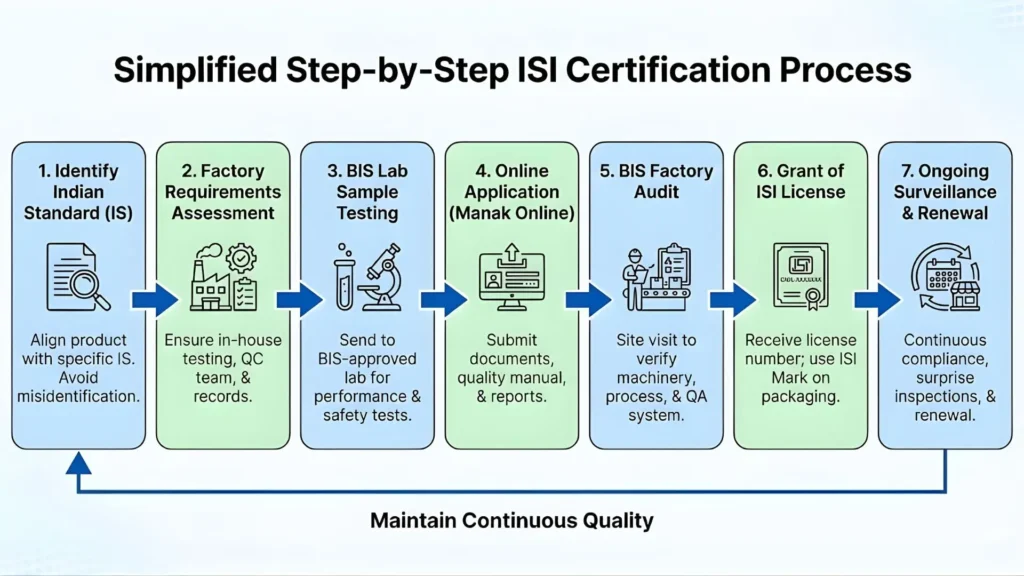
How to Get BIS Certification for Vacuum Cleaners — Step-by-Step Process
Understanding the certification process before you begin helps you plan your timeline realistically and avoid the delays that most commonly affect first-time applicants. Here is the complete step-by-step process:
Step 1 — Product Scope and Gap Analysis
The starting point for any BIS certification engagement is a thorough product scope review. This confirms exactly which of your models fall under IS 302 (Part 1): 2024, identifies whether any models additionally require IS 302 Part 2 Section standard compliance, and maps your current product specifications against the full technical requirements of the 2024 standard.
For existing IS 302 (Part 1): 2008 licence holders, the gap analysis also identifies what the transition to the 2024 standard specifically requires for your product types — so you understand the transition scope before committing to it.
Step 2 — Documentation Preparation
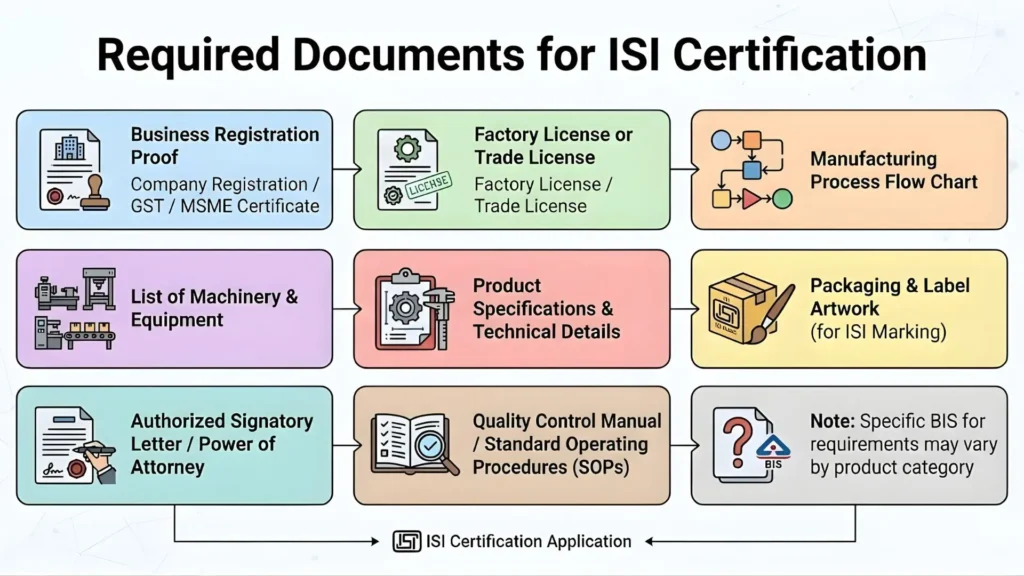
A BIS application for vacuum cleaners under IS 302 (Part 1): 2024 requires a comprehensive documentation package. Missing or incomplete documents are the single most common cause of BIS application delays. The required documentation falls into three categories:
- Administrative Documents: Company and factory registration certificate, premises ownership or lease documentation, GST registration certificate, authorised signatory details and authority letter.
- Technical Product Documents: Complete product specifications per model (rated voltage, rated frequency, rated power, motor type and specifications, suction system design), electrical circuit diagram and component list, filter system specifications, thermal protection system description, battery and BMS documentation for cordless models, water ingress protection rating and construction details for wet-rated models, software safety function description for robotic and app-connected models.
- Quality System Documents: Manufacturing process description, quality control plan covering incoming component inspection and in-process assembly checks, in-house laboratory equipment list with current calibration certificates, non-conforming product handling procedure, production testing records.
Step 3 — In-House Testing Laboratory Setup
IS 302 (Part 1): 2024 certification requires manufacturers to maintain in-house testing capability for ongoing production quality monitoring. This is not optional. A BIS factory inspector who arrives to find an in-house laboratory that exists only in documentation — with instruments that are uncalibrated, absent, or non-functional — will flag this as a major finding that causes significant delays.
Step 4 — Pre-Certification Testing at a BIS-Accredited Laboratory
Before submitting a formal BIS application, your products should be tested completely against IS 302 (Part 1): 2024 at a BIS-accredited laboratory. This pre-certification testing run serves a critical purpose: it identifies any findings that need attention before the formal process begins, so the official BIS test programme proceeds without complications.
Step 5 — BIS Portal Application via Manakonline
All BIS applications are submitted through the official Manakonline portal. The application covers manufacturer account registration and setup, application form completion for each model and variant, complete document and test report upload, application fee payment, and ongoing query management throughout the document scrutiny period.
Step 6 — BIS Factory Inspection
Following successful document scrutiny, BIS assigns a technical officer for a factory inspection of your manufacturing premises. This inspection is comprehensive. For vacuum cleaner manufacturers, it covers:
- Production Infrastructure Review: Complete walkthrough of your assembly operation — motor installation and wiring, suction system assembly, filter housing assembly, cord attachment and strain relief installation, housing assembly, electronic control board installation, battery installation for cordless models, and final quality inspection.
- In-House Laboratory Verification: Inspectors examine every testing instrument for operational status and current calibration. Laboratory personnel must demonstrate competence in required test methods. Every calibration certificate must be current and accessible.
- Component and Material Verification: Actual production components are compared against declarations in your BIS application. Any substitution of different components from those declared — even minor ones — is a serious compliance violation.
- Quality Control Records Review: Incoming component inspection records, in-process assembly quality checkpoint records, finished appliance test records, and batch testing data must be genuine, current, and systematic.
- Sample Sealing for Independent Testing: BIS officers draw production samples from your regular production line and seal them for independent laboratory testing. Results are compared against your pre-certification test programme.
Step 7 — ISI Mark Licence Issuance
After the factory inspection and independent testing of sealed samples, BIS conducts an internal review of the complete application file. Upon successful completion, BIS issues the ISI Mark licence authorising you to apply the ISI Mark to your certified vacuum cleaner and water suction appliance products.
Step 8 — Post-Certification Compliance Management
The ISI Mark licence is the beginning of your ongoing compliance obligation — not the end of it. BIS conducts periodic unannounced surveillance inspections of certified manufacturers, and purchases certified products from the open market for independent testing. Staying consistently compliant requires maintaining genuine production quality standards, keeping in-house testing records current, and preparing your team for surveillance visits.
How Can Foreign Manufacturers Get BIS Certification for Vacuum Cleaners?
Foreign manufacturers supplying vacuum cleaners to India cannot simply export through a distributor and expect customs clearance after 19 March 2026. Every foreign manufacturer must obtain BIS certification through the Foreign Manufacturers Certification Scheme (FMCS) before their products can legally enter India.

The FMCS process for vacuum cleaners runs on a 120 to 180 working day timeline and requires the appointment of an Authorized Indian Representative (AIR) who acts as the legal point of contact with BIS in India. The AIR is a mandatory requirement — without one, FMCS applications cannot be processed.
Foreign manufacturers must also arrange for BIS factory inspection at their overseas manufacturing facility. This is a physical inspection, not a remote review. BIS technical officers travel to the factory location to conduct the same inspection they would conduct at an Indian facility — production infrastructure review, in-house laboratory verification, component verification, and quality records review.
| Requirement | Indian Manufacturer | Foreign Manufacturer (FMCS) |
| Certification Scheme | Scheme-I — ISI Mark Licensing | Foreign Manufacturers Certification Scheme (FMCS) |
| Timeline | 30 to 45 Working Days | 120 to 180 Working Days |
| Factory Inspection | At Indian premises | At overseas manufacturing facility — BIS officers travel |
| Indian Representative | Not applicable | Authorised Indian Representative (AIR) — mandatory |
| Country-of-Origin Test Reports | Not required | Required where available |
| Product Marking | ISI Mark on product | ISI Mark on product — same requirement |
| Post-Certification Surveillance | BIS surveillance visits to Indian factory | BIS surveillance visits to overseas factory |
Who Exactly Needs BIS Certification for Vacuum Cleaners Under QCO 2025?
| Business Type | Certification Requirement |
| Indian Manufacturers | ISI Mark licence required for each manufacturing premises — cannot sell without it |
| Foreign Manufacturers | BIS certification via FMCS with Authorised Indian Representative — mandatory before any import |
| Importers / Distributors | Must import only from BIS-licensed foreign manufacturers — importers cannot independently certify |
| Private Label and OEM Brands | Full supply chain must be BIS-compliant — the brand owner is responsible for the ISI Mark status |
| E-Commerce Sellers | All product listings must carry valid ISI Mark — platform compliance checks are active |
| Export-Only Manufacturers | Exempt — but export-only documentation must be maintained and verifiable |
| R&D Importers | Up to 200 units per year permitted without certification — strictly not for commercial sale |
2026 Compliance Deadlines — What Is Your Deadline?
QCO 2025 sets staggered compliance deadlines based on enterprise size. Here is exactly where each category stands:
| Enterprise Category | Compliance Deadline | Status |
| Large Enterprises | 19 March 2026 | Deadline passed — immediate compliance required |
| Medium Enterprises | 19 March 2026 | Deadline passed — immediate compliance required |
| Small Enterprises | 9 months from 19 March 2026 (approx. December 2026) | Active — begin certification immediately |
| Micro Enterprises | 12 months from 19 March 2026 (approx. March 2027) | Active — begin certification process now |
If you are a large or medium enterprise reading this and have not yet begun your BIS certification for vacuum cleaners, your products are currently non-compliant. The time to act is now — not after the next consignment is detained at port.
What Happens If You Sell Vacuum Cleaners Without BIS Certification in India?
The consequences of non-compliance under QCO 2025 are severe and actively enforced. This is not a regulatory framework that exists only on paper:
- Port Detention and Import Rejection: From 19 March 2026, non-certified vacuum cleaner consignments arriving at Indian ports face detention and potential return to origin. Every shipment without ISI certification is at risk.
- Product Seizure: BIS enforcement officers can seize non-ISI-marked appliances from warehouses, retail stores, wholesale markets, and e-commerce fulfilment centres.
- Financial Penalties: Substantial fines under the BIS Act, 2016. Repeat violations carry escalating penalty levels.
- Criminal Liability: The BIS Act provides for criminal proceedings against responsible individuals in serious or repeat violation cases.
- E-Commerce Delisting: Major Indian online platforms including Amazon, Flipkart, and Meesho require ISI Mark compliance for electrical appliance listings. Non-certified products face delisting and seller account penalties.
- Government and Institutional Market Closure: All government procurement and large institutional purchasing specifies ISI Mark certification. Without it, this commercial segment is entirely inaccessible.
Transition from IS 302 (Part 1): 2008 to IS 302 (Part 1): 2024 — What Existing License Holders Must Know
If your vacuum cleaner products currently hold a BIS license under IS 302 (Part 1): 2008, your license remains valid during the concurrent applicability period — which has been extended until 23 February 2027. However, after that date, only IS 302 (Part 1): 2024 will be operative for all new applications and existing licenses.
This means the transition is not optional — it is a matter of when, not whether. And given that the full transition process for an existing licence holder involves gap assessment, additional testing where required, updated documentation, and a licence amendment application, starting the transition early is strongly recommended.
The key 2024 revision changes that are most likely to require action for existing vacuum cleaner licence holders include: updated software control requirements for electronic and smart models, new lithium battery system requirements for cordless models, revised EMC requirements, updated insulation classification and creepage/clearance distances, and new marking obligations.
Documents Checklist for BIS Vacuum Cleaner Certification
| Document Category | Required Documents |
| Company / Factory | Registration certificate, address proof, GST certificate, authorised signatory details and authority letter |
| Product Technical | Specifications per model, circuit diagram, component list, motor and thermal protection details, battery specs (cordless models), water protection rating documentation (wet/dry models), software safety description (robotic/smart models) |
| Quality Systems | Manufacturing process description, QC plan, in-house lab equipment list with calibration records, non-conforming product handling procedure, production test records |
| Test Reports | Pre-certification laboratory test reports from BIS-accredited laboratory under IS 302 (Part 1): 2024 |
| Declaration | Conformity declaration signed by authorised signatory |
| Foreign Manufacturers (FMCS only) | Authorised Indian Representative appointment letter, country-of-origin factory registration, country-of-origin test reports where available |
Important IS 302 Regulatory Update — What Changed in 2026
Regulatory Update — February 2026: BIS has issued two significant notifications in early 2026 that directly affect vacuum cleaner manufacturers and license holders. Both are summarized below.
Update 1 — IS 302 Concurrent Running Period Extended to 23 February 2027
In a notification issued in early 2026, BIS extended the concurrent running period for IS 302 (Part 1): 2008 alongside IS 302 (Part 1): 2024 / IEC 60335-1: 2020 from 23 February 2026 to 23 February 2027. This means IS 302-1: 2008 has not been withdrawn yet and both standards remain valid in parallel for all IS 302 series products — including vacuum cleaners and water suction cleaning appliances — until 23 February 2027.
- Existing IS 302 (Part 1): 2008 license holders: Your current BIS license remains valid and enforceable. You have additional time to complete the transition to IS 302 (Part 1): 2024, but the transition deadline is firm — 23 February 2027. After that date, IS 302-1: 2008 will be formally withdrawn and only IS 302 (Part 1): 2024 will be operative.
- New applicants: During the extended concurrent period, applications can still be submitted under either IS 302 (Part 1): 2008 or IS 302 (Part 1): 2024. However, applying under the 2024 standard now avoids the need for a mandatory transition application before February 2027.
- Laboratory test reports: Test reports under IS 302 (Part 1): 2008 submitted before the end of the concurrent period remain valid for license maintenance purposes. From 23 February 2027, all new applications and renewals must be supported by IS 302 (Part 1): 2024 test reports.
Update 2 — BIS (Conformity Assessment) Amendment Regulations, 2026 — Licese Validity Extended to 5 Years
On 25 February 2026, the Government of India published the Bureau of Indian Standards (Conformity Assessment) Amendment Regulations, 2026. This is one of the most significant structural changes to BIS certification in recent years. It directly affects every manufacturer holding or applying for a BIS ISI Mark licence — including vacuum cleaner manufacturers under IS 302 (Part 1): 2024.
The key changes introduced by the February 25, 2026 Amendment Regulations are:
- License validity extended from 2 years to 5 years: Under the previous framework, BIS licenses under Scheme-I were initially granted for a maximum of two years. Under the amended regulations, the initial license grant period under Scheme-I is now up to five years, with renewal also available for up to five years at a time.
- Annual fees must be paid in advance: Despite the longer license validity period, annual license fees and the minimum marking fee must continue to be paid annually in advance before the due date. This requirement has been made stricter — not relaxed — under the 2026 amendment.
- Production Statement submission aligned with fee payment: The annual Production Statement must now be submitted simultaneously with the annual fee payment. This is a new administrative requirement. Failure to submit the Production Statement on time may be treated as non-compliance.
- Automatic 90-day suspension for non-payment: If annual fees are not paid by the due date, the license is automatically suspended for 90 days. During the suspension period, the manufacturer cannot legally apply the ISI Mark to their products. After 90 days without payment, the license can be cancelled.
- Reinstatement fee of INR 5,000: To reinstate a suspended license, the manufacturer must pay all outstanding dues plus a late fee of INR 5,000. Reinstatement is not automatic — it requires a formal application.
| Parameter | Previous Framework | Amended February 2026 Framework |
| Initial Licence Validity | Up to 2 years | Up to 5 years |
| Renewal Period | 1 to 5 years (flexible) | Up to 5 years per renewal |
| Annual Fee Payment | Required annually | Required annually in advance before due date |
| Production Statement | Submitted separately | Must be submitted simultaneously with annual fee payment |
| Non-payment Consequence | Notice and opportunity to pay | Automatic 90-day suspension — immediate |
| Reinstatement After Suspension | Variable | Pay outstanding dues + INR 5,000 late fee |
| Applicable Schemes | Scheme-I | Scheme-I, Scheme-II, and Scheme-X |
The 5-year validity extension is genuinely positive for manufacturers — it reduces administrative renewal burden and provides longer-term regulatory certainty. However, the stricter annual fee enforcement mechanism means that lapsing on fee payment now carries an immediate and automatic penalty rather than a grace period. Calendar reminders and proactive fee management are no longer optional for responsible licence holders.
BIS Certification Cost for Vacuum Cleaners — What You Should Budget
One of the most practical questions manufacturers ask when beginning the BIS certification process is: what does it cost? The answer involves several components, and understanding each one allows you to budget accurately rather than be surprised partway through the process.
Government Fees — BIS Official Charges
BIS government fees are fixed and set by BIS (Conformity Assessment) Regulations, 2018 as amended. For Scheme-I ISI Mark licensing, the official BIS charges are:
| Fee Component | Amount | When Payable |
| Application Fee | INR 1,000 | At time of application submission on Manakonline |
| Factory Inspection Fee | INR 7,000 per man-day of BIS officer time | Before the factory inspection visit is scheduled |
| Annual Licence Fee | INR 1,000 per year | Annually in advance — due before the anniversary date of licence grant |
| Minimum Marking Fee | As per Annexure I of BIS (Conformity Assessment) Regulations 2018 — product specific | Annually in advance with annual licence fee |
| Late Reinstatement Fee (if suspended) | INR 5,000 in addition to outstanding dues | Only if licence is suspended for non-payment under the February 2026 amendment |
The marking fee — the ongoing annual fee linked to production volume — is the most significant ongoing cost component. It is calculated based on your declared annual production or import quantity of certified vacuum cleaner units. For most manufacturers, total annual BIS fees including licence fee and marking fee fall in the range of INR 10,000 to INR 75,000 depending on production scale, though larger-volume producers may pay more.
BIS Certification Timeline for Vacuum Cleaners
One of the most important things to understand about BIS certification for vacuum cleaners is that the official BIS processing time — 30 to 45 working days for Indian manufacturers — is only part of the total calendar time from decision to license. The preparatory work before formal submission is substantial and should not be underestimated.
For Indian Manufacturer
| Stage | Activity | Typical Duration | Key Dependencies |
| Stage 1 | Product scope review, gap analysis, and initial documentation assessment | 1 to 2 weeks | Access to product technical files and quality system documentation |
| Stage 2 | Documentation preparation and in-house lab setup or upgrade | 2 to 6 weeks | Complexity of product range; existing documentation quality; in-house lab status |
| Stage 3 | Pre-certification testing at BIS-accredited laboratory (booking, testing, report issuance) | 4 to 8 weeks | Laboratory availability and queue; test programme complexity; any re-testing needed |
| Stage 4 | BIS portal application submission and document scrutiny by BIS reviewers | 2 to 4 weeks | Completeness of application; number of BIS queries raised and response time |
| Stage 5 | BIS factory inspection scheduling and site visit | 2 to 4 weeks after document clearance | BIS officer availability; any findings requiring corrective action |
| Stage 6 | Independent sealed sample testing and BIS internal review | 2 to 4 weeks | Test results from sealed samples; BIS internal processing queue |
| Stage 7 | ISI Mark licence issuance | 1 to 2 weeks after review completion | Clean test results and satisfactory inspection findings |
| Total Realistic Timeline | From decision to ISI Mark on product | 12 to 24 weeks (3 to 6 months) | Faster with complete documentation and clean testing; longer if gaps or re-testing required |
For Foreign Manufacturer (FMCS)
| Stage | Activity | Typical Duration |
| Stage 1 | AIR appointment, product scope review, gap analysis | 2 to 3 weeks |
| Stage 2 | Documentation preparation | 3 to 6 weeks |
| Stage 3 | Pre-certification testing — at accredited lab in country of manufacture or India | 4 to 8 weeks |
| Stage 4 | FMCS portal application and document scrutiny | 3 to 6 weeks |
| Stage 5 | BIS overseas factory inspection — travel scheduling, inspection, findings clearance | 4 to 8 weeks |
| Stage 6 | Independent sealed sample testing and BIS review | 3 to 5 weeks |
| Stage 7 | ISI Mark licence issuance | 2 to 3 weeks |
| Total Realistic Timeline | Decision to ISI Mark licence | 24 to 40 weeks (6 to 10 months) |
BIS ISI Mark License Validity and Renewal — Everything You Need to Know (Updated for 2026)
The validity and renewal rules for BIS ISI Mark licenses changed significantly in February 2026. If you are working with information about BIS license validity that predates the Bureau of Indian Standards (Conformity Assessment) Amendment Regulations, 2026, the information you have may no longer be accurate.
New Validity Rules Under the February 25, 2026 Amendment Regulations
| Parameter | Details |
| Initial Licence Validity | Up to 5 years from the date of grant (amended from previous maximum of 2 years) |
| Renewal Period Options | Manufacturers can apply to renew for 1, 2, 3, 4, or 5 years — in line with the updated fee structure |
| Annual Fee Obligation | Annual licence fee and minimum marking fee must be paid every year in advance, regardless of whether the licence was granted for multiple years |
| Production Statement | Must be submitted simultaneously with each annual fee payment — new requirement under the 2026 amendment |
| Non-Payment Consequence | Automatic licence suspension after the due date — 90-day cure period before potential cancellation |
| Reinstatement After Suspension | Pay all outstanding dues plus late fee of INR 5,000 — reinstatement is not automatic |
| Late Renewal Application | If renewal application is made after licence expiry, a late fee of INR 5,000 applies |
| Scope Changes During Validity | Adding new models or variants requires a separate scope expansion application — does not affect licence validity |
What Happens at Renewal — What BIS Reviews
Renewal of a BIS ISI Mark licence for vacuum cleaners is not automatic or merely administrative. BIS uses the renewal process as an opportunity to verify that your products continue to comply with IS 302 (Part 1): 2024 and that your production quality has been maintained consistently throughout the licence period. The renewal application requires:
- Updated test reports: Fresh test reports from a BIS-accredited laboratory under IS 302 (Part 1): 2024 — typically not more than 90 days old at the time of renewal application submission.
- Production Statement for the preceding period: A certified statement of actual production volume of certified products during the preceding license validity period.
- Calibration records: Current calibration certificates for all in-house testing laboratory instruments — demonstrating that your quality monitoring capability has remained functional and calibrated throughout the license period.
- Any scope changes: If you added new models during the license period, confirmation that scope expansion approvals were properly obtained.
- Standard renewal fees: Annual license fee plus minimum marking fee for the renewal period chosen.
Why Manufacturers and Importers Choose Silvereye Certification for BIS Vacuum Cleaner Certification
- Deep Technical Understanding: Silvereye Certification's team understands IS 302 (Part 1): 2024 at the engineering level — the test requirements, the differences from the 2008 standard, and what those differences mean specifically for different vacuum cleaner types. Gap analysis with Silvereye is real technical assessment, not a documentation checklist exercise.
- Pre-Testing Commitment: Complete laboratory testing is coordinated before formal BIS submission. Products are confirmed compliant before the official process begins — eliminating test failures that cause costly delays.
- Factory Audit Preparation That Works: Pre-audit walkthrough identifies every gap before the BIS inspector arrives. In-house laboratories are fully operational, documentation is complete, and production processes are aligned with IS 302 (Part 1): 2024 requirements when the official visit happens.
- Transition Management Expertise: For existing IS 302 (Part 1): 2008 license holders, Silvereye manages the complete transition to the 2024 standard — assessing what your specific products require, handling the license transition application, and ensuring continuity of market access through the transition period.
- Complete Coverage: From product review and gap analysis through documentation preparation, laboratory testing coordination, factory audit preparation, portal management, BIS follow-up, and post-certification compliance management — Silvereye Certification handles every stage.
- Post-Certification Compliance Management: Ongoing support for surveillance inspection preparation, market sample monitoring, batch testing record maintenance, scope expansion for new models, and proactive license renewal management.
Frequently Asked Questions
What is the difference between IS 302 (Part 1): 2024 and IS 302 (Part 1): 2008 for vacuum cleaner manufacturers?
IS 302 (Part 1): 2024 is the Seventh Revision of the standard and directly adopts IEC 60335-1: 2020. Compared to the 2008 version, the 2024 standard introduces new requirements for software-controlled appliances, updated lithium battery safety requirements, revised EMC requirements, stricter insulation classification, and updated product marking obligations.
Can I import vacuum cleaners from China without BIS certification?
No. From 19 March 2026, all vacuum cleaners imported into India — regardless of country of origin — must be manufactured by a BIS-licensed foreign manufacturer under the FMCS scheme.
How long does it take to get BIS certification for a vacuum cleaner?
For Indian manufacturers, the process runs approximately 30 to 45 working days. For foreign manufacturers applying through FMCS, the timeline is 120 to 180 working days
Does my robotic vacuum cleaner need BIS certification?
Yes. Robotic vacuum cleaners with motorised suction systems fall within the scope of IS 302 (Part 1): 2024 under QCO 2025.
Where do I apply for BIS certification for vacuum cleaners?
BIS applications are submitted through the official Manakonline portal at manakonline.in.
What is the FMCS scheme and how does it work for vacuum cleaner manufacturers outside India?
Foreign Manufacturers Certification Scheme (FMCS) is the BIS pathway for overseas manufacturers who want to sell certified products in India.
What is the ISI Mark and how must it appear on a certified vacuum cleaner?
The ISI Mark is the conformity mark issued by the Bureau of Indian Standards confirming that a certified product meets the applicable Indian Standard — in this case IS 302 (Part 1): 2024.
Can I sell my existing non-certified vacuum cleaner stock after 19 March 2026?
The QCO 2025 applies from the effective date — products without the ISI Mark cannot legally be sold in India from the applicable compliance deadline.
Do vacuum cleaner spare parts and accessories also need BIS certification?
The mandatory BIS certification requirement under QCO 2025 applies to complete vacuum cleaner appliances — not to individual spare parts or accessories such as replacement filters, hose attachments, brush rolls, or dust bags sold separately.