

BIS Certification: What It Is, Who Needs It, and How to Get It Without Delays (2026)
- BIS Certification is mandatory for a wide range of products—from steel and chemicals to electronics and toys—ensuring they meet safety and quality benchmarks.
- Manufacturers can apply directly through the official government portal bis.gov.in. However, due to the technical complexity of lab testing and documentation, many businesses choose expert guidance to ensure approval.
- We detail the entire BIS certification process, including a breakdown of costs, realistic timelines, and the critical differences between the ISI Mark and CRS Registration.
Introduction
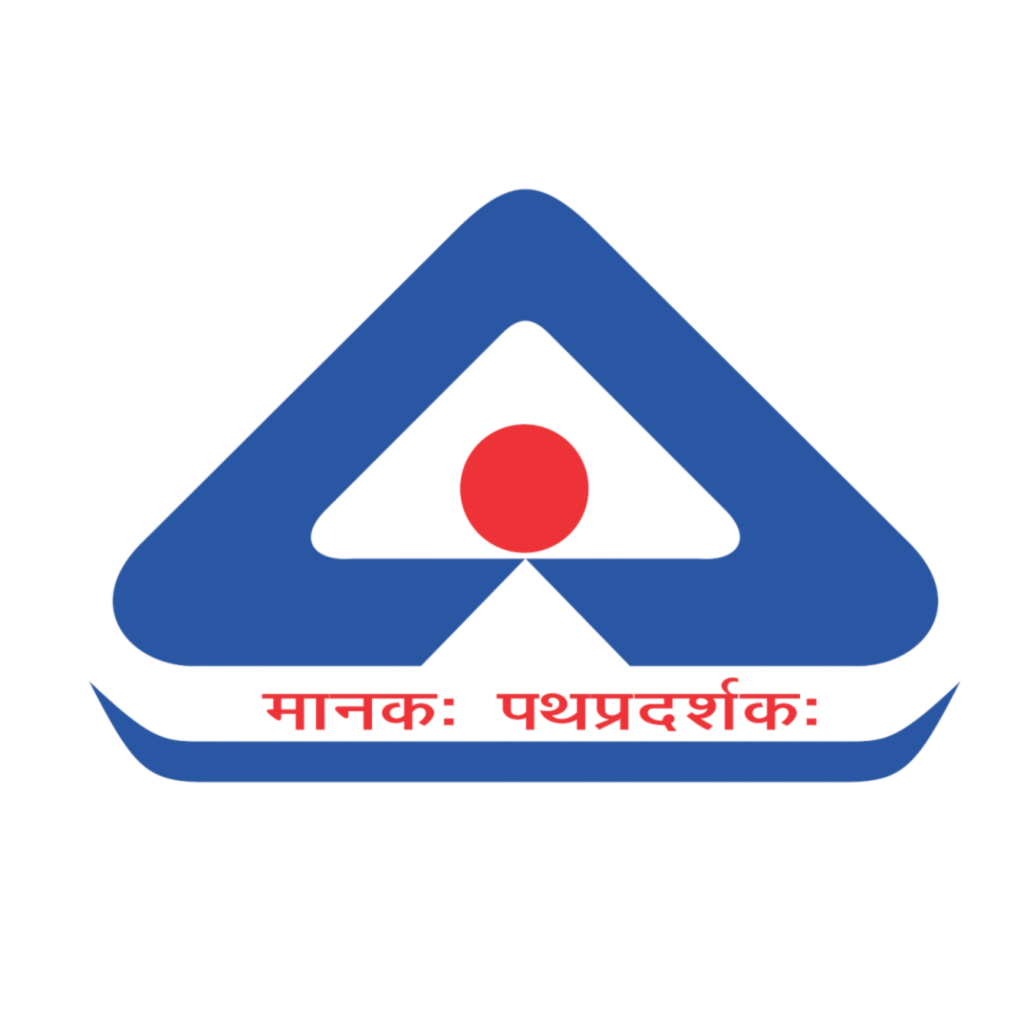
You have just manufactured a batch of high-quality LED lights or imported a container of steel valves. You are ready to distribute them across India. But suddenly, your shipment is seized at Customs, or your factory receives a legal notice. Why? Because you missed a small but powerful mark on your product—the BIS Standard Mark.
In the Indian industrial landscape, the Bureau of Indian Standards (BIS) isn’t just a regulatory body; it is the gatekeeper of the Indian market. For many businesses, “compliance” feels like a headache, but in reality, it is your license to sell. Without it, your product technically doesn’t exist for the Indian consumer. Whether you are a startup in Bangalore or a foreign manufacturer in China, understanding BIS certification is no longer optional. It is the difference between a thriving business and a warehouse full of dead stock. This guide cuts through the legal jargon to explain exactly what you need to do to get certified in 2026.
What is BIS Certification?
When a product carries BIS Certification, it means the Bureau of Indian Standards — India’s official national standards body — has looked at that product and said: yes, this meets the quality and safety bar we have set for this category. That is it. No complicated theory behind it.
But what does that actually involve in practice? Three things happen before any product earns that certification:
- Someone has physically tested it in a BIS-recognised laboratory — not just checked a box on a form, but run it through the applicable Indian Standard tests from start to finish.
- A BIS officer has visited the factory where it is made and verified that the manufacturing process and quality controls are genuinely in place.
- The government has formally authorised that manufacturer to sell the product in the Indian market.
Here is a simple way to think about it. Every time you pick up a product with a BIS mark on it, you are essentially reading a promise — one backed by the Indian government, not just the brand selling it. It is saying: this has been independently checked, it meets India’s safety standards, and the people who made it have committed to keeping it that way.
Why is BIS Certification Mandatory in India?
BIS Certification is not mandatory for every product in India. For many categories, it remains voluntary. But for a growing list of products — and this list keeps getting longer — the government has made it compulsory. And the reason comes down to one thing: protecting the person buying the product.
The Real Reason Behind Mandatory Certification
Picture the pressure cooker sitting on your kitchen stove. Or the helmet your child straps on before riding to school. These are not luxury items — they are products where a quality failure does not just mean disappointment, it means someone gets hurt. BIS certification exists precisely for situations like these.
When a product earns the ISI mark, it has been put through testing at an NABL-accredited laboratory against a specific Indian Standard (IS Code). That standard defines exactly what the product must withstand — whether that is the impact resistance of a helmet, the pressure tolerance of a cylinder, or the chemical composition of a solvent. It is not a formality. It is a filter that keeps genuinely dangerous products off the shelves.
What is a QCO and Why Should You Care?
This is where many manufacturers and importers get blindsided — often at significant cost.
The Government of India issues Quality Control Orders, commonly known as QCOs. A QCO is essentially the government’s mechanism for moving a product from the voluntary list to the mandatory list. One gazette notification, and overnight your product requires a BIS licence to be legally manufactured, imported, stored, or sold in India.
Products like footwear, industrial bolts and nuts, and wood-based boards were all sitting in the voluntary category until QCOs changed that. Businesses that were not tracking QCO notifications found themselves holding non-compliant inventory with no warning.
The rule is absolute: once a QCO covers your product, there is no grace period for intent. You either have the licence or you are in violation.
What Happens If You Ignore It?
The short answer — it gets expensive fast, and it can get criminal.
Under the BIS Act, 2016, enforcement officers carry real authority. They can walk into your warehouse without extended notice and seize every unit of non-certified stock on the premises. Beyond seizure, the legal consequences include imprisonment of up to two years and fines starting at ₹2 lakhs — but that floor is just the starting point. Fines can scale up to ten times the value of the goods seized, which means a mid-sized consignment of non-compliant products can turn into a penalty that threatens the entire business.
The businesses that treat BIS compliance as a one-time task rather than an ongoing process are precisely the ones who get caught by a new QCO they did not see coming.
Different Types of BIS Certification Schemes
BIS operates multiple conformity assessment schemes. For most manufacturers and importers, three schemes cover the vast majority of product categories: the ISI Mark (Scheme I), the Compulsory Registration Scheme or CRS (Scheme II), and the Foreign Manufacturers Certification Scheme or FMCS (Scheme III). Each is built for a different product type, market context, and risk profile.
One of the most common conversations we have with new clients goes something like this: they come in asking for “BIS Registration” — and what they actually need turns out to be something quite different from what they imagined. That is not their fault. The term gets used loosely, and most online resources treat BIS as a single, uniform process. It is not.
There are distinct certification schemes under BIS, and which one applies to you depends entirely on what your product is and where it is being manufactured. Getting this wrong at the start costs months. So let us break it down clearly.
Scheme I — The ISI Mark

When most people think of BIS, this is what they are picturing. The ISI mark — that familiar logo you see stamped on cement bags, steel bars, and kitchen appliances — comes from Scheme I, formally known as the Product Certification Scheme.
It covers a wide range of physical goods: cement, steel, food products, chemicals, tyres, glass, toys, and several other categories that have been brought under mandatory certification over the years. What makes Scheme I distinct is that it requires both product testing and a physical factory inspection. A BIS officer visits your manufacturing facility, assesses your production process and quality controls, and only after both the inspection and lab testing pass does the licence get issued.
In 2026, BIS has also intensified its post-certification surveillance for Scheme I products — meaning the inspection does not end when you receive your licence. Random market samples and surprise factory visits are part of the ongoing compliance picture.
What Products Does the ISI Mark Cover?
| Product Category | Examples | Key Indian Standard(s) |
| Construction Materials | Portland cement, TMT steel bars, safety glass, pipes | IS 269, IS 1786, IS 2553 |
| LPG & Gas Equipment | LPG cylinders, pressure regulators, gas stoves | IS 3196, IS 8737 |
| Electrical Products | Wires & cables, switches, circuit breakers, fans | IS 694, IS 3854, IS 8828 |
| Kitchen Appliances | Pressure cookers, geysers/water heaters, electric irons | IS 2347, IS 302 |
| Safety Products | Helmets (two-wheelers), safety footwear | IS 4151, IS 15298 |
| Packaged Food & Water | Packaged drinking water, infant milk substitutes | IS 14543, IS 7372 |
| Chemical & Industrial | Lubricating oils, pesticides, fire extinguishers | IS 1448, IS 1053 |
2026 Update: BIS has introduced a risk-based surveillance model for ISI Mark licences. High-risk product categories (electrical equipment, construction materials, food-contact products) now face more frequent inspections — some as often as quarterly. Businesses in these segments should maintain continuous production readiness, not just pre-inspection preparedness.
ISI Mark — Key Facts at a Glance
| Parameter | Details |
|---|---|
| Licence Format | CM/L-XXXXXXX |
| Typical Processing Time | 3 to 6 months (domestic manufacturers) |
| Validity | 1 year, renewable annually |
| Verification Method | BIS Care App, manakonline.in |
| Governing Regulation | BIS (Conformity Assessment) Regulations, 2018 |
| Key Feature | Factory audit + ongoing market surveillance |
Scheme II — CRS (Compulsory Registration Scheme)
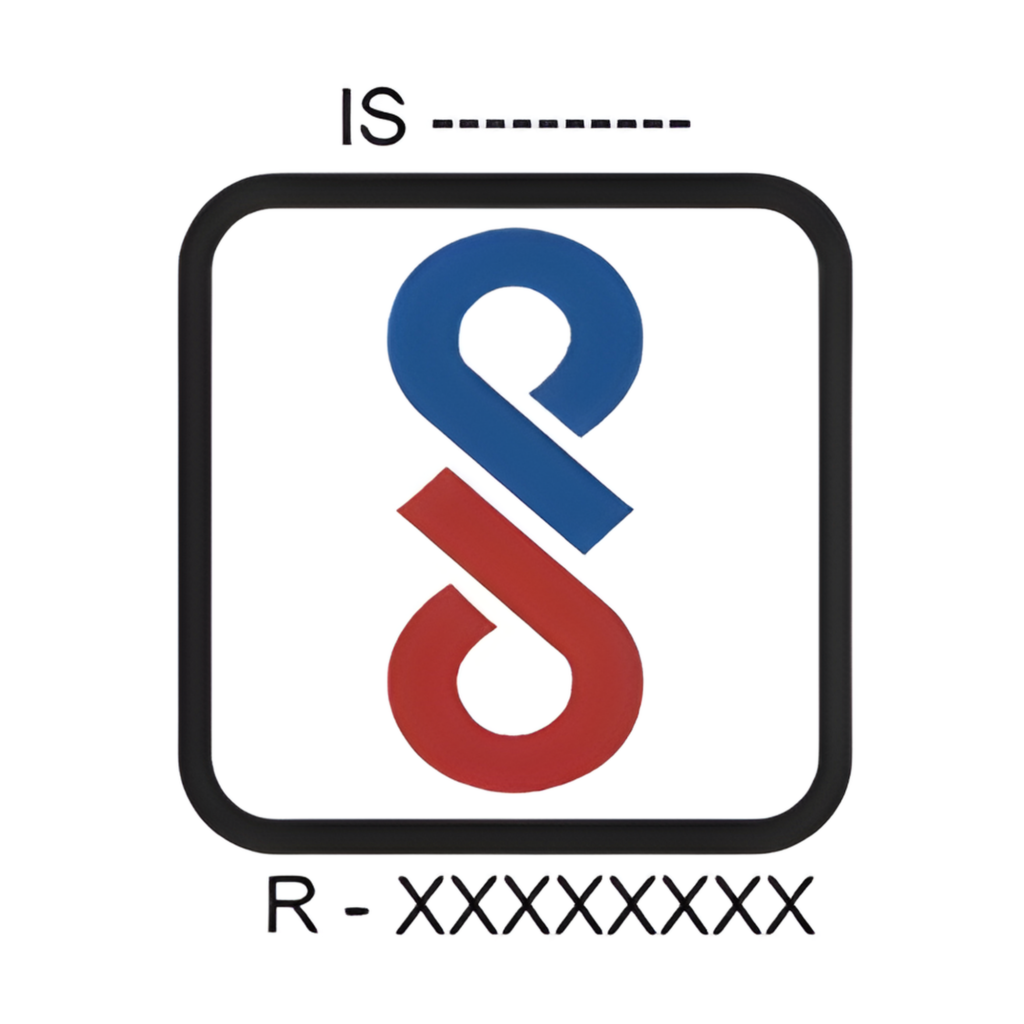
The electronics and IT sector operates at a pace that traditional factory-audit models simply cannot keep up with. A smartphone model that takes six months to certify is a competitive problem. CRS was built to solve that.
Managed in coordination with MeitY (Ministry of Electronics and Information Technology), CRS applies to laptops, mobile phones, power adapters, smartwatches, LED lights, solar cells, and a growing range of consumer electronics. The key difference from Scheme I is that CRS does not typically require a factory inspection. Instead, the manufacturer submits safety testing reports from a BIS-recognised laboratory along with a self-declaration of conformity — and the registration is granted on that basis.
It is a faster, leaner process. But do not mistake faster for looser. BIS actively monitors CRS-registered products through market surveillance, and in 2026 that includes automated scanning of e-commerce listings to cross-check registration numbers against the live BIS database.
What Products Does CRS Cover?
| Product | Applicable Indian Standard |
| Mobile Phones & Smartphones | IS 13252 (Part 1) |
| Laptops, Notebooks & Tablets | IS 13252 (Part 1) |
| LED Lights & LED Drivers | IS 10322 (various parts) |
| Mobile Chargers & Power Adapters | IS 13252 (Part 1) |
| Smart Televisions & Monitors | IS 616 |
| Set-Top Boxes (DTH/Cable) | IS 616 |
| Power Banks | IS 13252 (Part 1) |
| Printers, Scanners & Copiers | IS 13252 (Part 1) |
| Routers, Modems & Networking Gear | IS 13252 (Part 1) |
| Microwave Ovens | IS 302 (Part 2) |
| Refrigerators & Air Conditioners | IS 616 / IS 302 |
| Electric Toys & Powered Play Devices | IS 9873 |
Under CRS, every distinct product model with different technical specifications requires its own registration. You cannot register ‘Smartphone Series X’ and sell ten variants under it if those variants have different battery capacities, charging speeds, or power supply specifications. This is one of the most common compliance errors in 2026, especially for brands with large SKU portfolios.
CRS — Key Facts at a Glance
| Parameter | Details |
| Registration Format | R-XXXXXXX |
| Typical Processing Time | 7 to 30 working days (complete documentation) |
| Validity | 2 years, renewable |
| Key Feature | Self-declaration + lab testing (no factory audit for standard products) |
| Governing Order | Electronics and IT Goods (MEITY) Order, 2012 and amendments |
| Online Platform | www.manakonline.in |
| Market Surveillance | Random sampling from retail and e-commerce platforms |
FMCS — Foreign Manufacturers Certification Scheme

If your factory is based outside India — whether that is China, Vietnam, Germany, South Korea, or anywhere else — and you want to sell products in the Indian market under a mandatory BIS category, FMCS is your route.
The process broadly mirrors Scheme I, with one significant addition: you are required to appoint an Authorized Indian Representative, commonly referred to as an AIR. Your AIR is your legal point of contact with BIS India. They sign documents on your behalf, receive BIS correspondence, and carry legal responsibility for the accuracy of your application. Choosing the right AIR is genuinely one of the most important decisions in the entire FMCS process — an inexperienced or unresponsive AIR can quietly stall your certification for months without you realizing it.
The other reality of FMCS certification that catches foreign manufacturers off guard: BIS officers travel to your factory for the inspection, and the full cost of that travel — international airfare, accommodation, and per diem — is borne by you, the applicant. For factories in distant locations, that cost alone can run into several lakhs of rupees.
Which Scheme Applies to You?
| Manufacturing in India — industrial, food, safety, or construction products | Scheme I (ISI Mark) |
| Manufacturing in India — electronics or IT products | Scheme II (CRS) |
| Manufacturing outside India — any mandatory BIS category | FMCS |
If you are still unsure which scheme covers your specific product, the safest starting point is the BIS Connect portal at manakonline.in — search your product category there before making any other decision.
Who Needs FMCS?
Any foreign company manufacturing products in a mandatory BIS category and exporting them to India requires FMCS certification. This includes:
- Electronics manufacturers in China, Taiwan, South Korea, Vietnam, and other Asian manufacturing hubs
- European or American companies exporting electrical equipment, safety products, or construction materials to India
- Global OEMs supplying branded products to Indian distributors or retailers
- Foreign factories producing goods under Indian brand names or private labels
If a product in a mandatory BIS category arrives at an Indian port without FMCS certification, Customs officers are empowered to detain, reject, and arrange for destruction of the consignment. The storage, handling, and destruction costs are borne by the importer. In practice, a single detained shipment can cost far more than the entire FMCS certification process.
FMCS — Key Facts at a Glance
| Parameter | Details |
| Applicable To | Foreign manufacturers exporting to India (mandatory BIS categories) |
| Processed By | BIS Headquarters, New Delhi |
| Application Through | Authorised Indian Representative (AIR) — mandatory |
| Factory Visit | Physical inspection at foreign factory by BIS officers (applicant bears travel cost) |
| Typical Timeline | 4 to 9 months (international scheduling adds significant lead time) |
| Licence Validity | 1 to 2 years, renewable |
| Market Enforcement | Customs confiscation of non-certified mandatory goods at Indian ports |
Products That Require Mandatory BIS Certification in 2026
The list of mandatory BIS-certified product categories has expanded significantly over the past three years. As of 2026, mandatory certification spans electronics, construction materials, safety equipment, food products, and several chemical categories. Here is a consolidated reference:
| Broad Category | Products | Applicable Scheme |
| Electronics & IT | Smartphones, laptops, LED lights, chargers, TVs, power banks, routers, printers | CRS (Scheme II) |
| Electrical Equipment | Wires & cables, switches, circuit breakers, stabilizers, fans, geysers | ISI Mark (Scheme I) |
| Construction Materials | Portland cement, TMT steel bars, safety glass, drinking water pipes | ISI Mark (Scheme I) |
| LPG & Gas Equipment | LPG cylinders, valves, regulators, gas stoves | ISI Mark (Scheme I) |
| Safety Products | Two-wheeler helmets, safety footwear, fire extinguishers | ISI Mark (Scheme I) |
| Kitchen Appliances | Pressure cookers, microwave ovens, induction cooktops | ISI Mark or CRS |
| Toys | Mechanical, electric, and electronic toys | ISI Mark (Scheme I) |
| Imported Mandatory Products | Any of the above, manufactured abroad | FMCS (Scheme III) |
This list is not exhaustive and is updated periodically through gazette notifications. Always verify the current mandatory status of your specific product category at bis.gov.in or through the BIS Connect portal before commencing import or production.
Key Benefits of Obtaining BIS Certification
Beyond avoiding jail time, getting certified offers tangible business advantages. Here is how BIS certification directly impacts your growth:
| Benefit Category | Business Impact |
| Market Access | Essential for selling in government tenders and large retail chains which mandate certified products. |
| Brand Trust | The ISI mark is a “Trust Seal” for Indian consumers. It proves your product is high-quality and safe. |
| Legal Protection | Protects you from legal notices, raids, and stock seizures by enforcement authorities. |
| Export Advantage | Many developing nations recognize BIS standards, opening doors to markets like Nepal, Bhutan, and Africa. |
| Quality Assurance | The testing process forces you to upgrade your manufacturing standards, reducing defect rates in the long run. |
Who is Eligible to Apply?
The eligibility for BIS certification is strictly reserved for those who maintain direct control over the production process.
1. Domestic Manufacturers
Any manufacturing unit located within India that produces goods covered under the Mandatory Certification list can apply. The license is granted to the specific factory address where the final processing and quality control occur.
2. Foreign Manufacturers (FMCS)
Factories located outside of India that wish to export regulated products into the Indian market must apply under the Foreign Manufacturers Certification Scheme (FMCS). Again, the applicant is the overseas factory itself, not the international corporate headquarters.
Who is Excluded from Applying?
If your business model does not involve the physical fabrication or assembly of the product, you generally cannot be the license holder.
- Traders and Importers: You cannot hold a BIS license in your own name because you do not control the manufacturing environment or the quality testing protocols.
- Note: While you cannot be the licensee, an importer can serve as the Authorized Indian Representative (AIR) for a foreign factory to facilitate the application.
- Retailers: Your responsibility is limited to ensuring that the stock you sell carries the valid ISI Mark or Registration Mark provided by the manufacturer.
- Brand Owners / Corporate Offices: Unless the brand owner also owns and operates the factory, the application must be filed by the manufacturing entity.
Documents Required for BIS Registration
To avoid queries and rejection, ensure you have this checklist ready before starting:
- Business Proof: Factory License / MSME Certificate / Certificate of Incorporation.
- Identity Proof: Aadhar Card / PAN Card of the authorized signatory.
- Manufacturing Process Flowchart: A step-by-step diagram of how your product is made.
- List of Machinery: Details of all production equipment installed in the factory.
- List of Testing Equipment: In-house testing tools (with valid calibration certificates).
- Trademark Registration: Copy of the Brand Name/Trademark registration.
- Authorized Indian Representative (AIR) Form: (Only for Foreign Manufacturers).
Step-by-Step: How to Obtain BIS Certification
Step 1: Identifying the Correct Indian Standard (IS Code)
You must apply under the exact IS code (e.g., IS 14268 for High Tensile Steel). Selecting the wrong code voids the application.
Step 2: Sample Testing in NABL Accredited Labs
Send physical samples to a BIS-recognized (NABL) lab. You cannot use internal factory reports; independent testing is mandatory.
Step 3: Preparing Documentation
Compile the technical documents listed above. This is where most errors happen—ensure your machinery list matches your capacity.
Step 4: Factory Inspection (For ISI Mark Applicants)
A BIS scientist visits your factory to verify machinery and Quality Control (QC) competence. They will draw a sample for independent testing.
Step 5: License Grant
Once test reports are clear and documents verified, BIS grants the CM/L number (for ISI) or R-number (for CRS).
Scheme Comparison — ISI Mark vs. CRS vs. FMCS (Updated: February 2026)
Before we get to the table, there is something worth flagging upfront. The February 2026 amendment has quietly changed one of the most-quoted facts about BIS certification — the validity periods. If you have read older guides stating that a CRS registration lasts two years or an ISI licence is renewed annually, that information is now outdated. The new regulations have standardised validity across schemes in a way that changes the compliance calendar for every licence holder in India.
Here is what the amended regulations actually say, and what it means in practice.
| Feature | ISI Mark (Scheme I) | CRS (Scheme II) | FMCS (Scheme III) |
|---|---|---|---|
| Target Manufacturer | Domestic | Domestic and Foreign (imports) | Foreign (manufacturing abroad) |
| Product Focus | Industrial, construction, food, safety, electrical appliances | Electronics and IT products | Same as Scheme I or II — for imported goods |
| Core Mechanism | Factory audit + lab testing | Self-declaration of conformity + third-party lab testing | Factory audit abroad + lab testing |
| Factory Visit Required | Yes — by BIS officers | No (for standard products) | Yes — BIS officers travel to foreign factory |
| Travel Cost | Borne by BIS | Not applicable | Borne entirely by applicant |
| Certification Format | CM/L-XXXXXXX | R-XXXXXXX | CM/L-XXXXXXX (FMCS) |
| Initial Validity | Up to 5 years (amended Feb 2026) | Up to 5 years (amended Feb 2026) | Subject to applicable scheme |
| Renewal Period | Up to 5 years (amended Feb 2026) | Up to 5 years (amended Feb 2026) | Up to 5 years |
| Annual Fee Requirement | Yes — paid in advance before due date (new) | Yes — paid in advance before due date (new) | Yes — as per scheme |
| Late Payment Window | 90 days with ₹5,000 late fee (new) | 90 days with ₹5,000 late fee (new) | As per applicable scheme |
| Suspension for Non-Payment | Automatic on due date — no notice required (new) | Automatic on due date — no notice required (new) | As per applicable scheme |
| Suspension Notice (Other Reasons) | 21 days written notice | 21 days written notice | 21 days written notice |
| Market Surveillance | Yes — factory inspections and market sampling | Yes — including e-commerce platform monitoring | Yes — customs checks and Indian market sampling |
| MSME Fee Concession | As per scheme | 80% (micro/startups), 50% (small), 20% (medium) — till May 2029 (new) | As applicable |
What the February 2026 Amendment Actually Changed — And Why It Matters
The amendment notification (F. No. BS/XI/11/01/2025-26, dated 25 February 2026) does several things that go beyond a routine update.
Validity is now five years — not one or two. Both the ISI Mark licence and CRS registration are now granted initially for up to five years, with renewals also available for up to five years at a time. This is a structural shift. Previously, the short annual renewal cycle meant businesses had to actively engage with BIS every year just to stay in status. The new five-year window reduces administrative friction significantly — but it comes with a condition.
Annual fee payment is now non-negotiable — and automatic suspension is the consequence of missing it. Here is where the amendment introduces something genuinely new and operationally important. Even though the licence runs for five years, the annual fee must still be paid every year in advance before the due date. If it is not, the licence does not simply become “at risk” — it stands automatically suspended from the due date itself. No notice is required. The suspension is immediate.
Once suspended for non-payment, the licensee has a 90-day window to pay the outstanding annual fee along with a late fee of ₹5,000. If that payment arrives within 90 days, the suspension is lifted. If it does not, the licence is cancelled — again automatically, without separate notice.
The 21-day notice rule still applies — but only for non-fee suspensions. For all other suspension reasons — failed market surveillance, quality non-conformance, licence condition violations — BIS must still give 21 days written notice before suspending or cancelling. The no-notice automatic suspension applies only to annual fee non-payment. This distinction matters, and it is worth understanding clearly.
CRS now formally recognises foreign manufacturers. The revised Scheme II explicitly includes provisions for foreign manufacturers applying under CRS. They are required to nominate an Authorized Indian Representative and submit the relevant affidavit forms (Form III A, B, or C as applicable) — the same AIR framework that exists under FMCS. This closes a gap that previously created ambiguity for foreign electronics brands seeking CRS registration.
MSME fee concessions have been introduced for CRS. From the date of the gazette notification through 31 May 2029, the processing fee for Scheme II (CRS) applications carries significant concessions: 80 percent for micro enterprises and startups, 50 percent for small enterprises, and 20 percent for medium enterprises. From 1 June 2029 onwards, all MSMEs receive a flat 20 percent concession. For small electronics manufacturers and startups entering the Indian market, this meaningfully reduces the cost of certification.
BIS Certification Costs Breakdown
“How much will it cost?” is the most common question. The cost is split into three parts: Government, Lab, and Professional fees.
| Cost Component | Approximate Expense (INR) | Notes |
| Application Fee | ₹1,000 | Paid to BIS (Non-refundable). |
| License Fee | ₹1,000 (Minimum) | Calculated based on annual production volume. |
| Lab Testing Fee | ₹20,000 – ₹2,00,000+ | Variable. Depends entirely on the product complexity (e.g., a simple switch is cheap; a Lithium battery is expensive). |
| Official Inspection Fee | ₹7,000 per day | Only for Scheme-I (ISI Mark) factory audits. |
| Consultancy Fee | Variable | For document preparation, lab liaison, and query resolution by SEYECS. |
Timeline, Validity, and Renewal
Planning your product launch? Here is the realistic timeline you should account for.
- Timeline for Grant of License:
- CRS (Electronics): 20 – 30 Working Days.
- ISI Mark (Steel/Chemicals): 3 – 4 Months (due to factory inspection and longer testing cycles).
- Validity:
- The license is typically valid for 5 Years initially.
- Renewal:
- You can renew the license for up to 5 Years at a time.
- Renewal Condition: You must pay the marking fee and submit production returns. No re-testing is usually required unless the standard itself has changed.
Penalties for Non-Compliance (BIS Act, 2016)
Non-compliance with mandatory BIS certification requirements is not a civil matter — it is a criminal offence under the Bureau of Indian Standards Act, 2016. The enforcement regime was substantially strengthened by the 2016 Act compared to its predecessor, and enforcement activity has intensified considerably in 2025–26.
| Offence | Penalty |
| Manufacturing / selling mandatory products without BIS licence | Fine up to ₹2 lakh + imprisonment up to 2 years |
| Repeat offence (second or subsequent violation) | Fine up to ₹5 lakh + imprisonment up to 3 years |
| Using counterfeit or misleadingly similar ISI mark | Fine up to ₹5 lakh + imprisonment up to 2 years |
| Importing mandatory products without BIS certification | Customs detention, rejection, destruction at importer’s cost |
| Obstructing BIS officers during inspection | Fine + prosecution under BIS Act |
| Listing non-certified mandatory products on e-commerce | Platform takedown + legal notice from BIS enforcement wing |
In 2025–26, BIS enforcement operations have become considerably more sophisticated. The bureau’s digital monitoring cell runs continuous automated scans of major e-commerce platforms, checking listed products against the official BIS certification database. Physical raid operations — particularly in electronics wholesale markets in Delhi, Mumbai, Bengaluru, Chennai, and Hyderabad — are conducted on a quarterly basis, with raids on identified non-compliant warehouses coordinated with local police and customs authorities.
Common Mistakes That Delay BIS Certification
Based on the practical experience of navigating BIS applications across all three schemes, the following are the most frequent mistakes that derail or delay certification in 2026:
| Mistake | Why It Matters | How to Avoid It |
| Applying under the wrong Indian Standard | Application is rejected outright; months are lost | Confirm IS number with BIS office or a certified consultant before applying |
| Submitting incomplete factory documentation | Application put on hold pending clarification | Use the official document checklist on manakonline.in before submitting |
| Using a non-BIS-recognised lab | Test report is invalid and cannot be used | Verify lab recognition status at bis.gov.in before commissioning tests |
| Registering one CRS number for multiple variants | All unregistered variants become non-compliant | Apply for separate R-number for each model with distinct specifications |
| Missing renewal deadlines | Products become non-compliant overnight | Set dual calendar reminders — 3 months before and 1 month before expiry |
| Inadequate in-house quality control | Factory inspection fails; licence not granted | Establish and document QC procedures before applying — not after |
| Not budgeting FMCS travel costs correctly | Cash flow shock mid-process | Get a cost estimate for BIS officer travel to your country before starting |
DIY vs. Professional Consultancy: Which Should You Choose?
When seeking certification, business owners often face a dilemma: “Can I do this myself, or do I need a consultant?” Transparency is core to our values at SEYECS, so here is an honest comparison.
Can I Apply Directly on the BIS Website?
Yes. As a manufacturer, you are entitled to apply directly through the official government portal.
- Official Website: Visit www.bis.gov.in to access forms and pay statutory fees directly.
- Cost Implication: Applying directly avoids professional service fees, meaning you only pay government and lab charges.
Common Challenges When Applying Independently
- Wrong IS Code Selection: Leads to immediate rejection.
- Lab Coordination: Finding a lab with the right “scope” and managing sample logistics is complex.
- Documentation Queries: Technical errors in factory layouts or test equipment lists often stall applications for months.
How SEYECS Streamlines Your Compliance Journey
We act as your technical partner to ensure “First-Time-Right” submission.
- Pre-Compliance Audit: We review your documents before submission.
- Lab Management: We handle sample submission and follow-ups.
- Query Resolution: We draft technical responses to BIS officers to clear objections fast.
Conclusion: Your Pathway to the Indian Market
Securing BIS certification is your passport to the Indian market. It proves to buyers and government tenders that your product is safe, tested, and reliable. However, the path to compliance—involving strict IS Codes, NABL testing, and documentation—can be complex and prone to delays.
You have two choices: navigate the official government portal at bis.gov.in yourself, or partner with experts for a faster, error-free experience.
At Silvereye Certifications (SEYECS), we handle the entire technical process, from sample logistics to final approval, so you can focus on your business. Don’t let regulatory hurdles keep your inventory stuck at the border.
Frequently Asked Questions
Is BIS certification mandatory for every product sold in India?
No. BIS certification is mandatory only for product categories officially notified by the government under the BIS Act, 2016 or specific ministry orders. For non-notified categories, certification is voluntary — but carries significant market credibility advantages.
Can I sell products in India while my BIS application is being processed?
For mandatory categories, no. You cannot legally manufacture or import and sell a notified product in India without a valid, issued BIS certification. Selling under a ‘pending application’ is not a legal defence.
How do I know if my product needs CRS or ISI Mark certification?
The scheme is product-category-specific. Electronics and IT products almost exclusively fall under CRS (Scheme II). Industrial, construction, food, safety, and electrical products fall under ISI Mark (Scheme I). When in doubt, check the relevant ministry notification for your product on manakonline.in or contact the nearest BIS Regional Office.
Does a foreign manufacturer need both FMCS and CRS if selling electronics in India?
A foreign manufacturer of electronics products can apply for FMCS under the parameters of the relevant scheme. In practice, for CRS-category products, foreign manufacturers often have their Indian importers handle CRS registration since CRS does not require a factory visit. For ISI Mark-category products, the FMCS route is the applicable one. The right path depends on the specific product and its mandatory category classification.
What happens if a product fails BIS market surveillance testing?
If a product registered under any BIS scheme fails a market surveillance test, BIS initiates a formal corrective action process. The licence holder is notified and given an opportunity to respond. Depending on the severity, outcomes range from a warning and recall directive to immediate licence suspension or cancellation, followed by prosecution under the BIS Act.
Is ISO 9001 certification sufficient instead of BIS certification?
No. ISO 9001 is a quality management system standard — it certifies your process, not your product. BIS certification is product-specific and legally required for notified categories in India. ISO 9001 does not substitute for BIS certification in any mandatory category.
How do I find a BIS-recognised laboratory for testing?
The complete, current list of BIS-recognised laboratories is available at bis.gov.in under the ‘Laboratory’ section. Always verify a lab’s recognition for the specific Indian Standard you need tested — a lab may be recognised for some IS numbers but not others.
Can a small or micro-enterprise get ISI Mark certification?
Yes. There is no minimum company size requirement for BIS certification. Small enterprises do need to demonstrate adequate quality control infrastructure for the applicable product category, but BIS does provide guidance and sometimes facilitation for MSMEs through designated offices. Several state governments also offer subsidy schemes to help small manufacturers bear BIS certification costs.
How much does BIS certification cost?
The cost varies by product. It includes a government application fee (approx. ₹1,000), an annual license fee, and lab testing charges, which range from ₹20,000 to over ₹2 Lakhs depending on the product’s complexity.
What is the difference between ISI Mark and CRS?
ISI Mark (Scheme-I) requires both product testing and a factory audit (e.g., for steel, cement). CRS (Scheme-II) usually requires only safety testing in a lab (e.g., for laptops, phones).